Notice: تابع WP_Block_Type_Registry::register به طورنادرست فراخوانی شد. نامهای نوع بلوک نباید حروف بزرگ داشته باشند. لطفاً برای اطلاعات بیشتر، اشکال زدایی در وردپرس را مشاهده کنید. (این پیام در نگارش 5.0.0 افزوده شده است.) in /home/ethicsho/public_html/wp-includes/functions.php on line 5313
Warning: Use of undefined constant TDC_PATH_LEGACY - assumed 'TDC_PATH_LEGACY' (this will throw an Error in a future version of PHP) in /home/ethicsho/public_html/wp-content/plugins/td-composer/td-composer.php on line 109
Warning: Use of undefined constant TDSP_THEME_PATH - assumed 'TDSP_THEME_PATH' (this will throw an Error in a future version of PHP) in /home/ethicsho/public_html/wp-content/plugins/td-composer/td-composer.php on line 113 بایگانیهای Moral Development - صفحه 2 از 2 - خانه اخلاق پژوهان جوان Notice: Trying to access array offset on value of type bool in /home/ethicsho/public_html/wp-content/plugins/wp-ulike/inc/general-functions.php on line 807
The predominant view of moral virtue can be traced back to Aristotle. He believed that moral virtue must involve intellectual excellence. To have moral virtue one must have practical wisdom – the ability to deliberate well and to see what is morally relevant in a given context. Julia Driver challenges this classical theory of virtue, arguing that it fails to take into account virtues which do seem to involve ignorance or epistemic defect. Some ‘virtues of ignorance’ are counterexamples to accounts of virtue which hold that moral virtue must involve practical wisdom. Modesty, for example, is generally considered to be a virtue even though the modest person may be making an inaccurate assessment of his or her accomplishments. Driver argues that we should abandon the highly intellectualist view of virtue and instead adopt a consequentialist perspective which holds that virtue is simply a character trait which systematically produces good consequences.
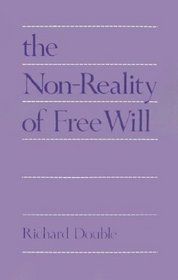
The traditional disputants in the free will discussion–the libertarian, soft determinist, and hard determinist–agree that free will is a coherent concept, while disagreeing on how the concept might be satisfied and whether it can, in fact, be satisfied. In this innovative analysis, Richard Double offers a bold new argument, rejecting all of the traditional theories and proposing that the concept of free will cannot be satisfied, no matter what the nature of reality. Arguing that there is unavoidable conflict within our understanding of moral responsibility and free choice, Double seeks to prove that when we ascribe responsibility, blame, or freedom, we merely express attitudes, rather than state anything capable of truth or falsity. Free will, he concludes, is essentially an incoherent notion.
“The Internet is often presented as an unsafe or untrustworthy space: where children are preyed upon by paedophiles, cannibals seek out victims, offline relationships are torn apart by online affairs and where individuals are addicted to gambling, love and cybersex.” “While many of these stories are grounded in truth, they do paint a rather sensationalised view of the Internet, the types of people who use it and the interactions that take place online. Simultaneously, researchers claim that the Internet allows individuals to express their true selves and to develop ‘hyperpersonal’ relationships characterised by high levels of intimacy and closeness. At the heart of these competing visions of the Internet as a social space are the issues of truth, lies and trust.” “This book offers a balanced view of the Internet by presenting empirical data conducted by social scientists, with a concentrated focus on psychological studies. It argues that the Internet’s anonymity, which can enable, for instance, high levels of self-disclosure in a relationship, is also responsible for many of its more negative outcomes such as deception and flaming. This is the first book to develop a coherent model of the truth-lies paradox, with specific reference to the critical role of trust.” “Truth, Lies and Trust on the Internet is a useful text for psychology students and academics interested in Internet behaviour, technology and online deviant behaviour and for related courses in sociology, media studies and information studies.”–BOOK JACKET.
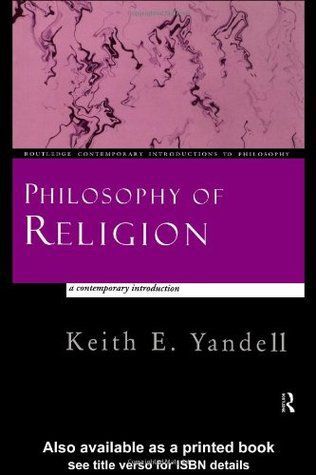
Philosophy of Religion provides an account of the central issues and viewpoints in the philosophy of religion but also shows how such issues can be rationally assessed and in what ways competing views can be rationally assessed. It includes major philosophical figures in religious traditions as well as discussions by important contemporary philosophers. Keith Yandell deals lucidly and constructively with representative views from Judaism, Christianity, Islam, Hinduism, Buddhism, and Jainism. This book will appeal to students of both philosophy and religion as well as to the general reader interested in the subject.Unique features of Philosophy of Religion: * key reading and new reading in the subject area* questions at the ends of chapters* a glossary of philosophical terms* annotated further reading
ما از اخلاق چه انتظاری داریم؟ این سوال شاید تاحدودی برای عموم مردم و یا متخصصان این رشته قابل پاسخ باشد؛ اینکه خوب بودن را به ما بیاموزد و در تنظیم روابط فردی م...

جشن کتاب تهران به ایستگاه سی و یکم رسیده است. حال و احوال نشر کتاب خوب نیست و باید فرهنگدوستان را به خرید و هدیه دادن کتاب ترغیب نمود. خانه اخلاقپژوهان جوان ب...

بنیاد کتابهای اخلاق اسلامی عمدتا پالایش جان از آلودگیها و آراستن آن به زیباییها است. اندیشه محوری این قبیل کتابها آن است که انسان فعلی آنی نیست که باید باشد...

-
0 Comments