



Notice: تابع WP_Block_Type_Registry::register به طورنادرست فراخوانی شد. نامهای نوع بلوک نباید حروف بزرگ داشته باشند. لطفاً برای اطلاعات بیشتر، اشکال زدایی در وردپرس را مشاهده کنید. (این پیام در نگارش 5.0.0 افزوده شده است.) in /home/ethicsho/public_html/wp-includes/functions.php on line 5313
Warning: Use of undefined constant TDC_PATH_LEGACY - assumed 'TDC_PATH_LEGACY' (this will throw an Error in a future version of PHP) in /home/ethicsho/public_html/wp-content/plugins/td-composer/td-composer.php on line 109
Warning: Use of undefined constant TDSP_THEME_PATH - assumed 'TDSP_THEME_PATH' (this will throw an Error in a future version of PHP) in /home/ethicsho/public_html/wp-content/plugins/td-composer/td-composer.php on line 113 بایگانیهای Philosophy - خانه اخلاق پژوهان جوان Notice: Trying to access array offset on value of type bool in /home/ethicsho/public_html/wp-content/plugins/wp-ulike/inc/general-functions.php on line 807
Liberal political justification is often accused of preaching to the converted: the values of such justification, it is claimed, are acceptable as values only to those already convinced by arguments in the secular, humanist Enlightenment tradition of political justification. This is the most taxing problem facing contemporary liberal theories of political justification. Catriona McKinnon suggests an interpretation of the ‘political constructivism’ approach to this problem offered by John Rawls. This interpretation argues that by placing the value of self-respect and its social conditions at the heart of the political constructivist approach to liberal justification, such justification can deliver on its promise to show why liberal principles of toleration and public reason are acceptable even to non-liberal people. A self-respect based constructivist approach to contemporary liberal justification restores to the liberal tradition the radical potential which it has always historically possessed.
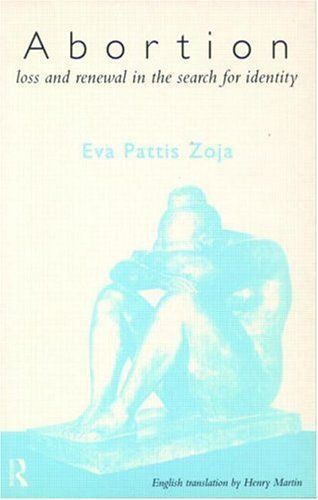
The debate on abortion has tended to avoid the psychological significance of an unwanted pregnancy, dominated instead by the strong emotions the subject excites. In this book Eva Pattis Zoja examines the thoughts and feelings that surround the decision to end a pregnancy, through the dreams, diary entries and reports of the women themselves. Abortionproposes the controversial thesis that although contraception is so readily available that the occurrence of unwanted pregnancy should become nil, abortion has now become a rite of passage in womanhood. While acknowledging the painful nature of the subject, the author suggests that this decision to abort as a way to development is one beyond the explanation of modern, enlightened rationalism.
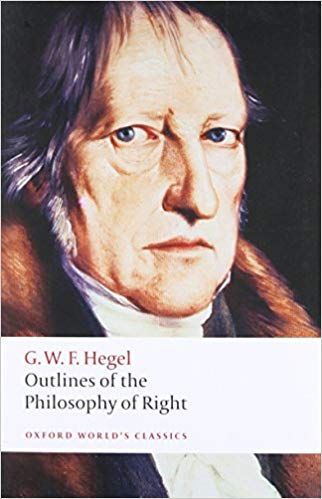
Hegel’s Outlines of the Philosophy of Right is one of the greatest works of moral, social, and political philosophy. It contains significant ideas on justice, moral responsibility, family life, economic activity, and the political structure of the state–all matters of profound interest to us today. Hegel shows that genuine human freedom does not consist in doing whatever we please, but involves living with others in accordance with publicly recognized rights and laws. Hegel demonstrates that institutions such as the family and the state provide the context in which individuals can flourish and enjoy full freedom. He also demonstrates that misunderstanding the true nature of freedom can lead to crime, evil, and poverty. His penetrating analysis of the causes of poverty in modern civil society was to be a great influence on Karl Marx. Hegel’s study remains one of the most subtle and perceptive accounts of freedom that we possess, and this newly revised translation makes it more accessible than ever. This edition incorporates Hegel’s lecture notes within the text and provides a glossary of key terms, up-to-date bibliography, and invaluable notes.Stephen Houlgate is Professor of Philosophy, University of Warwick and is the author of Hegel, Nietzsche and the Criticism of Metaphysics; An Introduction to Hegel: Freedom, Truth and History; and The Opening of Hegel’s Logic: From Being to Infinity.
There has been a consistent interest in ethical issues arising in the context of HIV research. Ongoing international and multi-site studies and the continuing search for an HIV vaccine continue to prompt examination of how this research is conducted, how participants are engaged in the studies, and the obligations of the researchers to individual participants and their communities during the course of and following the conclusion of the research. Each chapter is authored primarily by one of the editors (secondarily by the other) and is accompanied by one to two case studies. Each case study has been authored by an HIV/AIDS researcher with experience in the subject matter of the chapter. The case studies will focus on an actual ethical dilemma encountered by the researcher, with suggestions on how it can be resolved. Each chapter addresses relevant issues and emphasizes particular ethical principles.
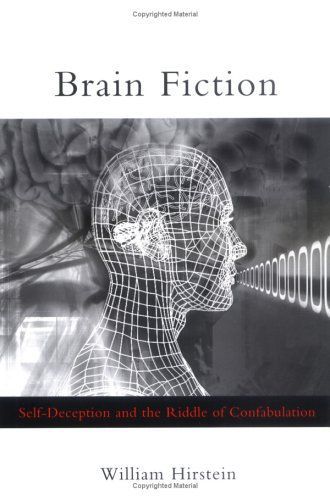
CHOICE Outstanding Academic Title for 2005Some neurological patients exhibit a striking tendency to confabulate—to construct false answers to a question while genuinely believing that they are telling the truth. A stroke victim, for example, will describe in detail a conference he attended over the weekend when in fact he has not left the hospital. Normal people, too, sometimes have a tendency to confabulate; rather than admitting “I don’t know,” some people will make up an answer or an explanation and express it with complete conviction. In Brain Fiction, William Hirstein examines confabulation and argues that its causes are not merely technical issues in neurology or cognitive science but deeply revealing about the structure of the human intellect.Hirstein describes confabulation as the failure of a normal checking or censoring process in the brain—the failure to recognize that a false answer is fantasy, not reality. Thus, he argues, the creative ability to construct a plausible-sounding response and some ability to check that response are separate in the human brain. Hirstein sees the dialectic between the creative and checking processes—”the inner dialogue”—as an important part of our mental life. In constructing a theory of confabulation, Hirstein integrates perspectives from different fields, including philosophy, neuroscience, and psychology to achieve a natural mix of conceptual issues usually treated by philosophers with purely empirical issues; information about the distribution of certain blood vessels in the prefrontal lobes of the brain, for example, or the behavior of split-brain patients can shed light on the classic questions of philosophy of mind, including questions about the function of consciousness. This first book-length study of confabulation breaks ground in both philosophy and cognitive science.
ما از اخلاق چه انتظاری داریم؟ این سوال شاید تاحدودی برای عموم مردم و یا متخصصان این رشته قابل پاسخ باشد؛ اینکه خوب بودن را به ما بیاموزد و در تنظیم روابط فردی م...

جشن کتاب تهران به ایستگاه سی و یکم رسیده است. حال و احوال نشر کتاب خوب نیست و باید فرهنگدوستان را به خرید و هدیه دادن کتاب ترغیب نمود. خانه اخلاقپژوهان جوان ب...

بنیاد کتابهای اخلاق اسلامی عمدتا پالایش جان از آلودگیها و آراستن آن به زیباییها است. اندیشه محوری این قبیل کتابها آن است که انسان فعلی آنی نیست که باید باشد...

-
0 Comments