Notice: تابع WP_Block_Type_Registry::register به طورنادرست فراخوانی شد. نامهای نوع بلوک نباید حروف بزرگ داشته باشند. لطفاً برای اطلاعات بیشتر، اشکال زدایی در وردپرس را مشاهده کنید. (این پیام در نگارش 5.0.0 افزوده شده است.) in /home/ethicsho/public_html/wp-includes/functions.php on line 5313
Warning: Use of undefined constant TDC_PATH_LEGACY - assumed 'TDC_PATH_LEGACY' (this will throw an Error in a future version of PHP) in /home/ethicsho/public_html/wp-content/plugins/td-composer/td-composer.php on line 109
Warning: Use of undefined constant TDSP_THEME_PATH - assumed 'TDSP_THEME_PATH' (this will throw an Error in a future version of PHP) in /home/ethicsho/public_html/wp-content/plugins/td-composer/td-composer.php on line 113 بایگانیهای Internet - Psychological Aspects - خانه اخلاق پژوهان جوان Notice: Trying to access array offset on value of type bool in /home/ethicsho/public_html/wp-content/plugins/wp-ulike/inc/general-functions.php on line 807
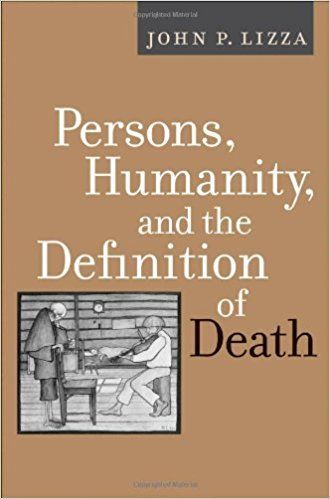
In this riveting and timely work, John P. Lizza presents the first comprehensive analysis of personhood and humanity in the context of defining death. Rejecting the common assumption that human or personal death is simply a biological phenomenon for biologists or physicians to define, Lizza argues that the definition of death is also a matter for metaphysical reflection, moral choice, and cultural acceptance. Lizza maintains that defining death remains problematic because basic ontological, ethical, and cultural issues have never been adequately addressed. Advances in life-sustaining technology and organ transplantation have led to revision of the legal definition of death. It is generally accepted that death occurs when all functions of the brain have ceased. However, legal and clinical cases involving postmortem pregnancy, individuals in permanent vegetative state, those with anencephaly, and those with severe dementia challenge the neurological criteria. Is “brain death” really death? Should the neurological criteria be expanded to include individuals in permanent vegetative state, with anencephaly, and those with severe dementia? What metaphysical, ethical, and cultural considerations are relevant to answering such questions? Although Lizza accepts a pluralistic approach to the legal definition of death, he proposes a nonreductive, substantive view in which persons are understood as “constituted by” human organisms. This view, he argues, provides the best account of human nature as biological, moral, and cultural and supports a consciousness-related formulation of death. Through an analysis of legal and clinical cases and a discussion of alternative concepts of personhood, Lizza casts greater light on the underlying themes of a complex debate.
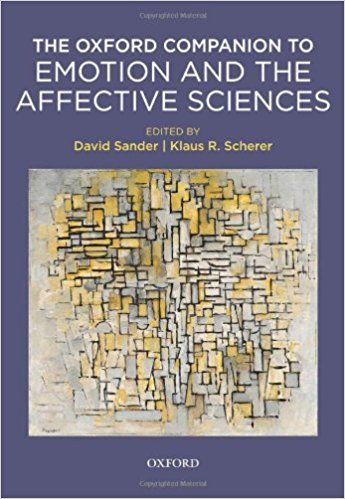
Few areas have witnessed the type of growth we have seen in the affective sciences in the past decades. Across psychology, philosophy, economics, and neuroscience, there has been an explosion of interest in the topic of emotion and affect. Comprehensive, authoritative, up-to-date, and easy-to-use, the new Oxford Companion to Emotion and the Affective Sciences is an indispensable resource for all who wish to find out about theories, concepts, methods, and research findings in this rapidly growing interdisciplinary field – one that brings together, amongst others, psychologists, neuroscientists, social scientists, philosophers, and historians. Organized by alphabetical entries, and presenting brief definitions, conciseoverviews, and encyclopaedic articles (all with extensive references to relevant publications), this Companion lends itself to casual browsing by non-specialists interested in the fascinating phenomena of emotions, moods, affect disorders, and personality as well as to focused search for pertinent information bystudents and established scholars in the field.Not only does the book provide entries on affective phenomena, but also on their neural underpinnings, their cognitive antecedents and the associated responses in physiological systems, facial, vocal, and bodily expressions, and action tendencies. Numerous entries also consider the role of emotion in society and social behavior, as well as in cognitive processes such as those critical for perception, attention, memory, judgement and decision-making.The volume has been edited by a group of internationally leading authorities in the respective disciplines consisting of two editors (David Sander and Klaus Scherer) as well as group of 11 associate editors (John T. Cacioppo, Tim Dalgleish, Robert Dantzer, Richard J. Davidson, Ronald B. de Sousa, Phoebe C. Ellsworth, Nico Frijda, George Loewenstein, Paula M. Niedenthal, Peter Salovey, and Richard A. Shweder). The members of the editorial board have commissioned and reviewed contributions frommajor experts on specific topics.In addition to comprehensive coverage of technical terms and fundamental issues, the volume also highlights current debates that inform the ongoing research process. In addition, the Companion contains a wealth of material on the role of emotion in applied domains such as economic behaviour, music and arts, work and organizational behaviour, family interactions and group dynamics, religion, law and justice, and societal change.Highly accessible and wide-ranging, this book is a vital resource for scientists, students, and professionals eager to obtain a rapid, conclusive overview on central terms and topics and anyone wanting to learn more about the mechanisms underlying the emotions dominating many aspects of our lives.
“Dimensions of Moral Theory “examines the key presuppositions and philosophical commitments that support and shape moral theories. Many of the topics discussed belong to “metaethics,” the study of moral concepts, language, and thought rather than a study of moral issues themselves. Other topics are under the heading of “moral psychology” and concern fundamental issues about the nature of moral agents, moral motivation, and the roles of reason, desire, and pleasure in moral action and experience. The book introduces metaethical and moral psychological positions and arguments and shows how they are generated and why they are important. It thereby brings to light some of the most important philosophical problems raised by moral theorizing.This volume formulates these issues of moral epistemology, the metaphysics of moral value, and moral motivation in a clear and rigorous but non-technical manner.
ما از اخلاق چه انتظاری داریم؟ این سوال شاید تاحدودی برای عموم مردم و یا متخصصان این رشته قابل پاسخ باشد؛ اینکه خوب بودن را به ما بیاموزد و در تنظیم روابط فردی م...

جشن کتاب تهران به ایستگاه سی و یکم رسیده است. حال و احوال نشر کتاب خوب نیست و باید فرهنگدوستان را به خرید و هدیه دادن کتاب ترغیب نمود. خانه اخلاقپژوهان جوان ب...

بنیاد کتابهای اخلاق اسلامی عمدتا پالایش جان از آلودگیها و آراستن آن به زیباییها است. اندیشه محوری این قبیل کتابها آن است که انسان فعلی آنی نیست که باید باشد...

-
0 Comments