Notice: تابع WP_Block_Type_Registry::register به طورنادرست فراخوانی شد. نامهای نوع بلوک نباید حروف بزرگ داشته باشند. لطفاً برای اطلاعات بیشتر، اشکال زدایی در وردپرس را مشاهده کنید. (این پیام در نگارش 5.0.0 افزوده شده است.) in /home/ethicsho/public_html/wp-includes/functions.php on line 5313
Warning: Use of undefined constant TDC_PATH_LEGACY - assumed 'TDC_PATH_LEGACY' (this will throw an Error in a future version of PHP) in /home/ethicsho/public_html/wp-content/plugins/td-composer/td-composer.php on line 109
Warning: Use of undefined constant TDSP_THEME_PATH - assumed 'TDSP_THEME_PATH' (this will throw an Error in a future version of PHP) in /home/ethicsho/public_html/wp-content/plugins/td-composer/td-composer.php on line 113 بایگانیهای 2798 - خانه اخلاق پژوهان جوان Notice: Trying to access array offset on value of type bool in /home/ethicsho/public_html/wp-content/plugins/wp-ulike/inc/general-functions.php on line 807
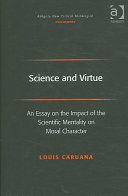
Charting new territory in the interface between science and ethics, Science and Virtue is a study of how the scientific mentality can affect the building of character, or the attainment of virtue by the individual. Drawing on inspiration from virtue-ethics and virtue-epistemology, Caruana argues that science is not just a system of knowledge but also an important factor determining a way of life.This book goes beyond the normal strategy evident in the science-ethics realm of examining specific ethical dilemmas posed by scientific innovations. Here Caruana deals with more fundamental issues, uncovering morally significant tendencies within the very core of the scientific mentality and explaining how science, its method, history and explanatory power can shape a conception of the good life.
Social Motivation, Justice, and the Moral Emotions proposes an attribution theory of interpersonal or social motivation that distinguishes between the role of thinking and feeling in determining action. The place of this theory within the larger fields of motivation and attributional analyses is explored. It features new thoughts concerning social motivation on such topics as help giving, aggression, achievement evaluation, compliance to commit a transgression, as well as new contributions to the understanding of social justice. Included also is material on moral emotions, with discussions of admiration, contempt, envy, gratitude, and other affects not considered in Professor Weiner’s prior work. The text also contains previously unexamined topics regarding social inferences of arrogance and modesty and the role of mediators versus moderators in theory building. Divided into five chapters, this book: *Considers the logical development and structure of a proposed theory of social motivation and justice; *Reviews meta-analytic tests of the theory within the contexts of help giving and aggression and examines issues related to cultural and individual differences; *Focuses on moral emotions including an analysis of admiration, envy, gratitude, jealousy, scorn, and others; *Discusses conditions where reward decreases motivation while punishment augments strivings; and *Provides applications that are beneficial in the classroom, in therapy, and in training programs. Social Motivation, Justice, and the Moral Emotions appeals to practicing and research psychologists and advanced students in a variety of fields including social, educational, personality, political/legal, health, and clinical psychology. It will also serve as a supplement in courses on motivational psychology, emotion and motivation, altruism and/or pro-social behavior, aggression, social judgment, and morality. Also included is the raw material (e.g., questionnaires, surveys, etc.) for 13 experiments relating to core predictions of the proposed attribution theory.
This book by womenrepresents a diversity of opinions about every aspect of forgiveness, embodying a tolerance for differing perspectives. The contributors are researchers and therapists who have dedicated themselves to grappling with the controversies and conundrums associated with forgiveness. On the basis of their clinical and empirical work in the field, the authors have questioned established definitions, opposed emerging “truisms” within the field, and used research methods that run counter to traditional practices. The result is a compelling collection of research and clinical wisdom that pushes us to consider new perspectives on the mysterious process of forgiveness.
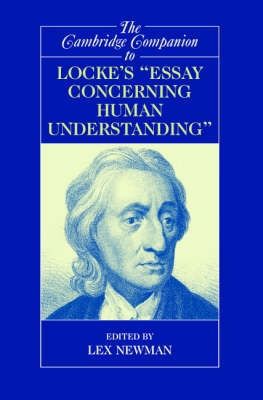
First published in 1689, John Locke’s Essay Concerning Human Understanding is widely recognised as among the greatest works in the history of Western philosophy. The Essay puts forward a systematic empiricist theory of mind, detailing how all ideas and knowledge arise from sense experience. Locke was trained in mechanical philosophy and he crafted his account to be consistent with the best natural science of his day. The Essay was highly influential and its rendering of empiricism would become the standard for subsequent theorists. This Companion volume includes fifteen new essays from leading scholars. Covering the major themes of Locke’s work, they explain his views while situating the ideas in the historical context of Locke’s day and often clarifying their relationship to ongoing work in philosophy. Pitched to advanced undergraduates and graduate students, it is ideal for use in courses on early modern philosophy, British empiricism and John Locke.
ما از اخلاق چه انتظاری داریم؟ این سوال شاید تاحدودی برای عموم مردم و یا متخصصان این رشته قابل پاسخ باشد؛ اینکه خوب بودن را به ما بیاموزد و در تنظیم روابط فردی م...

جشن کتاب تهران به ایستگاه سی و یکم رسیده است. حال و احوال نشر کتاب خوب نیست و باید فرهنگدوستان را به خرید و هدیه دادن کتاب ترغیب نمود. خانه اخلاقپژوهان جوان ب...

بنیاد کتابهای اخلاق اسلامی عمدتا پالایش جان از آلودگیها و آراستن آن به زیباییها است. اندیشه محوری این قبیل کتابها آن است که انسان فعلی آنی نیست که باید باشد...

-
0 Comments