
Notice: تابع WP_Block_Type_Registry::register به طورنادرست فراخوانی شد. نامهای نوع بلوک نباید حروف بزرگ داشته باشند. لطفاً برای اطلاعات بیشتر، اشکال زدایی در وردپرس را مشاهده کنید. (این پیام در نگارش 5.0.0 افزوده شده است.) in /home/ethicsho/public_html/wp-includes/functions.php on line 5313
Warning: Use of undefined constant TDC_PATH_LEGACY - assumed 'TDC_PATH_LEGACY' (this will throw an Error in a future version of PHP) in /home/ethicsho/public_html/wp-content/plugins/td-composer/td-composer.php on line 109
Warning: Use of undefined constant TDSP_THEME_PATH - assumed 'TDSP_THEME_PATH' (this will throw an Error in a future version of PHP) in /home/ethicsho/public_html/wp-content/plugins/td-composer/td-composer.php on line 113 بایگانیهای Science - Moral And Ethical Aspects - خانه اخلاق پژوهان جوان Notice: Trying to access array offset on value of type bool in /home/ethicsho/public_html/wp-content/plugins/wp-ulike/inc/general-functions.php on line 807
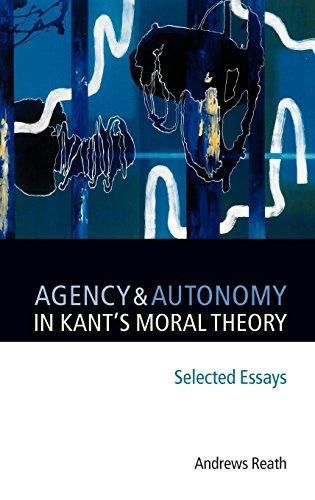
Andrews Reath presents a selection of his best essays on various features of Kant’s moral psychology and moral theory, with particular emphasis on his conception of rational agency and his conception of autonomy. Together the essays articulate Reath’s original approach to Kant’s views about human autonomy, which explains Kant’s belief that objective moral requirements are based on principles we choose for ourselves. With two new papers, and revised versions of several others, the volume will be of great interest to all students and scholars of Kant and of moral philosophy.
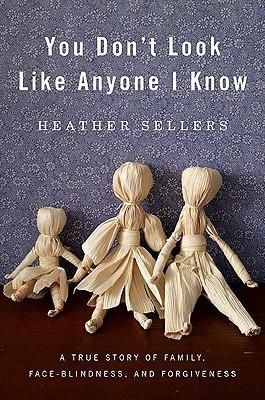
An unusual and uncommonly moving family memoir, with a twist that give new meaning to hindsight, insight, and forgiveness. Heather Sellers is face-blind-that is, she has prosopagnosia, a rare neurological condition that prevents her from reliably recognizing people’s faces. Growing up, unaware of the reason for her perpetual confusion and anxiety, she took what cues she could from speech, hairstyle, and gait. But she sometimes kissed a stranger, thinking he was her boyfriend, or failed to recognize even her own father and mother. She feared she must be crazy. Yet it was her mother who nailed windows shut and covered them with blankets, made her daughter walk on her knees to spare the carpeting, had her practice secret words to use in the likely event of abduction. Her father went on weeklong “fishing trips” (aka benders), took in drifters, wore panty hose and bras under his regular clothes. Heather clung to a barely coherent story of a “normal” childhood in order to survive the one she had. That fairy tale unraveled two decades later when Heather took the man she would marry home to meet her parents and began to discover the truth about her family and about herself. As she came at last to trust her own perceptions, she learned the gift of perspective: that embracing the past as it is allows us to let it go. And she illuminated a deeper truth-that even in the most flawed circumstances, love may be seen and felt.
Must good deeds be rewarded and wrongdoers punished? Would God be unjust if He failed to punish and reward? And what is it about good or evil actions and moral identity that might generate such necessities? These were some of the vital religious and philosophical questions that eighth- and ninth-century Mu’tazilite theologians and their sophisticated successors attempted to answer, giving rise to a distinctive ethical position and one of the most prominent and controversial intellectual trends in medieval Islam. The Mu’tazilites developed a view of ethics whose distinguishing features were its austere moral objectivism and the crucial role it assigned to reason in the knowledge of moral truths. Central to this ethical vision was the notion of moral desert, and of the good and evil consequences–reward or punishment–deserved through a person’s acts. Moral Agents and Their Desertsis the first book-length study of this central theme in Mu’tazilite ethics, and an attempt to grapple with the philosophical questions it raises. At the same time, it is a bid to question the ways in which modern readers, coming to medieval Islamic thought with a philosophical interest, seek to read and converse with Mu’tazilite theology.Moral Agents and Their Desertstracks the challenges and rewards involved in the pursuit of the right conversation at the seams between modern and medieval concerns.
Philippa Foot has for many years been one of the most distinctive and influential thinkers in moral philosophy. Long dissatisfied with the moral theories of her contemporaries, she has gradually evolved a theory of her own that is radically opposed not only to emotivism and prescriptivism but also to the whole subjectivist, anti-naturalist movement deriving from David Hume. Dissatisfied with both Kantian and utilitarian ethics, she claims to have isolated a special form of evaluation that predicates goodness and defect only to living things considered as such; she finds this form of evaluation in moral judgements. Her vivid discussion covers topics such as practical rationality, erring conscience, and the relation between virtue and happiness, ending with a critique of Nietzsche’s immoralism. This long-awaited book exposes a highly original approach to moral philosophy and represents a fundamental break from the assumptions of recent debates. Foot challenges many prominent philosophical arguments and attitudes; but hers is a work full of life and feeling, written for anyone intrigued by the deepest questions about goodness and human.
ما از اخلاق چه انتظاری داریم؟ این سوال شاید تاحدودی برای عموم مردم و یا متخصصان این رشته قابل پاسخ باشد؛ اینکه خوب بودن را به ما بیاموزد و در تنظیم روابط فردی م...

جشن کتاب تهران به ایستگاه سی و یکم رسیده است. حال و احوال نشر کتاب خوب نیست و باید فرهنگدوستان را به خرید و هدیه دادن کتاب ترغیب نمود. خانه اخلاقپژوهان جوان ب...

بنیاد کتابهای اخلاق اسلامی عمدتا پالایش جان از آلودگیها و آراستن آن به زیباییها است. اندیشه محوری این قبیل کتابها آن است که انسان فعلی آنی نیست که باید باشد...

-
0 Comments