Notice: تابع WP_Block_Type_Registry::register به طورنادرست فراخوانی شد. نامهای نوع بلوک نباید حروف بزرگ داشته باشند. لطفاً برای اطلاعات بیشتر، اشکال زدایی در وردپرس را مشاهده کنید. (این پیام در نگارش 5.0.0 افزوده شده است.) in /home/ethicsho/public_html/wp-includes/functions.php on line 5313
Warning: Use of undefined constant TDC_PATH_LEGACY - assumed 'TDC_PATH_LEGACY' (this will throw an Error in a future version of PHP) in /home/ethicsho/public_html/wp-content/plugins/td-composer/td-composer.php on line 109
Warning: Use of undefined constant TDSP_THEME_PATH - assumed 'TDSP_THEME_PATH' (this will throw an Error in a future version of PHP) in /home/ethicsho/public_html/wp-content/plugins/td-composer/td-composer.php on line 113 بایگانیهای Philosophy / Political - صفحه 4 از 4 - خانه اخلاق پژوهان جوان Notice: Trying to access array offset on value of type bool in /home/ethicsho/public_html/wp-content/plugins/wp-ulike/inc/general-functions.php on line 807
Thomas Aquinas is one of the foremost thinkers in Western philosophy and Christian scholarship, recognized as a significant voice in both theological discussions and secular philosophical debates. Alongside a revival of interest in Thomism in philosophy, scholars have realized its relevance when addressing certain contemporary issues in bioethics. This book offers a rigorous interpretation of Aquinas’s metaphysics and ethical thought, and highlights its significance to questions in bioethics. Jason T. Eberl applies Aquinas’s views on the seminal topics of human nature and morality to key questions in bioethics at the margins of human life – questions which are currently contested in the academia, politics and the media such as: * When does a human person’s life begin? How should we define and clinically determine a person’s death? * Is abortion ever morally permissible? How should we resolve the conflict between the potential benefits of embryonic stem cell research and the lives ofhuman embryos? * Does cloning involve a misuse of human ingenuity and technology? * What forms of treatment are appropriate for irreversibly comatose patients? How should we care for patients who experience unbearable suffering as they approach the end of life? * What ethical mandates and concerns underlie the practice of organ donation? Thomistic Principles and Bioethicspresents a significant philosophical viewpoint which should motivate further dialogue amongst religious and secular arenas of inquiry concerning such complex issues of both individual and public concern. It will be illuminating reading for scholars, postgraduate and research students of philosophy, metaphysics, ethics, bioethics and moral theology.
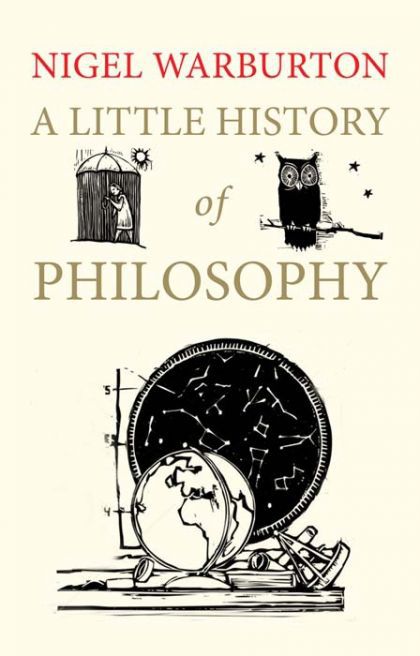
Philosophy begins with questions about the nature of reality and how we should live. These were the concerns of Socrates, who spent his days in the ancient Athenian marketplace asking awkward questions, disconcerting the people he met by showing them how little they genuinely understood. This engaging book introduces the great thinkers in Western philosophy and explores their most compelling ideas about the world and how best to live in it.In forty brief chapters, Nigel Warburton guides us on a chronological tour of the major ideas in the history of philosophy. He provides interesting and often quirky stories of the lives and deaths of thought-provoking philosophers from Socrates, who chose to die by hemlock poisoning rather than live on without the freedom to think for himself, to Peter Singer, who asks the disquieting philosophical and ethical questions that haunt our own times.Warburton not only makes philosophy accessible, he offers inspiration to think, argue, reason, and ask in the tradition of Socrates. A Little History of Philosophy presents the grand sweep of humanity’s search for philosophical understanding and invites all to join in the discussion.
This book traces the development of Marx’s ethics as they underwent various shifts and changes during different periods of his thought. In his early writings, his ethics were based on a concept of essence much like Aristotle’s, which Marx tried to link to a principle of universalization similar to Kant’s “categorical imperative.” In the period 1845-46, Marx abandoned this view, holding morality to be incompatible with his historical materialism. In the later work he was less of a determinist. Though he no longer wished to reject morality, he did want to transcend a morality of burdensome obligation and constraint in order to realize a community built upon spontaneous bonds of solidarity.
ما از اخلاق چه انتظاری داریم؟ این سوال شاید تاحدودی برای عموم مردم و یا متخصصان این رشته قابل پاسخ باشد؛ اینکه خوب بودن را به ما بیاموزد و در تنظیم روابط فردی م...

جشن کتاب تهران به ایستگاه سی و یکم رسیده است. حال و احوال نشر کتاب خوب نیست و باید فرهنگدوستان را به خرید و هدیه دادن کتاب ترغیب نمود. خانه اخلاقپژوهان جوان ب...

بنیاد کتابهای اخلاق اسلامی عمدتا پالایش جان از آلودگیها و آراستن آن به زیباییها است. اندیشه محوری این قبیل کتابها آن است که انسان فعلی آنی نیست که باید باشد...

-
0 Comments