
Notice: تابع WP_Block_Type_Registry::register به طورنادرست فراخوانی شد. نامهای نوع بلوک نباید حروف بزرگ داشته باشند. لطفاً برای اطلاعات بیشتر، اشکال زدایی در وردپرس را مشاهده کنید. (این پیام در نگارش 5.0.0 افزوده شده است.) in /home/ethicsho/public_html/wp-includes/functions.php on line 5313
Warning: Use of undefined constant TDC_PATH_LEGACY - assumed 'TDC_PATH_LEGACY' (this will throw an Error in a future version of PHP) in /home/ethicsho/public_html/wp-content/plugins/td-composer/td-composer.php on line 109
Warning: Use of undefined constant TDSP_THEME_PATH - assumed 'TDSP_THEME_PATH' (this will throw an Error in a future version of PHP) in /home/ethicsho/public_html/wp-content/plugins/td-composer/td-composer.php on line 113 بایگانیهای Philosophy / Political - خانه اخلاق پژوهان جوان Notice: Trying to access array offset on value of type bool in /home/ethicsho/public_html/wp-content/plugins/wp-ulike/inc/general-functions.php on line 807
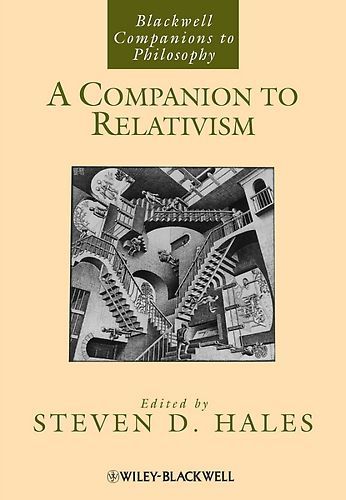
“Relativism is one of philosophy’s oldest — and most polarizing — concepts. It has captivated thinkers since the days of Protagoras (who supported the notion) and Plato (who did not). Relativism is assailed by popes as leading people away from absolute religious truths, and blamed by social commentators for many of society’s ills. With a few notable exceptions, 20th-century philosophers grew to dismiss relativism as an obviously mistaken or even self-refuting concept. But in the past decade, even its staunchest philosophical critics have come to realize that relativism is a legitimate option for explaining a variety of phenomena, including faultless disagreement, the utility of alternative logics, varieties of cross-cultural moralities, and differing ontological conceptual schemes. Reflecting this overdue reappraisal, A Companion to Relativism presents the latest thinking on the role of relativism in the philosophy of language, epistemology, ethics, philosophy of science, logic, and metaphysics. Original contributions to this volume feature cutting edge thinking from a variety of eminent scholars who approach relativism from various perspectives and philosophical subfields”–
This volume collects a wealth of articles covering a range of topics of practical concern in the field of ethics, including active and passive euthanasia, abortion, organ transplants, capital punishment, the consequences of human actions, slavery, overpopulation, the separate spheres of men and women, animal rights, and game theory and the nuclear arms race. The contributors are Thomas Nagel, David Hume, James Rachels, Judith Jarvis Thomson, Michael Tooley, John Harris, John Stuart Mill, Louis Pascal, Jonathan Glover, Derek Parfit, R.M. Hare, Janet Radcliffe Richards, Peter Singer, and Nicholas Measor.
Between the Civil War and the early decades of the eighteenth century, English poets of the first rank devoted more of their time and creative energies to translating than they had ever done before or have ever done since. Paul Davis’s Translation and the Poet’s Life is the first study to range across the entirety of this golden age of poetic translation in England, taking as its organizing principle and object of inquiry the significances of translating itself as a distinctive mode of imaginative conduct. Composed of case studies of the five leading poet-translators of the age – John Denham, Henry Vaughan, Abraham Cowley, John Dryden, and Alexander Pope – it explores the part translation played in their lives as poets and thence in modelling ‘the poet’s life’ during what was a period of transition between early-modern and modern constructions of it. The argumentative method of the book is metaphorical. Each chapter explores the impact on the theory and practice of the poet at issue of a metaphor or group of metaphors broadly current in contemporary translation discourse: in particular, figurations of the translator as an exile, as a child, as a code-breaker, and as a slave; and comparisons of translation to friendship, sexual congress, metamorphosis and trade. The majority of these metaphors were wholly or potentially pejorative: translation remained a controversial practice throughout this period, widely depreciated and stigmatized. Turning translator accordingly forced the five major poets considered in Translation and the Poet’s Life to undertake strenuous efforts of self-inquiry and self-presentation; to find new answers to questions integral to their understandings of themselves and their standing in their culture: questions about vocation and career, fame and happiness, responsibility and freedom. Translation and the Poet’s Life tells the stories of these personal and public remakings.
Authored by some of the most preeminent Renaissance scholars active today, the essays of this volume give fresh and illuminating analyses of important aspects of Renaissance humanism, such as the time and causes of its origin, its connection to the papal court and medieval traditions, its classical learning, its religious and literary dimensions, and its dramatis personae. Their interpretations are varied to the point of being contradictory. The essays bear the imprint of the work of the eminent scholars of the second half of the twentieth century, especially Kristeller’s, and demonstrate an awareness of the various modes of critical inquiry that have prevailed in recent years. As such they are an important exemplar of current scholarship on Renaissance humanism and are, therefore, indispensable to the scholar who wishes to explore this pivotal cultural movement. Book jacket.
ما از اخلاق چه انتظاری داریم؟ این سوال شاید تاحدودی برای عموم مردم و یا متخصصان این رشته قابل پاسخ باشد؛ اینکه خوب بودن را به ما بیاموزد و در تنظیم روابط فردی م...

جشن کتاب تهران به ایستگاه سی و یکم رسیده است. حال و احوال نشر کتاب خوب نیست و باید فرهنگدوستان را به خرید و هدیه دادن کتاب ترغیب نمود. خانه اخلاقپژوهان جوان ب...

بنیاد کتابهای اخلاق اسلامی عمدتا پالایش جان از آلودگیها و آراستن آن به زیباییها است. اندیشه محوری این قبیل کتابها آن است که انسان فعلی آنی نیست که باید باشد...

-
0 Comments