

Notice: تابع WP_Block_Type_Registry::register به طورنادرست فراخوانی شد. نامهای نوع بلوک نباید حروف بزرگ داشته باشند. لطفاً برای اطلاعات بیشتر، اشکال زدایی در وردپرس را مشاهده کنید. (این پیام در نگارش 5.0.0 افزوده شده است.) in /home/ethicsho/public_html/wp-includes/functions.php on line 5313
Warning: Use of undefined constant TDC_PATH_LEGACY - assumed 'TDC_PATH_LEGACY' (this will throw an Error in a future version of PHP) in /home/ethicsho/public_html/wp-content/plugins/td-composer/td-composer.php on line 109
Warning: Use of undefined constant TDSP_THEME_PATH - assumed 'TDSP_THEME_PATH' (this will throw an Error in a future version of PHP) in /home/ethicsho/public_html/wp-content/plugins/td-composer/td-composer.php on line 113 بایگانیهای Oxford University Press - صفحه 36 از 36 - خانه اخلاق پژوهان جوان Notice: Trying to access array offset on value of type bool in /home/ethicsho/public_html/wp-content/plugins/wp-ulike/inc/general-functions.php on line 807
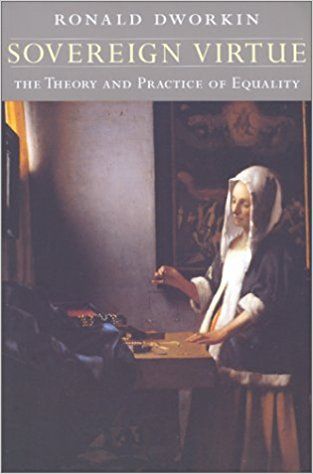
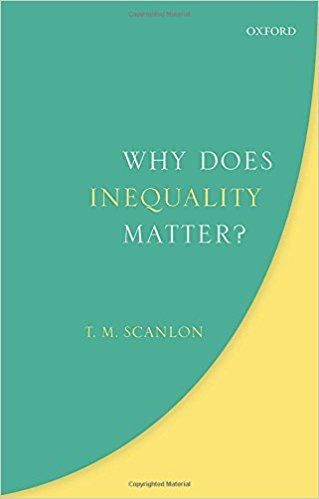
Equality is the endangered species of political ideals. Even left-of-center politicians reject equality as an ideal: government must combat poverty, they say, but need not strive that its citizens be equal in any dimension. In his new book Ronald Dworkin insists, to the contrary, that equality is the indispensable virtue of democratic sovereignty. A legitimate government must treat all its citizens as equals, that is, with equal respect and concern, and, since the economic distribution that any society achieves is mainly the consequence of its system of law and policy, that requirement imposes serious egalitarian constraints on that distribution. What distribution of a nation’s wealth is demanded by equal concern for all? Dworkin draws upon two fundamental humanist principles–first, it is of equal objective importance that all human lives flourish, and second, each person is responsible for defining and achieving the flourishing of his or her own life–to ground his well-known thesis that true equality means equality in the value of the resources that each person commands, not in the success he or she achieves. Equality, freedom, and individual responsibility are therefore not in conflict, but flow from and into one another as facets of the same humanist conception of life and politics. Since no abstract political theory can be understood except in the context of actual and complex political issues, Dworkin develops his thesis by applying it to heated contemporary controversies about the distribution of health care, unemployment benefits, campaign finance reform, affirmative action, assisted suicide, and genetic engineering.
Why does society allow, or even encourage, private appropriation of inventions? When do patents encourage competition, when do they hamper it? How should society design the compromise between the interest of the inventor and the interest of the users of patented inventions? How should the patent system adapt to new technological areas? These questions and many more are addressed by the authors in this groundbreaking analysis of the economics behind the European patent system. Beginning with the history and principles of the patent system, the book then examines the economic effects of patenting on innovation and the diffusion of technology and growth. Throughout the book the theory and the reality are discussed alongside real world examples and comparison between the European, USA, and Japanese patent systems.
This volume reflects on the effects of recent discoveries in genetics on a broad range of scientific fields. In addition to neuroscience, evolutionary biology, anthropology and medicine, contributors analyze the effects of genetics on theories of health, law, epistemology and philosophy of biology. Social and moral concerns about the relationship between genetics, society and the individual also figure prominently. Genetic discoveries fuel central contemporary public policy debates concerning, for example, human cloning, equitable access to healthcare or the role of genetics in medicine. Perhaps more fundamentally, advances in genetics are altering our perception of human life and death.An interview with François Jacob by Anne Fagot-Largeault opens the volume. In this interview, Jacob, who shared a Nobel Prize with André Lwoff and Jacques Monod for their discoveries concerning genetic control of enzyme and virus synthesis, addresses many of the central methodological epistemological and ethical questions covered in the volume. The dynamic interdisciplinary character of this volume makes it relevant to scholars from many disciplines, from biology, philosophy and the social sciences.
This book is the first comprehensive study of Rousseau’s rich and complex theory of the type of self-love (amour propre ) that, for him, marks the central difference between humans and the beasts. Amour propre is the passion that drives human individuals to seek the esteem, approval, admiration, or love–the recognition –of their fellow beings. Neuhouser reconstructs Rousseau’s understanding of what the drive for recognition is, why it is so problematic, and how its presence opens up far-reaching developmental possibilities for creatures that possess it. One of Rousseau’s central theses is that amour propre in its corrupted, manifestations–pride or vanity–is the principal source of an array of evils so widespread that they can easily appear to be necessary features of the human condition: enslavement, conflict, vice, misery, and self-estrangement. Yet Rousseau also argues that solving these problems depends not on suppressing or overcoming the drive for recognition but on cultivating it so that it contributes positively to the achievement of freedom, peace, virtue, happiness, and unalienated selfhood. Indeed, Rousseau goes so far as to claim that, despite its many dangers, the need for recognition is a condition of nearly everything that makes human life valuable and that elevates it above mere animal existence: rationality, morality, freedom–subjectivity itself–would be impossible for humans if it were not for amour propre and the relations to others it impels us to establish.
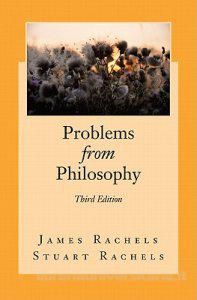
Problems from Philosophy is an introduction to philosophy which is organized around the great philosophical problems—the existence of God, the nature of the mind, human freedom, the limits of knowledge, and the truth about ethics. It begins by reflecting on the life of the first great philosopher, Socrates. Then it takes up the fundamental question of whether God exists. Next comes a discussion of death and the soul, which leads to a chapter about persons. The later chapters of the book are about whether objective knowledge is possible in science and ethics. Each chapter is self-contained and may be read independently of the others. Problems from Philosophy represents the final work of author and philosopher James Rachels. In it, he brings the same liveliness and clarity to the introduction of philosophy that he brings to his best-selling ethics text, The Elements of Moral Philosophy. The second and third edition have been revised by Rachels’ son Stuart, who carefully has carefully refined his father’s work to further strengthen its clarity and accessibility.
ما از اخلاق چه انتظاری داریم؟ این سوال شاید تاحدودی برای عموم مردم و یا متخصصان این رشته قابل پاسخ باشد؛ اینکه خوب بودن را به ما بیاموزد و در تنظیم روابط فردی م...

جشن کتاب تهران به ایستگاه سی و یکم رسیده است. حال و احوال نشر کتاب خوب نیست و باید فرهنگدوستان را به خرید و هدیه دادن کتاب ترغیب نمود. خانه اخلاقپژوهان جوان ب...

بنیاد کتابهای اخلاق اسلامی عمدتا پالایش جان از آلودگیها و آراستن آن به زیباییها است. اندیشه محوری این قبیل کتابها آن است که انسان فعلی آنی نیست که باید باشد...

-
0 Comments