Notice: تابع WP_Block_Type_Registry::register به طورنادرست فراخوانی شد. نامهای نوع بلوک نباید حروف بزرگ داشته باشند. لطفاً برای اطلاعات بیشتر، اشکال زدایی در وردپرس را مشاهده کنید. (این پیام در نگارش 5.0.0 افزوده شده است.) in /home/ethicsho/public_html/wp-includes/functions.php on line 5313
Warning: Use of undefined constant TDC_PATH_LEGACY - assumed 'TDC_PATH_LEGACY' (this will throw an Error in a future version of PHP) in /home/ethicsho/public_html/wp-content/plugins/td-composer/td-composer.php on line 109
Warning: Use of undefined constant TDSP_THEME_PATH - assumed 'TDSP_THEME_PATH' (this will throw an Error in a future version of PHP) in /home/ethicsho/public_html/wp-content/plugins/td-composer/td-composer.php on line 113 بایگانیهای D810 .J4 .F72713 1985 - خانه اخلاق پژوهان جوان Notice: Trying to access array offset on value of type bool in /home/ethicsho/public_html/wp-content/plugins/wp-ulike/inc/general-functions.php on line 807
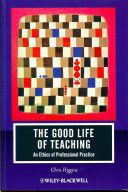
The Good Life of Teaching extends the recent revival of virtue ethics to professional ethics and the philosophy of teaching. It connects long-standing philosophical questions about work and human growth to questions about teacher motivation, identity, and development.Makes a significant contribution to the philosophy of teaching and also offers new insights into virtue theory and professional ethicsOffers fresh and detailed readings of major figures in ethics, including Alasdair MacIntyre, Charles Taylor, and Bernard Williams and the practical philosophies of Hannah Arendt, John Dewey and Hans-Georg GadamerProvides illustrations to assist the reader in visualizing major points, and integrates sources such as film, literature, and teaching memoirs to exemplify arguments in an engaging and accessible wayPresents a compelling vision of teaching as a reflective practice showing how this requires us to prepare teachers differently
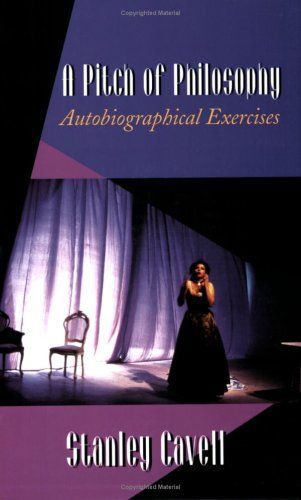
What is the pitch of philosophy? Something thrown, for us to catch? A lurch, meant to unsettle us? The relative position of a tone on a scale? A speech designed to persuade? This book is an invitation to the life of philosophy in the United States, as Emerson once lived it and as Stanley Cavell now lives it – in all its topographical ambiguity. Cavell talks about his vocation in connection with what he calls voice – the tone of philosophy – and his right to take that tone, and to describe an anecdotal journey toward the discovery of his own voice. Cavell asks how the voice of philosophy can be heard amid the commerce of everyday life. His autobiographical exercises begin at home with his parents, his father an accidental pawnbroker and accomplished raconteur, his mother a trained and talented musician. In the course of showing us his certain steps in the discovery of his trade, he conveys the sense of what it means to learn to walk on one’s own, with a Thoreauvian deliberateness. He pays suitableattention to a serious ally and antagonist to the task of philosophy as he understands it, namely, Jacques Derrida – yet Derrida has mounted a full-scale attack on “voice” and other concepts that Cavell has held open for much of a lifetime. The chapters are interwoven with intense family reminiscences in Cavell’s discovery of J. L. Austin, his understanding of Wittgenstein, his raising of Emerson to the philosophical canon, his fascination with film (images of women in a medium for women), the revelation that film and opera are the media of otherness for women. And the voice at the end: hearing in himself the voice of his mother, which is music. Complex, sentimental, witty, A Pitch ofPhilosophy is for anyone who cares to take on philosophy, under whatever name it goes.
‘It’s all relative’. In a world of increasing cultural diversity, it can seem that everything is indeed relative. But should we concede that there is no such thing as right and wrong, and no objective truth? Can we reconcile relativism and pluralism? Relativism surveys the different varieties of relativism and the arguments for and against them, and examines why relativism has survived for two thousand years despite all the criticisms levelled against it. Beginning with a historical overview of relativism, from Pythagoras in ancient Greece to Derrida and postmodernism, Maria Baghramian explores the resurgence of relativism throughout the history of philosophy. She then turns to the arguments for and against the many subdivisions of relativism, including Kuhn and Feyerabend’s ideas of relativism in science, Rorty’s relativism about truth, and the conceptual relativism of Quine and Putnam. Baghramian questions whether moral relativism leads to moral indifference or even nihilism, and whether feminist epistemology’s concerns about the very notion of objectivity can be considered a form of relativism. She concludes the relativism debate by assessing the recent criticisms such as Quine’s argument from translation and Davidson’s claim that even the motivations behind relativism are unintelligible. Finding these criticisms lacking, Baghramian proposes a moderate form of pluralism which addresses the legitimate worries that give rise to relativism without incurring charges of nihilism or anarchy. Relativism is essential reading for anyone interested in contemporary philosophy, sociology and politics.
ما از اخلاق چه انتظاری داریم؟ این سوال شاید تاحدودی برای عموم مردم و یا متخصصان این رشته قابل پاسخ باشد؛ اینکه خوب بودن را به ما بیاموزد و در تنظیم روابط فردی م...

جشن کتاب تهران به ایستگاه سی و یکم رسیده است. حال و احوال نشر کتاب خوب نیست و باید فرهنگدوستان را به خرید و هدیه دادن کتاب ترغیب نمود. خانه اخلاقپژوهان جوان ب...

بنیاد کتابهای اخلاق اسلامی عمدتا پالایش جان از آلودگیها و آراستن آن به زیباییها است. اندیشه محوری این قبیل کتابها آن است که انسان فعلی آنی نیست که باید باشد...

-
0 Comments