Notice: تابع WP_Block_Type_Registry::register به طورنادرست فراخوانی شد. نامهای نوع بلوک نباید حروف بزرگ داشته باشند. لطفاً برای اطلاعات بیشتر، اشکال زدایی در وردپرس را مشاهده کنید. (این پیام در نگارش 5.0.0 افزوده شده است.) in /home/ethicsho/public_html/wp-includes/functions.php on line 5313
Warning: Use of undefined constant TDC_PATH_LEGACY - assumed 'TDC_PATH_LEGACY' (this will throw an Error in a future version of PHP) in /home/ethicsho/public_html/wp-content/plugins/td-composer/td-composer.php on line 109
Warning: Use of undefined constant TDSP_THEME_PATH - assumed 'TDSP_THEME_PATH' (this will throw an Error in a future version of PHP) in /home/ethicsho/public_html/wp-content/plugins/td-composer/td-composer.php on line 113 بایگانیهای Informed Consent (Medical Law) - Great Britain - خانه اخلاق پژوهان جوان Notice: Trying to access array offset on value of type bool in /home/ethicsho/public_html/wp-content/plugins/wp-ulike/inc/general-functions.php on line 807
The philosophy of language is not an isolated philosophical discipline of merely technical interest to other philosophers. Rather, as Mark Platts shows, the philosophy of language can help to solve traditional problems in other areas of philosophy, such as metaphysics, epistemology, and ethics. Ways of Meaning provides a clear, comprehensive introduction to such issues at the forefront of philosophy. Assuming only minimum knowledge of elementary formal logic, the book shows how taking truth as the central notion in the theory of meaning can clarify the relations between language, reality, and knowledge, and thus illuminate the nature of each.This second edition of the book contains a new chapter on the notions of natural-kind words and natural kinds. Unlike other discussions of the subject, this one places the semantic issues involved in the context of questions about the relations between knowing subjects and known objects. The author has also added a bibliography of further readings published since the first edition appeared in 1979.
Life Before Birth provides a coherent framework for addressing bioethical issues in which the moral status of embryos and fetuses is relevant. It is based on the “interest view” which ascribes moral standing to beings with interests, and connects the possession of interests with the capacity for conscious awareness or sentience. The theoretical framework is applied to ethical and legal topics, including abortion, prenatal torts, wrongful life, the crime of feticide, substance abuse by pregnant women, compulsory cesareans, assisted reproduction, and stem cell research. Along the way, difficult philosophical problems, such as identity and the non-identity problem are thoroughly explored. The book will be of interest not only to philosophers, but also physicians, lawyers, policy makers, and anyone perplexed by the many difficulties surrounding the unborn.”Bonnie Steinbock’s excellent book is . . . consistent, thoroughgoing, and intelligible.” –Nature”Steinbock’s book is valuable for all interested in the ethical/legal issues surrounding abortion, prenatal injury and liability, maternal-fetal conflict, and fetal/embryo research. The author provides an excellent historical overview of these issues, but she also addresses the issues from the stance of a particular theory of moral status, namely, interest theory. This gives coherence to her discussion as well as allowing testing of the viability of interest theory.” –Choice”A focused, lucid, analytically fine-grained discussion of a wide variety of problems. . . extremely useful as a survey of the current state of the debate.” –Religious Studies Review”Merits serious consideration by physicians. Steinbock’s interests-based approach treats all questions as open — another and most welcome breath of fresh air.” -New England Journal of Medicine”An extremely valuable contribution to the literature. The author carefully identifies the many bioethical issues to which the status of embryos and fetuses is relevant….She thoroughly reviews the extensive medical, bioethical, and legal literature on all of these issues, offering well-developed critiques of many standard positions. She articulates and thoughtfully defends interesting positions on all of theses topics. Anyone with an interest in these issues will learn a great deal from her knowledgeable and judicious treatment of them.” — The Journal of Clinical Ethics
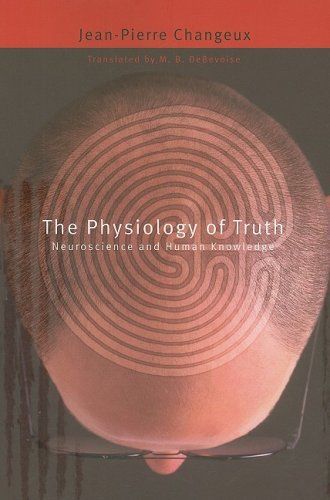
In this wide-ranging book, one of the boldest thinkers in modern neuroscience confronts an ancient philosophical problem: can we know the world as it really is?Drawing on provocative new findings about the psychophysiology of perception and judgment in both human and nonhuman primates, and also on the cultural history of science, Jean-Pierre Changeux makes a powerful case for the reality of scientific progress and argues that it forms the basis for a coherent and universal theory of human rights. On this view, belief in objective knowledge is not a mere ideological slogan or a nave confusion; it is a characteristic feature of human cognition throughout evolution, and the scientific method its most sophisticated embodiment. Seeking to reconcile science and humanism, Changeux holds that the capacity to recognize truths that are independent of subjective personal experience constitutes the foundation of a human civil society.
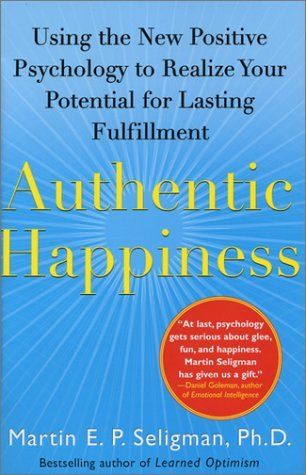
In this national bestseller — Martin Seligman’s most stimulating, persuasive book to date — the acclaimed author of Learned Optimism introduces yet another revolutionary idea. Drawing on groundbreaking scientific research, Seligman shows how Positive Psychology is shifting the profession’s paradigm away from its narrow-minded focus on pathology, victimology, and mental illness to positive emotion and mental health. Happiness, studies show, is not the result of good genes or luck. It can be cultivated by identifying and nurturing traits that we already possess — including kindness, originality, humor, optimism, and generosity.Seligman provides the tools you need in order to ascertain your most positive traits or strengths. Then he explains how, by frequently calling upon these “signature strengths” in all the crucial realms of life — health, relationships, career — you will not only develop natural buffers against misfortune and negative emotion, but also achieve new and sustainable levels of authentic contentment, gratification, and meaning.
ما از اخلاق چه انتظاری داریم؟ این سوال شاید تاحدودی برای عموم مردم و یا متخصصان این رشته قابل پاسخ باشد؛ اینکه خوب بودن را به ما بیاموزد و در تنظیم روابط فردی م...

جشن کتاب تهران به ایستگاه سی و یکم رسیده است. حال و احوال نشر کتاب خوب نیست و باید فرهنگدوستان را به خرید و هدیه دادن کتاب ترغیب نمود. خانه اخلاقپژوهان جوان ب...

بنیاد کتابهای اخلاق اسلامی عمدتا پالایش جان از آلودگیها و آراستن آن به زیباییها است. اندیشه محوری این قبیل کتابها آن است که انسان فعلی آنی نیست که باید باشد...

-
0 Comments