Notice: تابع WP_Block_Type_Registry::register به طورنادرست فراخوانی شد. نامهای نوع بلوک نباید حروف بزرگ داشته باشند. لطفاً برای اطلاعات بیشتر، اشکال زدایی در وردپرس را مشاهده کنید. (این پیام در نگارش 5.0.0 افزوده شده است.) in /home/ethicsho/public_html/wp-includes/functions.php on line 5313
Warning: Use of undefined constant TDC_PATH_LEGACY - assumed 'TDC_PATH_LEGACY' (this will throw an Error in a future version of PHP) in /home/ethicsho/public_html/wp-content/plugins/td-composer/td-composer.php on line 109
Warning: Use of undefined constant TDSP_THEME_PATH - assumed 'TDSP_THEME_PATH' (this will throw an Error in a future version of PHP) in /home/ethicsho/public_html/wp-content/plugins/td-composer/td-composer.php on line 113 بایگانیهای Teaching - Moral And Ethical Aspects - خانه اخلاق پژوهان جوان Notice: Trying to access array offset on value of type bool in /home/ethicsho/public_html/wp-content/plugins/wp-ulike/inc/general-functions.php on line 807
Over more than two millennia, the world’s leading religious traditions have provided the guidance in questions of when war can be justified, and of what methods and targets are permissible in war. Linking deep historical analysis to contemporary issues, this volume provides insight to the understanding of the role and influence of religion in the state politics. The book examines the norms of war in Hinduism, in Theravada Buddhism, in Japanese religion, in Judaism, in Roman Catholic Christianity, in Eastern Orthodox Christianity, in Protestant Christianity, in Shia Islam and in Sunni Islam, and discusses norms of war in cross-religious perspective.–Publisher’s description.
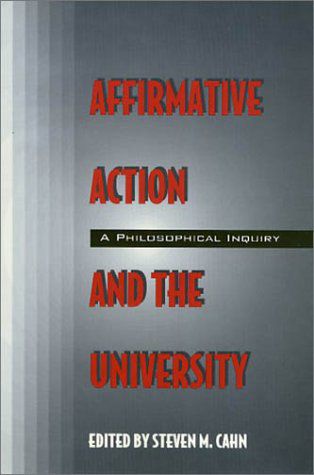
This book is recommended for anyone interested in understanding, questioning, articulating, and acting on the basis of their own and others’ perspectives on sexism, racism, and affirmative action in American higher education. –ChoiceWhile equal opportunity for all candidates is widely recognized as a goal within academia, the implementation of specific procedures to achieve equality has resulted in vehement disputes regarding both the means and ends. To encourage a reexamination of this issue, Cahn asked three prominent American social philosophers–Leslie Pickering Francis, Robert L. Simon, and Lawrence C. Becker–who hold divergent views about affirmative action, to write extended essays presenting their views. Twenty-two other philosophers then respond to these three principal essays. While no consensus is reached, the resulting clash of reasoned judgments will serve to revitalize the issues raised by affirmative action.ContentsIntroduction – Steven M. CahnPart I1. In Defense of Affirmative Action – Leslie Pickering Francis2. Affirmative Action and the University: Faculty Appointment and Preferential Treatment – Robert L. Simon3. Affirmative Action and Faculty Appointments – Lawrence C. BeckerPart II4. What Good Am I? – Laurence Thomas5. Who Counts on Campus? – Ann Hartle6. Reflections on Affirmative Action in Academia – Robert G. Turnbull7. The Injustice of Strong Affirmative Action – John Kekes8. Preferential Treatment Versus Purported Meritocratic Rights – Richard J. Arneson9. Faculties as Civil Societies: A Misleading Model for Affirmative Action – Jeffrie G. Murphy10. Facing Facts and Responsibilities – The White Man’s Burden and the Burden of Proof – Karen Hanson11. Affirmative Action: Relevant Knowledge and Relevant Ignorance – Joel J. Kupperman12. Remarks on Affirmative Action – Andrew Oldenquist13. Affirmative Action and the Multicultural Ideal – Philip L. Quinn14. Affirmative Action in the Cultural Wars – Frederick A. Olafson15. Quotas by Any Name: Some Problems of Affirmative Action in Faculty Appointments – Tom L. Beauchamp16. Are Quotas Sometimes Justified? – James Rachels17. Proportional Representation of Women and Minorities – Celia Wolf-Devine18. An Ecological Concept of Diversity – La Verne Shelton19. Careers Open to Talent – Ellen Frankel Paul20. Some Sceptical Doubts – Alasdair MacIntyre21. Affirmative Action and Tenure Decisions – Richard T. De George22. Affirmative Action and the Awarding of Tenure – Peter J. Markie23. The Case for Preferential Treatment – James P. Sterba24. Saying What We Think – Fred Sommers25. Comments on Compromise and Affirmative Action – Alan H. GoldmanAbout the AuthorsIndex About the Author(s)Steven M. Cahn is Professor of Philosophy and former Provost and Vice President for Academic Affairs at the Graduate Center of the City University of New York. He has published numerous other books, including Morality, Responsibility, and the University (Temple).Contributors: Laurence Thomas, Ann Hartle, Robert G. Turnbull, John Kekes, Richard J. Arneson, Jeffrie G. Murphy, Karen Hanson, Joel J. Kupperman, Andrew Oldenquist, Philip L. Quinn, Frederick A. Olafson, Tom L. Beauchamp, James Rachels, Celia Wolf-Devine, La Verne Shelton, Ellen Frankel Paul, Alasdair MacIntyre, Richard T. De George, Peter J. Markie, James P. Sterba, Fred Sommers, Alan H. Goldman, and the editor.
“Two Books of the Elements of Universal Jurisprudence” was Pufendorf’s first work, published in 1660. Its appearance effectively inaugurated the modern natural-law movement in the German-speaking world. The work also established Pufendorf as a key figure and laid the foundations for his major works, which were to sweep across Europe and North America. ‘Elements of Universal Jurisprudence’ established Pufendorf’s political theory, which, when fully developed, became the most significant alternative to rights-based theories. Pufendorf rejected the concept of natural rights as liberties and the suggestion that political government is justified by its protection of such rights, arguing instead for a principled limit to the state’s role in human life. The Liberty Fund edition is based on the translation by William Abbott Oldfather prepared for the Classics of International Law series published by the Carnegie Endowment for International Peace.
ما از اخلاق چه انتظاری داریم؟ این سوال شاید تاحدودی برای عموم مردم و یا متخصصان این رشته قابل پاسخ باشد؛ اینکه خوب بودن را به ما بیاموزد و در تنظیم روابط فردی م...

جشن کتاب تهران به ایستگاه سی و یکم رسیده است. حال و احوال نشر کتاب خوب نیست و باید فرهنگدوستان را به خرید و هدیه دادن کتاب ترغیب نمود. خانه اخلاقپژوهان جوان ب...

بنیاد کتابهای اخلاق اسلامی عمدتا پالایش جان از آلودگیها و آراستن آن به زیباییها است. اندیشه محوری این قبیل کتابها آن است که انسان فعلی آنی نیست که باید باشد...

-
0 Comments