Notice: تابع WP_Block_Type_Registry::register به طورنادرست فراخوانی شد. نامهای نوع بلوک نباید حروف بزرگ داشته باشند. لطفاً برای اطلاعات بیشتر، اشکال زدایی در وردپرس را مشاهده کنید. (این پیام در نگارش 5.0.0 افزوده شده است.) in /home/ethicsho/public_html/wp-includes/functions.php on line 5313
Warning: Use of undefined constant TDC_PATH_LEGACY - assumed 'TDC_PATH_LEGACY' (this will throw an Error in a future version of PHP) in /home/ethicsho/public_html/wp-content/plugins/td-composer/td-composer.php on line 109
Warning: Use of undefined constant TDSP_THEME_PATH - assumed 'TDSP_THEME_PATH' (this will throw an Error in a future version of PHP) in /home/ethicsho/public_html/wp-content/plugins/td-composer/td-composer.php on line 113 بایگانیهای BJ1231 .S45 1997 - خانه اخلاق پژوهان جوان Notice: Trying to access array offset on value of type bool in /home/ethicsho/public_html/wp-content/plugins/wp-ulike/inc/general-functions.php on line 807
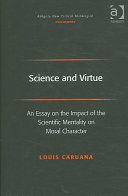
Charting new territory in the interface between science and ethics, Science and Virtue is a study of how the scientific mentality can affect the building of character, or the attainment of virtue by the individual. Drawing on inspiration from virtue-ethics and virtue-epistemology, Caruana argues that science is not just a system of knowledge but also an important factor determining a way of life.This book goes beyond the normal strategy evident in the science-ethics realm of examining specific ethical dilemmas posed by scientific innovations. Here Caruana deals with more fundamental issues, uncovering morally significant tendencies within the very core of the scientific mentality and explaining how science, its method, history and explanatory power can shape a conception of the good life.
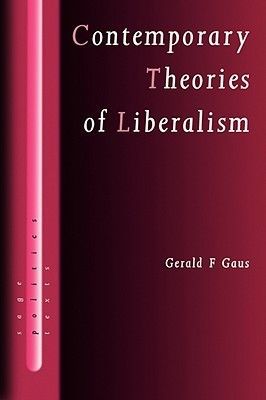
`The author has provided us with a masterful overview and critique of liberal theorizing of the past quarter-century. While dealing exhaustively and fairly with each of a variety of broadly liberal approaches, Gaus also presents a compelling argument for his own preferred “justificatory” approach. His analyses range across familiar territory – Berlin, Gauthier, Baier, Habermas, social choice theory, Rawls, and so on – and are always illuminating and, taken together, provide both the newcomer and the old-hand much to ponder’ – Fred D’Agostino, University of New England, Armidale `[A]ll that man is and all that raises him above animals he owes to his reason’ – Ludwig von Mises Contemporary Theories of Liberalism provides students with a comprehensive overview of the key tenets of liberalism developed through Hobbes, Locke, Kant and Rawls to present day theories and debates. Central to recent debate has been the idea of public reason. The text introduces and explores seven dominant theories of public reason, namely, pluralism, Neo-Hobbesianism, pragmatism, deliberative democracy, political democracy, Rawlsian political liberalism and justificatory liberalism. As a proponent of justificatory liberalism, Gaus presents an accessible and critical analysis of all contempoary liberal political theory and powerfully illustrates the distinct and importsant contribution of justificatory liberalism. Contemporary Theories of Liberalism is essential reading for students and academics seeking a deeper understanding of liberal political theory today.
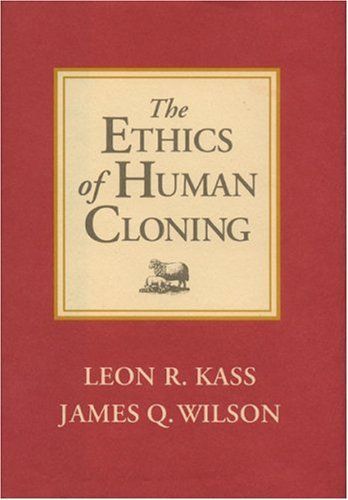
In this engaging book, Leon R. Kass, the noted teacher, scientist, and humanist, and James Q. Wilson, the preeminent political scientist to whom four U.S. presidents have turned for advice on crime, drug abuse, education, and other crises in American life, explore the ethics of human cloning, reproductive technology, and the teleology of human sexuality. Although in their lively dialogue both authors share a fundamental distrust of the notion of human cloning, they base their reticence on different views of the role of sexual reproduction and the role of the family. Professor Kass contends that in vitro fertilization and other assisted reproduction technologies that place the origin of human life in human hands have eroded the respect for the mystery of sexuality and human renewal. Professor Wilson, on the other hand, asserts that whether a human life is created naturally or artificially is immaterial as long as the child is raised by loving parents in a two-parent family and is not harmed by the means of its conception. This accessible volume promises to inform the public policy debate over the permissible conduct of genetic research and the permissible uses of its discoveries.
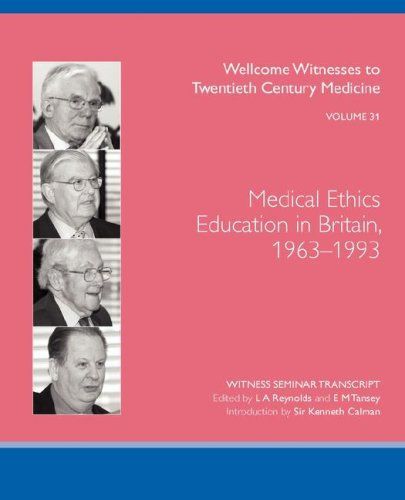
Changing attitudes toward human experimentation along with other controversial moral issues emerged after the Second World War and, in 1963, led to the establishment of the London Medical Group, organized by Ted Shotter, with similar Medical Groups elsewhere from 1967. These became forums for discussion and debate arising from dilemmas encountered in medical settings. Medical ethics did not become a recognized subject in the syllabus of Britain’s medical schools until 1993. This Witness Seminar transcript records the development of international ethical codes, the response to them over the period 1963-93 by students and doctors and the extent of resistance encountered from deans, hospital administrators and others; the Groups’ influence on medical practice; the impact on both Medical Group organizers and participants in their subsequent careers; the local and regional variations and their significant lasting contributions. The meeting was chaired by Dr Stephen Lock and included former Medical Group members, scientists, physicians and policy makers, such as Professors Kenneth Boyd, Bill Fulford, Roger Higgs, Sir Ian Kennedy, David Morton and Sir Malcolm Macnaughton. An introduction by Professor Sir Kenneth Calman and appendices of the Very Revd Edward Shotter’s reflections on the influence of the Medical Groups as a report for the Institute of Medical Ethics complete the transcript.
ما از اخلاق چه انتظاری داریم؟ این سوال شاید تاحدودی برای عموم مردم و یا متخصصان این رشته قابل پاسخ باشد؛ اینکه خوب بودن را به ما بیاموزد و در تنظیم روابط فردی م...

جشن کتاب تهران به ایستگاه سی و یکم رسیده است. حال و احوال نشر کتاب خوب نیست و باید فرهنگدوستان را به خرید و هدیه دادن کتاب ترغیب نمود. خانه اخلاقپژوهان جوان ب...

بنیاد کتابهای اخلاق اسلامی عمدتا پالایش جان از آلودگیها و آراستن آن به زیباییها است. اندیشه محوری این قبیل کتابها آن است که انسان فعلی آنی نیست که باید باشد...

-
0 Comments