






Notice: تابع WP_Block_Type_Registry::register به طورنادرست فراخوانی شد. نامهای نوع بلوک نباید حروف بزرگ داشته باشند. لطفاً برای اطلاعات بیشتر، اشکال زدایی در وردپرس را مشاهده کنید. (این پیام در نگارش 5.0.0 افزوده شده است.) in /home/ethicsho/public_html/wp-includes/functions.php on line 5313
Warning: Use of undefined constant TDC_PATH_LEGACY - assumed 'TDC_PATH_LEGACY' (this will throw an Error in a future version of PHP) in /home/ethicsho/public_html/wp-content/plugins/td-composer/td-composer.php on line 109
Warning: Use of undefined constant TDSP_THEME_PATH - assumed 'TDSP_THEME_PATH' (this will throw an Error in a future version of PHP) in /home/ethicsho/public_html/wp-content/plugins/td-composer/td-composer.php on line 113 بایگانیهای Law - Philosophy - خانه اخلاق پژوهان جوان Notice: Trying to access array offset on value of type bool in /home/ethicsho/public_html/wp-content/plugins/wp-ulike/inc/general-functions.php on line 807
Scientists have long counseled against interpreting animal behavior in terms of human emotions, warning that such anthropomorphizing limits our ability to understand animals as they really are. With “Wild Justice”, Marc Bekoff and Jessica Pierce unequivocally challenge this long-held view. Marrying years of behavioral and cognitive research with compelling and moving anecdotes, Bekoff and Pierce reveal that animals exhibit a broad repertoire of moral behaviors, including fairness, empathy, trust, and reciprocity. Animals, in short, are incredibly adept social beings, relying on rules of conduct to navigate intricate social networks that are essential to their survival. Ultimately, Bekoff and Pierce draw the astonishing conclusion that there is no moral gap between humans and other species: morality is an evolved trait that we unquestionably share with other social mammals.
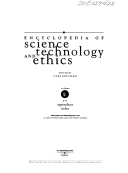
This Encyclopedia considers both the professional ethics of science and technology, and the ethical and political issues raised by science and technology in an increasingly complex and global society. This broad coverage supports the numerous courses in applied and professional ethics and policy related to the practice of science and technology in education.
“This collection offers a comprehensive overview of stakeholding and critically explores the ethical foundations of the stakeholder society. Keith Dowding, Jurgen De Wispelaere and Stuart White offer a comprehensive introduction to the ideas underlying stakeholding and explaining the modern debates. The contributors, including some of the leading worldwide proponents in the field, provide arguments for and against the specific types of stakeholding – capital grants versus universal basic income – and critically explore the ethical foundations of the stakeholder society.”–BOOK JACKET.
Although an inchoate liberty theory of freedom of speech has deep roots in Supreme Court decisions and political history, it has been overshadowed in judicial decisions and scholarly commentary by the marketplace of ideas theory. In this book, Baker critiques the assumptions required by the marketplace of ideas theory and develops the liberty theory, showing its philosophical soundness, persuasiveness, and ability to protect free speech. He argues that First Amendment liberty rights (as well as Fourteenth Amendment equality rights) required by political or moral theory are central to the possibility of progressive change. Problem areas are examined, including the question of whether individual political and civil rights can in principle be distinguished from property rights, freedom of the press, and the use of public spaces for expressive purposes.
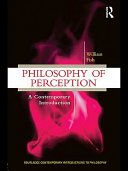
The philosophy of perception investigates the nature of our sensory experiences and their relation to reality. Raising questions about the conscious character of perceptual experiences, how they enable us to acquire knowledge of the world in which we live, and what exactly it is we are aware of when we hallucinate or dream, the philosophy of perception is a growing area of interest in metaphysics, epistemology, and philosophy of mind.William Fish’s Philosophy of Perception introduces the subject thematically, setting out the major theories of perception together with their motivations and attendant problems. While providing historical background to debates in the field, this comprehensive overview focuses on recent presentations and defenses of the different theories, and looks beyond visual perception to take into account the role of other senses.Topics covered include:The Phenomenal PrinciplePerception and HallucinationPerception and ContentSense-Data, Adverbialism and IdealismDisjunctivism and RelationalismIntentionalism and Combined TheoriesThe Nature of ContentVeridicalityPerception and Empirical ScienceNon-Visual PerceptionWith summaries and suggested further reading at the end of each chapter, this is an ideal introduction to the philosophy of perception.
ما از اخلاق چه انتظاری داریم؟ این سوال شاید تاحدودی برای عموم مردم و یا متخصصان این رشته قابل پاسخ باشد؛ اینکه خوب بودن را به ما بیاموزد و در تنظیم روابط فردی م...

جشن کتاب تهران به ایستگاه سی و یکم رسیده است. حال و احوال نشر کتاب خوب نیست و باید فرهنگدوستان را به خرید و هدیه دادن کتاب ترغیب نمود. خانه اخلاقپژوهان جوان ب...

بنیاد کتابهای اخلاق اسلامی عمدتا پالایش جان از آلودگیها و آراستن آن به زیباییها است. اندیشه محوری این قبیل کتابها آن است که انسان فعلی آنی نیست که باید باشد...

-
0 Comments