


Notice: تابع WP_Block_Type_Registry::register به طورنادرست فراخوانی شد. نامهای نوع بلوک نباید حروف بزرگ داشته باشند. لطفاً برای اطلاعات بیشتر، اشکال زدایی در وردپرس را مشاهده کنید. (این پیام در نگارش 5.0.0 افزوده شده است.) in /home/ethicsho/public_html/wp-includes/functions.php on line 5313
Warning: Use of undefined constant TDC_PATH_LEGACY - assumed 'TDC_PATH_LEGACY' (this will throw an Error in a future version of PHP) in /home/ethicsho/public_html/wp-content/plugins/td-composer/td-composer.php on line 109
Warning: Use of undefined constant TDSP_THEME_PATH - assumed 'TDSP_THEME_PATH' (this will throw an Error in a future version of PHP) in /home/ethicsho/public_html/wp-content/plugins/td-composer/td-composer.php on line 113 بایگانیهای English - صفحه 3 از 155 - خانه اخلاق پژوهان جوان Notice: Trying to access array offset on value of type bool in /home/ethicsho/public_html/wp-content/plugins/wp-ulike/inc/general-functions.php on line 807
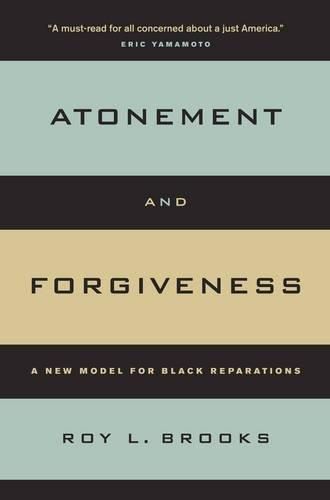
Roy L. Brooks reframes one of the most important, controversial, and misunderstood issues of our time in this far-reaching reassessment of the growing debate on black reparation. Atonement and Forgiveness shifts the focus of the issue from the backward-looking question of compensation for victims to a more forward-looking racial reconciliation. Offering a comprehensive discussion of the history of the black redress movement, this book puts forward a powerful new plan for repairing the damaged relationship between the federal government and black Americans in the aftermath of 240 years of slavery and another 100 years of government-sanctioned racial segregation. Key to Brooks’s vision is the government’s clear signal that it understands the magnitude of the atrocity it committed against an innocent people, that it takes full responsibility, and that it publicly requests forgiveness–in other words, that it apologizes. The government must make that apology believable, Brooks explains, by a tangible act that turns the rhetoric of apology into a meaningful, material reality, that is, by reparation. Apology and reparation together constitute atonement. Atonement, in turn, imposes a reciprocal civic obligation on black Americans to forgive, which allows black Americans to start relinquishing racial resentment and to begin trusting the government’s commitment to racial equality. Brooks’s bold proposal situates the argument for reparations within a larger, international framework–namely, a post-Holocaust vision of government responsibility for genocide, slavery, apartheid, and similar acts of injustice. Atonement and Forgiveness makes a passionate, convincing case that only with this spirit of heightened morality, identity, egalitarianism, and restorative justice can genuine racial reconciliation take place in America. Roy L. Brooks reframes one of the most important, controversial, and misunderstood issues of our time in this far-reaching reassessment of the growing debate on black reparation. Atonement and Forgiveness shifts the focus of the issue from the backward-looking question of compensation for victims to a more forward-looking racial reconciliation. Offering a comprehensive discussion of the history of the black redress movement, this book puts forward a powerful new plan for repairing the damaged relationship between the federal government and black Americans in the aftermath of 240 years of slavery and another 100 years of government-sanctioned racial segregation. Key to Brooks’s vision is the government’s clear signal that it understands the magnitude of the atrocity it committed against an innocent people, that it takes full responsibility, and that it publicly requests forgiveness–in other words, that it apologizes. The government must make that apology believable, Brooks explains, by a tangible act that turns the rhetoric of apology into a meaningful, material reality, that is, by reparation. Apology and reparation together constitute atonement. Atonement, in turn, imposes a reciprocal civic obligation on black Americans to forgive, which allows black Americans to start relinquishing racial resentment and to begin trusting the government’s commitment to racial equality. Brooks’s bold proposal situates the argument for reparations within a larger, international framework–namely, a post-Holocaust vision of government responsibility for genocide, slavery, apartheid, and similar acts of injustice. Atonement and Forgiveness makes a passionate, convincing case that only with this spirit of heightened morality, identity, egalitarianism, and restorative justice can genuine racial reconciliation take place in America.
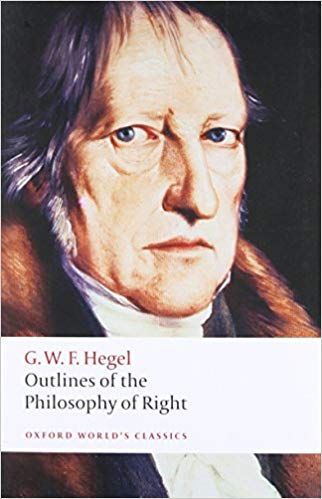
Hegel’s Outlines of the Philosophy of Right is one of the greatest works of moral, social, and political philosophy. It contains significant ideas on justice, moral responsibility, family life, economic activity, and the political structure of the state–all matters of profound interest to us today. Hegel shows that genuine human freedom does not consist in doing whatever we please, but involves living with others in accordance with publicly recognized rights and laws. Hegel demonstrates that institutions such as the family and the state provide the context in which individuals can flourish and enjoy full freedom. He also demonstrates that misunderstanding the true nature of freedom can lead to crime, evil, and poverty. His penetrating analysis of the causes of poverty in modern civil society was to be a great influence on Karl Marx. Hegel’s study remains one of the most subtle and perceptive accounts of freedom that we possess, and this newly revised translation makes it more accessible than ever. This edition incorporates Hegel’s lecture notes within the text and provides a glossary of key terms, up-to-date bibliography, and invaluable notes.Stephen Houlgate is Professor of Philosophy, University of Warwick and is the author of Hegel, Nietzsche and the Criticism of Metaphysics; An Introduction to Hegel: Freedom, Truth and History; and The Opening of Hegel’s Logic: From Being to Infinity.
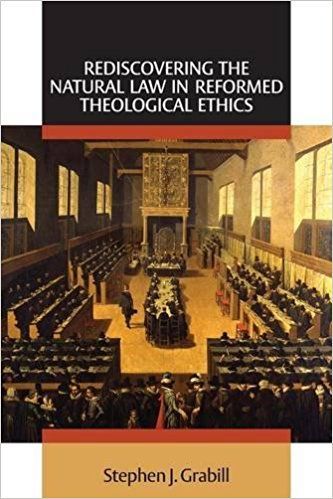
Is knowledge of right and wrong written on the human heart? Do people know God from the world around them? Does natural knowledge contribute to Christian doctrine? While these questions of natural theology and natural law have historically been part of theological reflection, twentieth-century Protestant theologians’ radical reliance on revelation has eclipsed this historic connection. Stephen Grabill attempts the treacherous task of reintegration of Reformed Protestant theology with natural law by appealing to reformation era theologians such as John Calvin, Peter Martyr Vermigli, Johannes Althusius, and Francis Turretin who carried over and refined the traditional understanding of this key doctrine. In Rediscovering the Natural Law in Reformed Theological Ethics Stephen Grabill calls Christian ethicists, theologians and laypersons to take another look at this vital element in the history of Christian ethical thought.
The Blackwell Companion to Christian Ethics presents an innovative exposition of Christian ethics, seen through the lens of Christian worship. Editors Stanley Hauerwas and Samuel Wells challenge conventional approaches to the subject, contending that it is Christian worship that shapes the moral life of Christians. In this way, they restore a sense of the integral connection between Christian ethics and theology. The structure of the volume reflects this fresh approach to the discipline, following the practices of the Eucharist in a liturgical sequence from the “Gathering” through to the “Dismissal”.The Companion is ecumenical in spirit and embraces contributions from leading commentators within the Roman Catholic, Anglican, Methodist, Presbyterian, Mennonite, and Pentecostal traditions. Designed to be accessible to introductory students, it will have a major impact on the study of Christian ethics. The Blackwell Companion to Christian Ethics presents an innovative exposition of Christian ethics, seen through the lens of Christian worship. Editors Stanley Hauerwas and Samuel Wells challenge conventional approaches to the subject, contending that it is Christian worship that shapes the moral life of Christians. In this way, they restore a sense of the integral connection between Christian ethics and theology. The structure of the volume reflects this fresh approach to the discipline, following the practices of the Eucharist in a liturgical sequence from the “Gathering” through to the “Dismissal”.The Companion is ecumenical in spirit and embraces contributions from leading commentators within the Roman Catholic, Anglican, Methodist, Presbyterian, Mennonite, and Pentecostal traditions. Designed to be accessible to introductory students, it will have a major impact on the study of Christian ethics.
ما از اخلاق چه انتظاری داریم؟ این سوال شاید تاحدودی برای عموم مردم و یا متخصصان این رشته قابل پاسخ باشد؛ اینکه خوب بودن را به ما بیاموزد و در تنظیم روابط فردی م...

جشن کتاب تهران به ایستگاه سی و یکم رسیده است. حال و احوال نشر کتاب خوب نیست و باید فرهنگدوستان را به خرید و هدیه دادن کتاب ترغیب نمود. خانه اخلاقپژوهان جوان ب...

بنیاد کتابهای اخلاق اسلامی عمدتا پالایش جان از آلودگیها و آراستن آن به زیباییها است. اندیشه محوری این قبیل کتابها آن است که انسان فعلی آنی نیست که باید باشد...

-
0 Comments