Notice: تابع WP_Block_Type_Registry::register به طورنادرست فراخوانی شد. نامهای نوع بلوک نباید حروف بزرگ داشته باشند. لطفاً برای اطلاعات بیشتر، اشکال زدایی در وردپرس را مشاهده کنید. (این پیام در نگارش 5.0.0 افزوده شده است.) in /home/ethicsho/public_html/wp-includes/functions.php on line 5313
Warning: Use of undefined constant TDC_PATH_LEGACY - assumed 'TDC_PATH_LEGACY' (this will throw an Error in a future version of PHP) in /home/ethicsho/public_html/wp-content/plugins/td-composer/td-composer.php on line 109
Warning: Use of undefined constant TDSP_THEME_PATH - assumed 'TDSP_THEME_PATH' (this will throw an Error in a future version of PHP) in /home/ethicsho/public_html/wp-content/plugins/td-composer/td-composer.php on line 113 بایگانیهای 9780748624485 - خانه اخلاق پژوهان جوان Notice: Trying to access array offset on value of type bool in /home/ethicsho/public_html/wp-content/plugins/wp-ulike/inc/general-functions.php on line 807
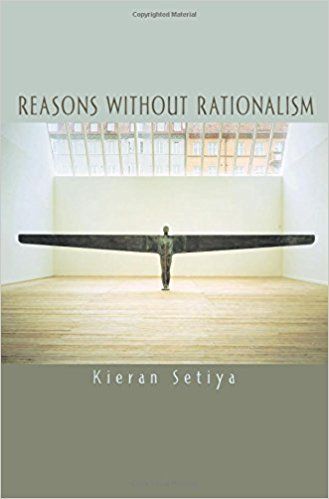
Modern philosophy has been vexed by the question “Why should I be moral?” and by doubts about the rational authority of moral virtue. In Reasons without Rationalism, Kieran Setiya shows that these doubts rest on a mistake. The “should” of practical reason cannot be understood apart from the virtues of character, including such moral virtues as justice and benevolence, and the considerations to which the virtues make one sensitive thereby count as reasons to act. Proposing a new framework for debates about practical reason, Setiya argues that the only alternative to this “virtue theory” is a form of ethical rationalism in which reasons derive from the nature of intentional action. Despite its recent popularity, however, ethical rationalism is false. It wrongly assumes that we act “under the guise of the good,” or it relies on dubious views about intention and motivation. It follows from the failure of rationalism that the virtue theory is true: we cannot be fully good without the perfection of practical reason, or have that perfection without being good. Addressing such topics as the psychology of virtue and the explanation of action, Reasons without Rationalism is essential reading for philosophers interested in ethics, rationality, or the philosophy of mind.
It is well over a decade since John Fischer and Mark Ravizza – and before them, Jay Wallace and Daniel Dennett – defended responsibility from the threat of determinism. But defending responsibility from determinism is a potentially endless and largely negative enterprise; it can go on for as long as dissenting voices remain, and although such work strengthens the theoretical foundations of these theories, it won’t necessarily build anything on top of those foundations, nor will it move these theories into new territory or explain how to apply them to practical contexts.To this end, the papers in this volume address these more positive challenges by exploring how compatibilist responsibility theory can be extended and/or applied in a range of practical contexts. For instance, how is the narrow philosophical concept of responsibility that was defended from the threat of determinism related to the plural notions of responsibility present in everyday discourse, and how might this more fine-grained understanding of responsibility open up new vistas and challenges for compatibilist theory? What light might compatibilism shed, and what light might be shed upon it, by political debates about access to public welfare in the context of responsibility for one’s own health, and by legal debates about the impact of self-intoxication on responsibility. Does compatibilist theory, which was originally designed to cater for analysis of individual actions, scale to scenarios that involve group action and collective responsibility – e.g. for harms due to human-induced climate change? This book’s chapters deal with a range of theoretical problems discussed in classic compatibilist literature – e.g. the relationship between responsibility and capacity, the role of historical tracing in discounting the exculpatory value of incapacities, and the justifiability of retributive punishment. But instead of motivating their discussions by focusing on the alleged threat that determinism poses to responsibility, these chapters’ authors have animated their discussions by tackling important practical problems which crop up in contemporary debates about responsibility.
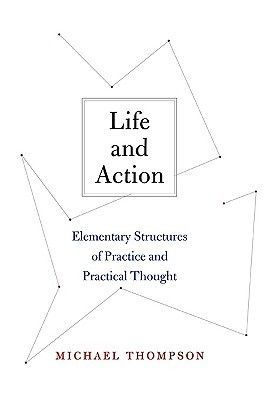
Any sound practical philosophy must be clear on practical concepts—concepts, in particular, of life, action, and practice. This clarity is Michael Thompson’s aim in his ambitious work. In Thompson’s view, failure to comprehend the structures of thought and judgment expressed in these concepts has disfigured modern moral philosophy, rendering it incapable of addressing the larger questions that should be its focus.In three investigations, Thompson considers life, action, and practice successively, attempting to exhibit these interrelated concepts as pure categories of thought, and to show how a proper exposition of them must be Aristotelian in character. He contends that the pure character of these categories, and the Aristotelian forms of reflection necessary to grasp them, are systematically obscured by modern theoretical philosophy, which thus blocks the way to the renewal of practical philosophy. His work recovers the possibility, within the tradition of analytic philosophy, of hazarding powerful generalities, and of focusing on the larger issues—like “life”—that have the power to revive philosophy.As an attempt to relocate crucial concepts from moral philosophy and the theory of action into what might be called the metaphysics of life, this original work promises to reconfigure a whole sector of philosophy. It is a work that any student of contemporary philosophy must grapple with.
This timely reader in moral philosophy addresses a controversy that strongly affected recent European reflections on the relevance of ethics for theories of democratic institutions and democratic legitimacy. The debate centers around the idea of a communicative ethics as articulated by Jurgen Habermas and Karl-Otto Apel, and it is representative both of recent attempts to bridge the gap between Continental and Anglo-American philosophy and of the turn to language that has characterized much of recent philosophy.The Communicative Ethics Controversy illustrates philosophical dialogue in action, moving from theses to counterarguments to rejoinders. Theoretical statements by Habermas, Apel, and two of their leading students, Dietrich Bohler and Robert Alexy, are followed by a series of five arguments by their leading critics, who represent viewpoints ranging from Kantian idealism to Wittgensteinian ordinary-language theory. Fred Dallmayr’s introduction and Seyla Benhabib’s incisive conclusion place the debate in perspective, bringing it up to date and relating it to the Anglo-American context.Seyla Benhabib is Associate Professor of Philosophy and Women’s Studies at the State University of New York, Stony Brook. Fred Dallmayr is Packey Dee Professor of Government at the University of Notre Dame.Contributors: Robert Alexy. Karl-Otto Apel. Seyla Benhabib. Dietrich Bohler. Jurgen Habermas. Otfried Hoffe. KarlHeinz Ilting. Hermann Lubbe. Herbert Schnadelbach. Albrecht Wellmer.
ما از اخلاق چه انتظاری داریم؟ این سوال شاید تاحدودی برای عموم مردم و یا متخصصان این رشته قابل پاسخ باشد؛ اینکه خوب بودن را به ما بیاموزد و در تنظیم روابط فردی م...

جشن کتاب تهران به ایستگاه سی و یکم رسیده است. حال و احوال نشر کتاب خوب نیست و باید فرهنگدوستان را به خرید و هدیه دادن کتاب ترغیب نمود. خانه اخلاقپژوهان جوان ب...

بنیاد کتابهای اخلاق اسلامی عمدتا پالایش جان از آلودگیها و آراستن آن به زیباییها است. اندیشه محوری این قبیل کتابها آن است که انسان فعلی آنی نیست که باید باشد...

-
0 Comments