Notice: تابع WP_Block_Type_Registry::register به طورنادرست فراخوانی شد. نامهای نوع بلوک نباید حروف بزرگ داشته باشند. لطفاً برای اطلاعات بیشتر، اشکال زدایی در وردپرس را مشاهده کنید. (این پیام در نگارش 5.0.0 افزوده شده است.) in /home/ethicsho/public_html/wp-includes/functions.php on line 5313
Warning: Use of undefined constant TDC_PATH_LEGACY - assumed 'TDC_PATH_LEGACY' (this will throw an Error in a future version of PHP) in /home/ethicsho/public_html/wp-content/plugins/td-composer/td-composer.php on line 109
Warning: Use of undefined constant TDSP_THEME_PATH - assumed 'TDSP_THEME_PATH' (this will throw an Error in a future version of PHP) in /home/ethicsho/public_html/wp-content/plugins/td-composer/td-composer.php on line 113 بایگانیهای Communication - Moral And Ethical Aspects - خانه اخلاق پژوهان جوان Notice: Trying to access array offset on value of type bool in /home/ethicsho/public_html/wp-content/plugins/wp-ulike/inc/general-functions.php on line 807
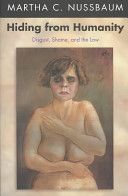
Should laws about sex and pornography be based on social conventions about what is disgusting? Should felons be required to display bumper stickers or wear T-shirts that announce their crimes? This powerful and elegantly written book, by one of America’s most influential philosophers, presents a critique of the role that shame and disgust play in our individual and social lives and, in particular, in the law. Martha Nussbaum argues that we should be wary of these emotions because they are associated in troubling ways with a desire to hide from our humanity, embodying an unrealistic and sometimes pathological wish to be invulnerable. Nussbaum argues that the thought-content of disgust embodies “magical ideas of contamination, and impossible aspirations to purity that are just not in line with human life as we know it.” She argues that disgust should never be the basis for criminalizing an act, or play either the aggravating or the mitigating role in criminal law it currently does. She writes that we should be similarly suspicious of what she calls “primitive shame,” a shame “at the very fact of human imperfection,” and she is harshly critical of the role that such shame plays in certain punishments. Drawing on an extraordinarily rich variety of philosophical, psychological, and historical references–from Aristotle and Freud to Nazi ideas about purity–and on legal examples as diverse as the trials of Oscar Wilde and the Martha Stewart insider trading case, this is a major work of legal and moral philosophy.
For friendship, love and sexuality, it touches upon changes in the distinctions between private and public, in subject-formation and legal practices, as well as the varying cultural, existential and ethical importance of close relations in history.
This landmark text is the first introduction to concepts and issues in critical discourse analysis for educational researchers. The central premise is that critical discourse analysis must be conducted “systematically,” which means conducting inquiry into the ways in which language form and function correlate with social practices. Bringing together the work of New Literacy Studies, situated literacy, critical discourse theory and analysis with theories of learning, the text is distinctive in providing not just useful analytic accounts of discourse in classroom and other settings, but going on to identify ways in which these forms of language are connected to theories of learning. Contributions from two pioneers in the field–James Gee and Norman Fairclough–are combined with empirically grounded chapters that illustrate variations of their approaches to critical discourse analysis. Each chapter presents examples of systematical critical discourse analysis and its relevance in education settings, and provides detailed information on analytic procedures. An Introduction to Critical Discourse Analysis in Education: *introduces key concepts in critical discourse analysis and answers some of the frequently asked questions; *situates critical discourse analysis within educational research; and *provides detailed analytic procedures, to demystify the process, allow researchers to have a conversation about issues of trustworthiness of interpretations and value to educational contexts, and enable replication of studies. The new synthesis of theoretical and empirical studies in critical discourse analysis and education the book presents will interest newcomers to critical discourse analysis, as well as researchers and educators interested in discourse, identity, and learning. The descriptive, critical ethnographic and interpretive approaches to critical discourse analysis developed in each chapter make the book accessible yet theoretically rich. Pedagogical features make critical discourse analysis accessible to students. The text is cross-disciplinary, intended for courses in qualitative methodology, discourse analysis, critical discourse studies, and literacy education. It will appeal not only to education researchers but to a wide readership within literacy studies, linguistics, sociology, and other social sciences concerned with contemporary approaches to describing and explaining the role of language in learning and education.
Civil War officer, Reconstruction “carpetbagger,” best-selling novelist, and relentless champion of equal rights, Albion Tourgee battled his entire life for racial justice. Now, in this engaging biography, Mark Elliott offers an insightful portrait of a fearless lawyer, jurist, and writer, who fought for equality long after most Americans had abandoned the ideals of Reconstruction. Elliott provides a fascinating account of Tourgee’s life, from his childhood in the Western Reserve region of Ohio (then a hotbed of abolitionism), to his years as a North Carolina judge during Reconstruction, to his memorable role as lead plaintiff’s counsel in the landmark Supreme Court case Plessy v. Ferguson. Tourgee’s brief coined the phrase that justice should be “color-blind,” and his career was one long campaign to made good on that belief. A redoubtable lawyer and an accomplished jurist, Tourgee wrote fifteen political novels, eight books of historical and social criticism, and several hundred newspaper and magazine articles that all told represent a mountain of dissent against the prevailing tide of racial oppression.
ما از اخلاق چه انتظاری داریم؟ این سوال شاید تاحدودی برای عموم مردم و یا متخصصان این رشته قابل پاسخ باشد؛ اینکه خوب بودن را به ما بیاموزد و در تنظیم روابط فردی م...

جشن کتاب تهران به ایستگاه سی و یکم رسیده است. حال و احوال نشر کتاب خوب نیست و باید فرهنگدوستان را به خرید و هدیه دادن کتاب ترغیب نمود. خانه اخلاقپژوهان جوان ب...

بنیاد کتابهای اخلاق اسلامی عمدتا پالایش جان از آلودگیها و آراستن آن به زیباییها است. اندیشه محوری این قبیل کتابها آن است که انسان فعلی آنی نیست که باید باشد...

-
0 Comments