Notice: تابع WP_Block_Type_Registry::register به طورنادرست فراخوانی شد. نامهای نوع بلوک نباید حروف بزرگ داشته باشند. لطفاً برای اطلاعات بیشتر، اشکال زدایی در وردپرس را مشاهده کنید. (این پیام در نگارش 5.0.0 افزوده شده است.) in /home/ethicsho/public_html/wp-includes/functions.php on line 5313
Warning: Use of undefined constant TDC_PATH_LEGACY - assumed 'TDC_PATH_LEGACY' (this will throw an Error in a future version of PHP) in /home/ethicsho/public_html/wp-content/plugins/td-composer/td-composer.php on line 109
Warning: Use of undefined constant TDSP_THEME_PATH - assumed 'TDSP_THEME_PATH' (this will throw an Error in a future version of PHP) in /home/ethicsho/public_html/wp-content/plugins/td-composer/td-composer.php on line 113 بایگانیهای 9780521477192 - خانه اخلاق پژوهان جوان Notice: Trying to access array offset on value of type bool in /home/ethicsho/public_html/wp-content/plugins/wp-ulike/inc/general-functions.php on line 807
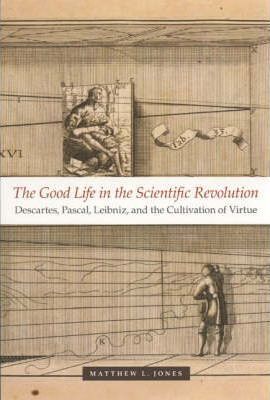
Amid the unrest, dislocation, and uncertainty of seventeenth-century Europe, readers seeking consolation and assurance turned to philosophical and scientific books that offered ways of conquering fears and training the mind—guidance for living a good life. The Good Life in the Scientific Revolution presents a triptych showing how three key early modern scientists, René Descartes, Blaise Pascal, and Gottfried Leibniz, envisioned their new work as useful for cultivating virtue and for pursuing a good life. Their scientific and philosophical innovations stemmed in part from their understanding of mathematics and science as cognitive and spiritual exercises that could create a truer mental and spiritual nobility. In portraying the rich contexts surrounding Descartes’ geometry, Pascal’s arithmetical triangle, and Leibniz’s calculus, Matthew L. Jones argues that this drive for moral therapeutics guided important developments of early modern philosophy and the Scientific Revolution.
Sex addiction affects millions of people’s lives today, and is on the rise with the internet. This solution focused book offers an intelligent understanding of sexual addiction as well as practical remedies. “The Final Freedom” is the single most professionally endorsed book in the field of sexual addiction to date!
Jesse Prinz argues that recent work in philosophy, neuroscience, and anthropology supports two radical hypotheses about the nature of morality: moral values are based on emotional responses, and these emotional responses are inculcated by culture, not hard-wired through natural selection. In the first half of the book, Jesse Prinz defends the hypothesis that morality has an emotional foundation. Evidence from brain imaging, social psychology, and psychopathology suggest that, when we judge something to be right or wrong, we are merely expressing our emotions. Prinz argues that these emotions do not track objective features of reality; rather, the rightness and wrongness of an act consists in the fact that people are disposed to have certain emotions towards it. In the second half of the book, he turns to a defense of moral relativism. Moral facts depend on emotional responses, and emotional responses vary from culture to culture. Prinz surveys the anthropological record to establish moral variation, and he draws on cultural history to show how attitudes toward practices such as cannibalism and marriage change over time. He also criticizes evidence from animal behavior and child development that has been taken to support the claim that moral attitudes are hard-wired by natural selection. Prinz concludes that there is no single true morality, but he also argues that some moral values are better than others; moral progress is possible. Throughout the book, Prinz relates his views to contemporary and historical work in philosophical ethics. His views echo themes in the writings of David Hume and Friedrich Nietzsche, but Prinz supports, extends, and revises these classic theories using the resources of cutting-edge cognitive science. The Emotional Construction of Morals will stimulate and challenge anyone who is curious about the nature and origin of moral values.
ما از اخلاق چه انتظاری داریم؟ این سوال شاید تاحدودی برای عموم مردم و یا متخصصان این رشته قابل پاسخ باشد؛ اینکه خوب بودن را به ما بیاموزد و در تنظیم روابط فردی م...

جشن کتاب تهران به ایستگاه سی و یکم رسیده است. حال و احوال نشر کتاب خوب نیست و باید فرهنگدوستان را به خرید و هدیه دادن کتاب ترغیب نمود. خانه اخلاقپژوهان جوان ب...

بنیاد کتابهای اخلاق اسلامی عمدتا پالایش جان از آلودگیها و آراستن آن به زیباییها است. اندیشه محوری این قبیل کتابها آن است که انسان فعلی آنی نیست که باید باشد...

-
0 Comments