Notice: تابع WP_Block_Type_Registry::register به طورنادرست فراخوانی شد. نامهای نوع بلوک نباید حروف بزرگ داشته باشند. لطفاً برای اطلاعات بیشتر، اشکال زدایی در وردپرس را مشاهده کنید. (این پیام در نگارش 5.0.0 افزوده شده است.) in /home/ethicsho/public_html/wp-includes/functions.php on line 5313
Warning: Use of undefined constant TDC_PATH_LEGACY - assumed 'TDC_PATH_LEGACY' (this will throw an Error in a future version of PHP) in /home/ethicsho/public_html/wp-content/plugins/td-composer/td-composer.php on line 109
Warning: Use of undefined constant TDSP_THEME_PATH - assumed 'TDSP_THEME_PATH' (this will throw an Error in a future version of PHP) in /home/ethicsho/public_html/wp-content/plugins/td-composer/td-composer.php on line 113 بایگانیهای 9780195156607 - خانه اخلاق پژوهان جوان Notice: Trying to access array offset on value of type bool in /home/ethicsho/public_html/wp-content/plugins/wp-ulike/inc/general-functions.php on line 807
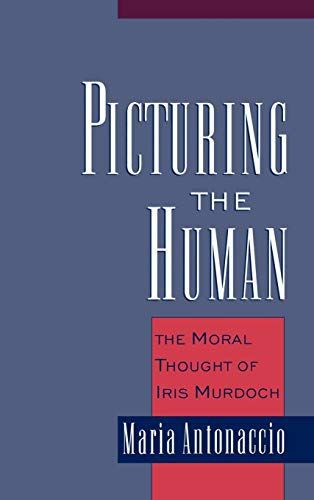
Iris Murdoch has long been known as one of the most deeply insightful and morally passionate novelists of our time. This attention has often eclipsed Murdoch’s sophisticated and influential work as a philosopher, which has had a wide-ranging impact on thinkers in moral philosophy as well as religious ethics and political theory. Yet it has never been the subject of a book-length study in its own right. Picturing the Human seeks to fill this gap. In this groundbreaking book, author Maria Antonaccio presents the first systematic and comprehensive treatment of Murdoch’s moral philosophy. Unlike literary critical studies of her novels, it offers a general philosophical framework for assessing Murdoch’s thought as a whole. Antonaccio also suggests a new interpretive method for reading Murdoch’s philosophy and outlines the significance of her thought in the context of current debates in ethics. This vital study will appeal to those interested in moral philosophy, religious ethics, and literary criticism, and grants those who have long loved Murdoch’s novels a closer look at her remarkable philosophy.
Contemporary philosophers have grown increasingly skeptical toward both morality and moral theory. Some argue that moral theory is a radically misguided enterprise that does not illuminate moral practice, while others simply deny the value of morality in human life. In this important new book, Louden responds to the arguments of both “anti-morality” and “anti-theory” skeptics. In Part One, he develops and defends an alternative conception of morality, which, he argues, captures more of the central features of both Aristotelian and Kantian ethics than do other contemporary models, and enables the central importance of morality to be convincingly reaffirmed. In Louden’s model, morality is primarily a matter of what one does to oneself, rather than what one does or does not do to others. This model eliminates the gulf that many anti-morality critics say exists between morality’s demands and the personal point of view. Louden further argues that morality’s primary focus should be on agents and their lives, rather than on right actions, and that it is always better to be morally better–i.e. it is impossible to be “too moral.” Part Two presents Louden’s alternative conception of moral theory. Here again he draws on the work of Aristotle and Kant, showing that their moral theories have far more in common than is usually thought, and that those features that they share can be the basis for a viable moral theory that is immune to the standard anti-theory objections. Louden reaffirms the necessity and importance of moral theory in human life, and shows that moral theories fulfill a variety of genuine and indispensable human needs.
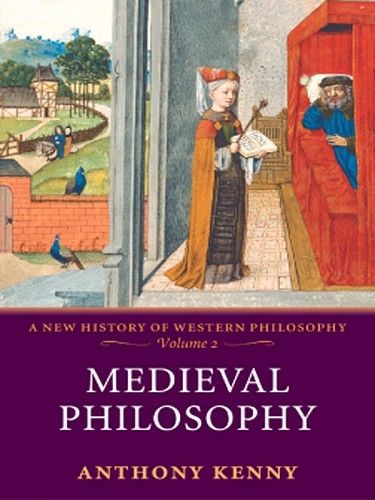
Sir Anthony Kenny here continues his fascinating account of the history of philosophy, focusing on the thousand-year-long medieval period. This is the second volume of a four-book set in which Kenny will unfold a magisterial new history of Western philosophy, the first major single-author history of philosophy to appear in decades. In this volume, Kenny takes us on a fascinating tour through more than a millennium of thought from 400 AD onwards, charting the story of philosophy from the founders of Christian and Islamic thought through to the Renaissance. The Middle Ages saw a great flourishing of philosophy, and the intellectual endeavor of the era reaches its climax in the thirteenth and fourteenth centuries, with the systems of the great schoolmen such as Thomas Aquinas and John Duns Scotus. With Kenny as guide, we see these major philosophers through the eyes of a man who has spent a lifetime contemplating their work. Thus we do not simply get an overview of philosophy, but also a penetrating and insightful critique of it. Kenny offers an illuminating account of various thinkers and schools of thought, from Augustine to Maimonides and from Grosseteste to Pomponazzi. And he offers much insight into medieval thinking about logic and language, knowledge, physics, metaphysics, the mind, the soul, and God. Vividly written, but serious and deep enough to offer a genuine understanding of the great philosophers, Kenny’s lucid and stimulating history will become the definitive work for anyone interested in the people and ideas that shaped the course of Western thought.
Charting new territory in the interface between science and ethics, Science and Virtue is a study of how the scientific mentality can affect the building of character, or the attainment of virtue by the individual. Drawing on inspiration from virtue-ethics and virtue-epistemology, Caruana argues that science is not just a system of knowledge but also an important factor determining a way of life.This book goes beyond the normal strategy evident in the science-ethics realm of examining specific ethical dilemmas posed by scientific innovations. Here Caruana deals with more fundamental issues, uncovering morally significant tendencies within the very core of the scientific mentality and explaining how science, its method, history and explanatory power can shape a conception of the good life.
ما از اخلاق چه انتظاری داریم؟ این سوال شاید تاحدودی برای عموم مردم و یا متخصصان این رشته قابل پاسخ باشد؛ اینکه خوب بودن را به ما بیاموزد و در تنظیم روابط فردی م...

جشن کتاب تهران به ایستگاه سی و یکم رسیده است. حال و احوال نشر کتاب خوب نیست و باید فرهنگدوستان را به خرید و هدیه دادن کتاب ترغیب نمود. خانه اخلاقپژوهان جوان ب...

بنیاد کتابهای اخلاق اسلامی عمدتا پالایش جان از آلودگیها و آراستن آن به زیباییها است. اندیشه محوری این قبیل کتابها آن است که انسان فعلی آنی نیست که باید باشد...

-
0 Comments