Notice: تابع WP_Block_Type_Registry::register به طورنادرست فراخوانی شد. نامهای نوع بلوک نباید حروف بزرگ داشته باشند. لطفاً برای اطلاعات بیشتر، اشکال زدایی در وردپرس را مشاهده کنید. (این پیام در نگارش 5.0.0 افزوده شده است.) in /home/ethicsho/public_html/wp-includes/functions.php on line 5313
Warning: Use of undefined constant TDC_PATH_LEGACY - assumed 'TDC_PATH_LEGACY' (this will throw an Error in a future version of PHP) in /home/ethicsho/public_html/wp-content/plugins/td-composer/td-composer.php on line 109
Warning: Use of undefined constant TDSP_THEME_PATH - assumed 'TDSP_THEME_PATH' (this will throw an Error in a future version of PHP) in /home/ethicsho/public_html/wp-content/plugins/td-composer/td-composer.php on line 113 بایگانیهای 3410 - خانه اخلاق پژوهان جوان Notice: Trying to access array offset on value of type bool in /home/ethicsho/public_html/wp-content/plugins/wp-ulike/inc/general-functions.php on line 807
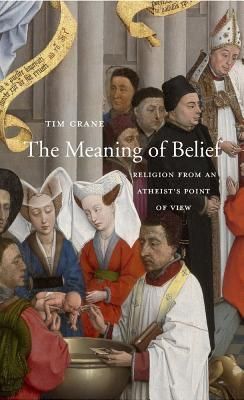
Contemporary debate about religion seems to be going nowhere. Atheists persist with their arguments, many plausible and some unanswerable, but these make no impact on religious believers. Defenders of religion find atheists equally unwilling to cede ground. The Meaning of Belief offers a way out of this stalemate. An atheist himself, Tim Crane writes that there is a fundamental flaw with most atheists’ basic approach: religion is not what they think it is. Atheists tend to treat religion as a kind of primitive cosmology, as the sort of explanation of the universe that science offers. They conclude that religious believers are irrational, superstitious, and bigoted. But this view of religion is almost entirely inaccurate. Crane offers an alternative account based on two ideas. The first is the idea of a religious impulse: the sense people have of something transcending the world of ordinary experience, even if it cannot be explicitly articulated. The second is the idea of identification: the fact that religion involves belonging to a specific social group and participating in practices that reinforce the bonds of belonging. Once these ideas are properly understood, the inadequacy of atheists’ conventional conception of religion emerges. The Meaning of Belief does not assess the truth or falsehood of religion. Rather, it looks at the meaning of religious belief and offers a way of understanding it that both makes sense of current debate and also suggests what more intellectually responsible and practically effective attitudes atheists might take to the phenomenon of religion.–
In this brief history, philosopher Nicholas White reviews 2,500 years of philosophical thought about happiness.Addresses key questions such as: What is happiness? Should happiness play such a dominant role in our lives? How can we deal with conflicts between the various things that make us happy? Considers the ways in which major thinkers from antiquity to the modern day have treated happiness: from Plato’s notion of the harmony of the soul, through to Nietzsche’s championing of conflict over harmony. Relates questions about happiness to ethics and to practical philosophy.
Recent scientific advances have placed many traditional philosophical concepts under great stress. In this pathbreaking book, the eminent philosopher Robert Nozick rethinks and transforms the concepts of truth, objectivity, necessity, contingency, consciousness, and ethics. Using an original method, he presents bold new philosophical theories that take account of scientific advances in physics, evolutionary biology, economics, and cognitive neuroscience, and casts current cultural controversies (such as whether all truth is relative and whether ethics is objective) in a wholly new light. Throughout, the book is open to, and engages in, the bold exploration of new philosophical possibilities.Philosophy will never look the same. Truth is embedded in space-time and is relative to it. However, truth is not socially relative among human beings (extraterrestrials are another matter). Objective facts are invariant under specified transformations; objective beliefs are arrived at by a process in which biasing factors do not play a significant role. Necessity’s domain is contracted (there are no important metaphysical necessities; water is not necessarily H2O) while the important and useful notion of degrees of contingency is elaborated. Gradations of consciousness (based upon “common registering”) yield increasing capacity to fit actions to the world. The originating function of ethics is cooperation to mutual benefit, and evolution has instilled within humans a “normative module”: the capacities to learn, internalize, follow norms, and make evaluations. Ethics has normative force because of the connection between ethics and conscious self-awareness. Nozick brings together the book’s novel theories to show the extent to which there are objective ethical truths.
Moral Dilemmas in Real Life purports to supply ways of thinking of, perhaps even dealing with, the ins and outs of ethical argument.such argument. The world today presents both individuals and communities with situations, which demand moral and ethical deliberations. From the more general issues of universal globalization to the very specific problems of every-day existence encountered by active agents, contemporary life is replete with moral and ethical conundrums. Any thinking person is required, so it seems, to be concerned, involved, or – at the very least – conversant with these issues and this book supplies the wherewithal needed. Applied ethics is that intellectual locale where theory meets praxis. Moral Dilemmas in Real Life is designed to make that meeting point explicit, by presenting a series of issues in well-grounded philosophical formulations. The book begins with the general relation between the individual and society – instilling ethical tension, and even clashes, between the private and the public in our discourse. Going on, from general to specific, it gradually narrows the ethical playing field to touch on medical ethics, the family, and the practice of punishment. In all cases, the book addresses both consensual and conventional social institutions and distortions thereof.
ما از اخلاق چه انتظاری داریم؟ این سوال شاید تاحدودی برای عموم مردم و یا متخصصان این رشته قابل پاسخ باشد؛ اینکه خوب بودن را به ما بیاموزد و در تنظیم روابط فردی م...

جشن کتاب تهران به ایستگاه سی و یکم رسیده است. حال و احوال نشر کتاب خوب نیست و باید فرهنگدوستان را به خرید و هدیه دادن کتاب ترغیب نمود. خانه اخلاقپژوهان جوان ب...

بنیاد کتابهای اخلاق اسلامی عمدتا پالایش جان از آلودگیها و آراستن آن به زیباییها است. اندیشه محوری این قبیل کتابها آن است که انسان فعلی آنی نیست که باید باشد...

-
0 Comments