Notice: تابع WP_Block_Type_Registry::register به طورنادرست فراخوانی شد. نامهای نوع بلوک نباید حروف بزرگ داشته باشند. لطفاً برای اطلاعات بیشتر، اشکال زدایی در وردپرس را مشاهده کنید. (این پیام در نگارش 5.0.0 افزوده شده است.) in /home/ethicsho/public_html/wp-includes/functions.php on line 5313
Warning: Use of undefined constant TDC_PATH_LEGACY - assumed 'TDC_PATH_LEGACY' (this will throw an Error in a future version of PHP) in /home/ethicsho/public_html/wp-content/plugins/td-composer/td-composer.php on line 109
Warning: Use of undefined constant TDSP_THEME_PATH - assumed 'TDSP_THEME_PATH' (this will throw an Error in a future version of PHP) in /home/ethicsho/public_html/wp-content/plugins/td-composer/td-composer.php on line 113 بایگانیهای Atheists - Attitudes - خانه اخلاق پژوهان جوان Notice: Trying to access array offset on value of type bool in /home/ethicsho/public_html/wp-content/plugins/wp-ulike/inc/general-functions.php on line 807
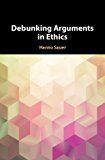
In this crisply written book, Hanno Sauer offers the first book-length treatment of debunking arguments in ethics, developing an empirically informed and philosophically sophisticated account of genealogical arguments and their significance for the reliability of moral cognition. He breaks new ground by introducing a series of novel distinctions into the current debate, which allows him to develop a framework for assessing the prospects of debunking or vindicating our moral intuitions. He also challenges the justification of some of our moral judgments by showing that they are based on epistemically defective processes.
Is all human behavior based on self-interest? Many social and biological theories would argue so, but such a perspective does not explain the many truly heroic acts committed by people willing to risk their lives to help others. In The Heart of Altruism, Kristen Renwick Monroe boldly lays the groundwork for a social theory receptive to altruism by examining the experiences described by altruists themselves: from Otto, a German businessman who rescued over a hundred Jews in Nazi Germany, to Lucille, a newspaper poetry editor, who, armed with her cane, saved a young girl who was being raped. Monroe’s honest and moving interviews with these little-known heroes enable her to explore the causes of altruism and the differences between altruists and other people. By delineating an overarching perspective of humanity shared by altruists, Monroe demonstrates how social theories may begin to account for altruism and debunks the notions of scientific inevitability that stem from an overemphasis on self-interest.As Monroe has discovered, the financial and religious backgrounds of altruists vary greatly–as do their views on issues such as welfare, civil rights, and morality. Altruists do, however, share a certain way of looking at the world: where the rest of us see a stranger, altruists see a fellow human being. It is this perspective that many social theories overlook. Monroe restores altruism to a general theory of ethical political behavior. She argues that to understand what makes one person act out of concern for others and not the self, we need to ask how that individual’s perspective sets the range of options he or she finds available.
The process of turning the news into just another product has been going on since at least the nineteenth century. But this process of commodification has accelerated since a few, publicly owned conglomerates have come to dominate the global media market. The emphasis on the bottom line has resulted in newsroom budget cuts and other business strategies that seriously endanger good journalism. Meanwhile, the growing influence of the Internet and partisan commentary has led even journalists themselves to question their role. In this book, Sandra L. Borden analyzes the ethical bind of public-minded journalists using Alasdair MacIntyre’s account of a ‘practice’. She suggests that MacIntyre’s framework helps us to see how journalism is normatively defined by the pursuit of goods appropriate to its purpose – and how money and other ‘external’ goods threaten that pursuit. Borden argues that developing and promoting the kind of robust group identity implied by the idea of a practice can help journalism better withstand the moral challenges posed by commodification. This book applies MacIntyre’s virtue theory to journalism with philosophical rigor, and at the same time is informed by the most current thinking from communication and other disciplines, including organizational studies and sociology.
With implications that go to the core of what it means to be human, the issues raised by genetic manipulation-especially cloning-have sparked a passionate debate among governmental, religious, and scientific quarters, as well as the media and the general public. Keeping to the actual science rather than speculation is of the utmost importance for an enlightened approach to this weighty discussion. In clear, lively prose, The Science and Ethics of Engineering the Human Germ Line: Mendel’s Maze provides an authoritative treatment of the principles of science and bioethics that bear upon such technologies as germ-line insertion and cloning. It offers a realistic assessment of possible applications, limitations, and new developments likely to arise in these areas. Written by a top physician-investigator, this book progresses from the basics of building a living organism from inanimate parts through to recombinant DNA technology, assisted reproductive technologies, and gene transfer and germ-line engineering. Ethical considerations are woven into this material throughout, while a special section covers the intellectual role played by various social biases. As genetic and reproductive technologies spread from the laboratory to the clinic-and society takes further notice-students and practitioners of biology and medicine, as well as the interested general reader, will find The Science and Ethics of Engineering the Human Germ Line: Mendel’s Maze to be an essential and accessible guide to these important subjects.
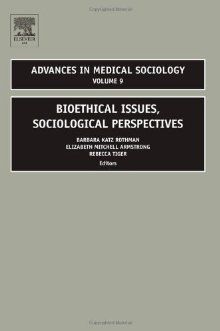
Book Summary of Bioethical Issues, Sociological PerspectivesThis volume deals with the topic of health inequalities and health disparities. The volume is divided into five sections. The first section includes an introductory look at the issue of health care inequalities and disparities and also an introduction to the volume. One of the backdrops to this topic in the United States was The National Healthcare Disparities Report and its focus on the ability of Americans to access health care and variation in the quality of care. Disparities related to socioeconomic status were included, as were disparities linked to race and ethnicity and the report also tried to explore the relationship between race/ethnicity and socioeconomic position, as explained in more detail in the first article in the book. The second article discusses a newer overall approach to issues related to health inequalities and health disparities.The remaining four sections of the book address more specific topics relating to inequalities and disparities. The second section examines racial and ethnic inequalities and disparities. The third section includes articles that address the issue from the perspective of research about health care providers and health care facilities. The last two sections of the book focus on consumers and topics of health care disparities, with Section 4 focused on issues related to substance abuse, mental health and related concerns. Section 5 includes articles looking at issues of vulnerable women, women with breast cancer and people with colorectal cancer.Inequalities and Disparities in Health Care and Health is important reading for medical sociologists and people working in other social science disciplines studying health-related issues. The volume also provides vital information for health services researchers, policy analysts and public health researchers..
ما از اخلاق چه انتظاری داریم؟ این سوال شاید تاحدودی برای عموم مردم و یا متخصصان این رشته قابل پاسخ باشد؛ اینکه خوب بودن را به ما بیاموزد و در تنظیم روابط فردی م...

جشن کتاب تهران به ایستگاه سی و یکم رسیده است. حال و احوال نشر کتاب خوب نیست و باید فرهنگدوستان را به خرید و هدیه دادن کتاب ترغیب نمود. خانه اخلاقپژوهان جوان ب...

بنیاد کتابهای اخلاق اسلامی عمدتا پالایش جان از آلودگیها و آراستن آن به زیباییها است. اندیشه محوری این قبیل کتابها آن است که انسان فعلی آنی نیست که باید باشد...

-
0 Comments