Notice: تابع WP_Block_Type_Registry::register به طورنادرست فراخوانی شد. نامهای نوع بلوک نباید حروف بزرگ داشته باشند. لطفاً برای اطلاعات بیشتر، اشکال زدایی در وردپرس را مشاهده کنید. (این پیام در نگارش 5.0.0 افزوده شده است.) in /home/ethicsho/public_html/wp-includes/functions.php on line 5313
Warning: Use of undefined constant TDC_PATH_LEGACY - assumed 'TDC_PATH_LEGACY' (this will throw an Error in a future version of PHP) in /home/ethicsho/public_html/wp-content/plugins/td-composer/td-composer.php on line 109
Warning: Use of undefined constant TDSP_THEME_PATH - assumed 'TDSP_THEME_PATH' (this will throw an Error in a future version of PHP) in /home/ethicsho/public_html/wp-content/plugins/td-composer/td-composer.php on line 113 بایگانیهای 2993 - خانه اخلاق پژوهان جوان Notice: Trying to access array offset on value of type bool in /home/ethicsho/public_html/wp-content/plugins/wp-ulike/inc/general-functions.php on line 807
In THE CRITIQUE OF JUDGMENT (1790), Immanuel Kant (1724-1804) seeks to establish the a priori principles underlying the faculty of judgement, just as he did in his previous critiques of pure and practical reason. The first part deals with the subject of our aesthetic sensibility; we respond to certain natural phenomena as beautiful, says Kant, when we recognise in nature a harmonious order that satisfies the mind’s own need for order. The second half of the critique concentrates on the apparent teleology in nature’s design of organisms. Kant argues that our minds are inclined to see purpose and order in nature and this is the main principle underlying all of our judgements. Although this might imply a super sensible Designer, Kant insists that we cannot prove a supernatural dimension or the existence of God. Such considerations are beyond reason and are solely the province of faith.
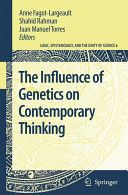
This volume reflects on the effects of recent discoveries in genetics on a broad range of scientific fields. In addition to neuroscience, evolutionary biology, anthropology and medicine, contributors analyze the effects of genetics on theories of health, law, epistemology and philosophy of biology. Social and moral concerns about the relationship between genetics, society and the individual also figure prominently. Genetic discoveries fuel central contemporary public policy debates concerning, for example, human cloning, equitable access to healthcare or the role of genetics in medicine. Perhaps more fundamentally, advances in genetics are altering our perception of human life and death.An interview with François Jacob by Anne Fagot-Largeault opens the volume. In this interview, Jacob, who shared a Nobel Prize with André Lwoff and Jacques Monod for their discoveries concerning genetic control of enzyme and virus synthesis, addresses many of the central methodological epistemological and ethical questions covered in the volume. The dynamic interdisciplinary character of this volume makes it relevant to scholars from many disciplines, from biology, philosophy and the social sciences.
ما از اخلاق چه انتظاری داریم؟ این سوال شاید تاحدودی برای عموم مردم و یا متخصصان این رشته قابل پاسخ باشد؛ اینکه خوب بودن را به ما بیاموزد و در تنظیم روابط فردی م...

جشن کتاب تهران به ایستگاه سی و یکم رسیده است. حال و احوال نشر کتاب خوب نیست و باید فرهنگدوستان را به خرید و هدیه دادن کتاب ترغیب نمود. خانه اخلاقپژوهان جوان ب...

بنیاد کتابهای اخلاق اسلامی عمدتا پالایش جان از آلودگیها و آراستن آن به زیباییها است. اندیشه محوری این قبیل کتابها آن است که انسان فعلی آنی نیست که باید باشد...

-
0 Comments