Notice: تابع WP_Block_Type_Registry::register به طورنادرست فراخوانی شد. نامهای نوع بلوک نباید حروف بزرگ داشته باشند. لطفاً برای اطلاعات بیشتر، اشکال زدایی در وردپرس را مشاهده کنید. (این پیام در نگارش 5.0.0 افزوده شده است.) in /home/ethicsho/public_html/wp-includes/functions.php on line 5313
Warning: Use of undefined constant TDC_PATH_LEGACY - assumed 'TDC_PATH_LEGACY' (this will throw an Error in a future version of PHP) in /home/ethicsho/public_html/wp-content/plugins/td-composer/td-composer.php on line 109
Warning: Use of undefined constant TDSP_THEME_PATH - assumed 'TDSP_THEME_PATH' (this will throw an Error in a future version of PHP) in /home/ethicsho/public_html/wp-content/plugins/td-composer/td-composer.php on line 113 بایگانیهای Teleology - Early Works To 1800 - خانه اخلاق پژوهان جوان Notice: Trying to access array offset on value of type bool in /home/ethicsho/public_html/wp-content/plugins/wp-ulike/inc/general-functions.php on line 807
Why should we be tolerant? What does it mean to “live and let live”? What ought to be tolerated and what not? Toleration: A Critical Introductionis a comprehensive and accessible philosophical introduction to toleration. The first part of the book clearly and coherently introduces and assesses the major theoretical accounts of toleration, examining toleration in light of challenges from skepticism, value pluralism and reasonableness. Catriona McKinnon also draws from those philosophers whose theories are central to toleration, from Locke and Mill to Rawls. In the second part of the book, McKinnon applies the theories of toleration to urgent contemporary problems such as female circumcision, the French headscarves affair, artistic freedom, pornography and censorship, and holocaust denial. Toleration: ACritical Introductionprovides a solid theoretical base to those who value toleration, whilst considering the challenges toleration faces in practice. It provides anideal starting point for those coming to the topic for the first time, and anyone interested in the challenges facing toleration today.
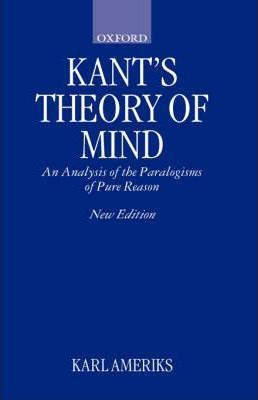
This seminal contribution to Kant studies, originally published in 1982, was the first to present a thorough survey and evaluation of Kant’s theory of mind. Ameriks focuses on Kant’s discussion of the Paralogisms in the Critique of Pure Reason, and examines how the themes raised there are treated in the rest of Kant’s writings. Ameriks demonstrates that Kant developed a theory of mind that is much more rationalistic and defensible than most interpreters have allowed.
Is it possible to study ethics objectively, or are moral judgements inevitably subjective? Are ancient theories of ethics of any contemporary relevance? Which ethical theory offers the most convincing explanation of how best to live one’s life? Eight Theories of Ethics is a comprehensive introduction to the theories of ethics encountered by first-time students. Gordon Graham introduces the fundamental concepts that underpin ethics, such as relativism and objectivity, and then devotes his attention to each of the eight major theories of ethics: * egoism* hedonism* naturalism and virtue theory* existentialism* Kantianism* utilitarianism* contractualism* religion. Throughout the book, Gordon Graham draws on examples from great moral philosophers such as Aristotle, Kant and Mill, and also from contemporary debates over human nature, the environment and citizenship. Eight Theories of Ethics is written in an engaging and student-friendly style, with detailed suggestions for further reading at the end of each chapter – including original sources and contemporary discussions. It is ideal for anyone coming to this area of philosophy for the first time, and for those studying ethics in related disciplines such as politics, law, nursing and medicine.
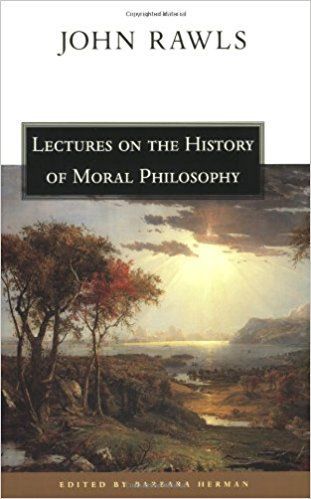
The premier political philosopher of his day, John Rawls, in three decades of teaching at Harvard, has had a profound influence on the way philosophical ethics is approached and understood today. This book brings together the lectures that inspired a generation of students–and a regeneration of moral philosophy. It invites readers to learn from the most noted exemplars of modern moral philosophy with the inspired guidance of one of contemporary philosophy’s most noteworthy practitioners and teachers.Central to Rawls’s approach is the idea that respectful attention to the great texts of our tradition can lead to a fruitful exchange of ideas across the centuries. In this spirit, his book engages thinkers such as Leibniz, Hume, Kant, and Hegel as they struggle in brilliant and instructive ways to define the role of a moral conception in human life. The lectures delineate four basic types of moral reasoning: perfectionism, utilitarianism, intuitionism, and–the ultimate focus of Rawls’s course–Kantian constructivism. Comprising a superb course on the history of moral philosophy, they also afford unique insight into how John Rawls has transformed our view of this history.
ما از اخلاق چه انتظاری داریم؟ این سوال شاید تاحدودی برای عموم مردم و یا متخصصان این رشته قابل پاسخ باشد؛ اینکه خوب بودن را به ما بیاموزد و در تنظیم روابط فردی م...

جشن کتاب تهران به ایستگاه سی و یکم رسیده است. حال و احوال نشر کتاب خوب نیست و باید فرهنگدوستان را به خرید و هدیه دادن کتاب ترغیب نمود. خانه اخلاقپژوهان جوان ب...

بنیاد کتابهای اخلاق اسلامی عمدتا پالایش جان از آلودگیها و آراستن آن به زیباییها است. اندیشه محوری این قبیل کتابها آن است که انسان فعلی آنی نیست که باید باشد...

-
0 Comments