Notice: تابع WP_Block_Type_Registry::register به طورنادرست فراخوانی شد. نامهای نوع بلوک نباید حروف بزرگ داشته باشند. لطفاً برای اطلاعات بیشتر، اشکال زدایی در وردپرس را مشاهده کنید. (این پیام در نگارش 5.0.0 افزوده شده است.) in /home/ethicsho/public_html/wp-includes/functions.php on line 5313
Warning: Use of undefined constant TDC_PATH_LEGACY - assumed 'TDC_PATH_LEGACY' (this will throw an Error in a future version of PHP) in /home/ethicsho/public_html/wp-content/plugins/td-composer/td-composer.php on line 109
Warning: Use of undefined constant TDSP_THEME_PATH - assumed 'TDSP_THEME_PATH' (this will throw an Error in a future version of PHP) in /home/ethicsho/public_html/wp-content/plugins/td-composer/td-composer.php on line 113 بایگانیهای 2704 - خانه اخلاق پژوهان جوان Notice: Trying to access array offset on value of type bool in /home/ethicsho/public_html/wp-content/plugins/wp-ulike/inc/general-functions.php on line 807
Social Motivation, Justice, and the Moral Emotions proposes an attribution theory of interpersonal or social motivation that distinguishes between the role of thinking and feeling in determining action. The place of this theory within the larger fields of motivation and attributional analyses is explored. It features new thoughts concerning social motivation on such topics as help giving, aggression, achievement evaluation, compliance to commit a transgression, as well as new contributions to the understanding of social justice. Included also is material on moral emotions, with discussions of admiration, contempt, envy, gratitude, and other affects not considered in Professor Weiner’s prior work. The text also contains previously unexamined topics regarding social inferences of arrogance and modesty and the role of mediators versus moderators in theory building. Divided into five chapters, this book: *Considers the logical development and structure of a proposed theory of social motivation and justice; *Reviews meta-analytic tests of the theory within the contexts of help giving and aggression and examines issues related to cultural and individual differences; *Focuses on moral emotions including an analysis of admiration, envy, gratitude, jealousy, scorn, and others; *Discusses conditions where reward decreases motivation while punishment augments strivings; and *Provides applications that are beneficial in the classroom, in therapy, and in training programs. Social Motivation, Justice, and the Moral Emotions appeals to practicing and research psychologists and advanced students in a variety of fields including social, educational, personality, political/legal, health, and clinical psychology. It will also serve as a supplement in courses on motivational psychology, emotion and motivation, altruism and/or pro-social behavior, aggression, social judgment, and morality. Also included is the raw material (e.g., questionnaires, surveys, etc.) for 13 experiments relating to core predictions of the proposed attribution theory.
Bioethics, still in its infancy, is routinely called on by the government to provide political cover for controversial public health decisions involving the life and death of Americans. Doomsday or worst-case scenarios are often at the heart of these biopolitical decisions. A central feature of science fiction, these scenarios can impart useful insights. But worst-case scenarios, like Frankenstein’s monster, can also be unpredictably destructive, undermining both preparedness and the very values bioethics seeks to promote. Discovering a new flu strain, for example, leads immediately to visions of the 1918 flu pandemic, the worst in human history. Likewise, a “ticking time bomb” scenario leads to the use of physicians for torture, and he all purpose worst case charge of “socialism” threatens to derail meaningful healthcare reform. In Worst Case Bioethics George Annas employs contemporary disputes involving death and disaster to explore the radical changes underway in public health practice, the application of constitutional law to medicine, and human rights discourse to promote human health and wellbeing. Worst-case scenarios, especially worst-case bioethics scenarios, distort debate, limit options, rationalize human rights abuses, and undermine equality and social justice. It is, nonetheless, possible to temper worst-case scenarios in ways that promote both the development of a meaningful American bioethics, and a life and liberty affirming global health and human rights movement. Written at the intersection of law, bioethics, public health, and human rights, Worst Case Bioethics will interest not only bioethicists but scholars in public health, public policy, and human rights law, as well as members of the public who want to participate in these policy debates. Written at the intersection of law, bioethics, public health, and human rights, Worse Case Bioethics will interest not only bioethicists but scholars in public health, public policy, and human rights law.
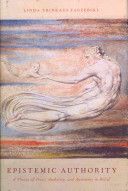
In this book Linda Trinkaus Zagzebski gives an extended argument that the self-reflective person is committed to belief on authority. Epistemic authority is compatible with autonomy, but epistemic self-reliance is incoherent. She argues that epistemic and emotional self-trust are rational and inescapable, that consistent self-trust commits us to trust in others, and that among those we are committed to trusting are some whom we ought to treat as epistemic authorities, modeled on the well-known principles of authority of Joseph Raz. Some of these authorities can be in the moral and religious domains. Why have people for thousands of years accepted epistemic authority in religious communities? A religious community’s justification for authority is typically based on beliefs unique to that community. Unfortunately, that often means that from the community’s perspective, its justifying claims are insulated from the outside; whereas from an outside perspective, epistemic authority in the community appears unjustified. But as Zagzebski’s argument shows, an individual’s acceptance of authority in her community can be justified by principles that outsiders accept, and the particular beliefs justified by that authority are not immune to external critiques. Why have people for thousands of years accepted epistemic authority in religious communities? A religious community’s justification for authority is typically based on beliefs unique to that community. Unfortunately, that often means that from the community’s perspective, its justifying claims are insulated from the outside; whereas from an outside perspective, epistemic authority in the community appears unjustified. But as Zagzebski’s argument shows, an individual’s acceptance of authority in her community can be justified by principles that outsiders accept, and the particular beliefs justified by that authority are not immune to external critiques.
ما از اخلاق چه انتظاری داریم؟ این سوال شاید تاحدودی برای عموم مردم و یا متخصصان این رشته قابل پاسخ باشد؛ اینکه خوب بودن را به ما بیاموزد و در تنظیم روابط فردی م...

جشن کتاب تهران به ایستگاه سی و یکم رسیده است. حال و احوال نشر کتاب خوب نیست و باید فرهنگدوستان را به خرید و هدیه دادن کتاب ترغیب نمود. خانه اخلاقپژوهان جوان ب...

بنیاد کتابهای اخلاق اسلامی عمدتا پالایش جان از آلودگیها و آراستن آن به زیباییها است. اندیشه محوری این قبیل کتابها آن است که انسان فعلی آنی نیست که باید باشد...

-
0 Comments