Epistemic Authority
by Linda Trinkaus Zagzebski
Philosophy / Epistemology
,Philosophy / Religious
,Political Science / General
,Psychology / General
2012
1645
121.6
9780199936472
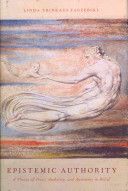
In this book Linda Trinkaus Zagzebski gives an extended argument that the self-reflective person is committed to belief on authority. Epistemic authority is compatible with autonomy, but epistemic self-reliance is incoherent. She argues that epistemic and emotional self-trust are rational and inescapable, that consistent self-trust commits us to trust in others, and that among those we are committed to trusting are some whom we ought to treat as epistemic authorities, modeled on the well-known principles of authority of Joseph Raz. Some of these authorities can be in the moral and religious domains. Why have people for thousands of years accepted epistemic authority in religious communities? A religious community’s justification for authority is typically based on beliefs unique to that community. Unfortunately, that often means that from the community’s perspective, its justifying claims are insulated from the outside; whereas from an outside perspective, epistemic authority in the community appears unjustified. But as Zagzebski’s argument shows, an individual’s acceptance of authority in her community can be justified by principles that outsiders accept, and the particular beliefs justified by that authority are not immune to external critiques. Why have people for thousands of years accepted epistemic authority in religious communities? A religious community’s justification for authority is typically based on beliefs unique to that community. Unfortunately, that often means that from the community’s perspective, its justifying claims are insulated from the outside; whereas from an outside perspective, epistemic authority in the community appears unjustified. But as Zagzebski’s argument shows, an individual’s acceptance of authority in her community can be justified by principles that outsiders accept, and the particular beliefs justified by that authority are not immune to external critiques.
Warning: Invalid argument supplied for foreach() in /home/ethicsho/public_html/wp-content/themes/Hedayat/woocommerce/single-product.php on line 641







Notice: تابع id به طورنادرست فراخوانی شد. خاصیت های محصول نباید به صورت مستقیم مشاهده شود. Backtrace: require('wp-blog-header.php'), require_once('wp-includes/template-loader.php'), include('/themes/Hedayat/woocommerce/single-product.php'), WC_Abstract_Legacy_Product->__get, wc_doing_it_wrong لطفاً برای اطلاعات بیشتر، اشکال زدایی در وردپرس را مشاهده کنید. (این پیام در نگارش 3.0 افزوده شده است.) in /home/ethicsho/public_html/wp-includes/functions.php on line 5313