Notice: تابع WP_Block_Type_Registry::register به طورنادرست فراخوانی شد. نامهای نوع بلوک نباید حروف بزرگ داشته باشند. لطفاً برای اطلاعات بیشتر، اشکال زدایی در وردپرس را مشاهده کنید. (این پیام در نگارش 5.0.0 افزوده شده است.) in /home/ethicsho/public_html/wp-includes/functions.php on line 5313
Warning: Use of undefined constant TDC_PATH_LEGACY - assumed 'TDC_PATH_LEGACY' (this will throw an Error in a future version of PHP) in /home/ethicsho/public_html/wp-content/plugins/td-composer/td-composer.php on line 109
Warning: Use of undefined constant TDSP_THEME_PATH - assumed 'TDSP_THEME_PATH' (this will throw an Error in a future version of PHP) in /home/ethicsho/public_html/wp-content/plugins/td-composer/td-composer.php on line 113 بایگانیهای 171 - صفحه 2 از 2 - خانه اخلاق پژوهان جوان Notice: Trying to access array offset on value of type bool in /home/ethicsho/public_html/wp-content/plugins/wp-ulike/inc/general-functions.php on line 807
In this cogent and accessible introduction to philosophy, the distinguished author of Mortal Questions and The View From Nowhere sets forth the central problems of philosophical inquiry for the beginning student. Arguing that the best way to learn about philosophy is to think about its questions directly, Thomas Nagel considers possible solutions to nine problems–knowledge of the world beyond our minds, knowledge of other minds, the mind-body problem, free will, the basis of morality, right and wrong, the nature of death, the meaning of life, and the meaning of words. Although he states his own opinions clearly, Nagel leaves these fundamental questions open, allowing students to entertain other solutions and encouraging them to think for themselves.
” The Justice of Mercyis exhilarating reading. Teeming with intelligence and insight, this study immediately establishes itself as the unequaled philosophical and legal exploration of mercy. But Linda Meyer’s book reaches beyond mercy to offer reconceptualizations of justice and punishment themselves. Meyer’s ambition is to rethink the failed retributivist paradigm of criminal justice and to replace it with an ideal of merciful punishment grounded in a Heideggerian insight into the gift of being-with-others. The readings of criminal law, Heideggerian and Levinasian philosophy, and literature are powerful and provocative. The Justice of Mercyis a radical and rigorous exploration of both punishment and mercy as profoundly human activities.” —Roger Berkowitz, Director of the Hannah Arendt Center for Ethical and Political Thinking, Bard College “This book addresses a question both ancient and urgently timely: how to reconcile the law’s call to justice with the heart’s call to mercy? Linda Ross Meyer’s answer is both philosophical and pragmatic, taking us from the conceptual roots of the supposed conflict between justice and mercy to concrete examples in both fiction and contemporary criminal law. Energetic, eloquent, and moving, this book’s defense of mercy will resonate with philosophers, legal scholars, lawyers, and policymakers engaged with criminal justice, and anyone concerned about our current harshly punitive legal system.” —Carol Steiker, Harvard Law School “Far from being a utopian, soft and ineffectual concept, Meyer shows that mercy already operates within the law in ways that we usually do not recognize. . . . Meyer’s piercing insights and careful analysis bring the reader to think of law, justice, and mercy itself in a new and far more profound light.” —James Martel, San Francisco State University How can granting mercy be just if it gives a criminal less punishment than he “deserves” and treats his case differently from others like it? This ancient question has become central to debates over truth and reconciliation commissions, alternative dispute resolution, and other new forms of restorative justice. The traditional response has been to marginalize mercy and to cast doubt on its ability to coexist with forms of legal justice. Flipping the relationship between justice and mercy, Linda Ross Meyer argues that our rule-bound and harsh system of punishment is deeply flawed and that mercy should be, not the crazy woman in the attic of the law, but the lady of the house. This book articulates a theory of punishment with mercy and illustrates the implications of that theory with legal examples drawn from criminal law doctrine, pardons, mercy in military justice, and fictional narratives of punishment and mercy. Linda Ross Meyer is Carmen Tortora Professor of Law at Quinnipiac University School of Law; President of the Association for the Study of Law, Culture and the Humanities; and Associate Editor of Journal of Law, Culture and the Humanities.
In this important book, Dr. Laura Schlessinger shows men and women that they can have a Good Life no matter how Bad their Childhood. For each of us, there is a connection between our early family dynamics and experiences and our current attitudes and decisions. Many of the people Dr. Laura has helped did not realize how their histories impacted their adult lives, or how their choices in people, repetitive situations, and decisions — even their emotional reactions — were connected to those early negative experiences, playing a major role in their current unhappiness. For these people and millions like them, too much time is dedicated to repeating the ugly dynamics of childhood in a vain attempt to repair or cope with deep hurt and longings. Too often they use their emotional pain to control others or excuse their own inappropriate and destructive behaviors. Some turn to therapy, only to find themselves trapped in their self-pitying victim mode, robbed of optimism, confidence, and growth. Dr. Laura will help you realize that no matter what circumstances you came from or currently live in, you are ultimately responsible for how you react to them. The acceptance of this basic truth is the source of your power to secure the Good Life you long for. In her signature straightforward style, with real-life examples, Dr. Laura shows you what you will gain by not being satisfied with an identity as a victim, or even as a survivor — but striving to be a victor! In Bad Childhood — Good Life, Dr. Laura will guide you to accept the truth of the assaults on your psyche and soul, understand your unique coping style and how it impacts your daily thoughts and actions, and help you embrace a life of more peace and happiness. Bad Childhood — Good Life comes from a compassionate and personal place. Dr. Laura also reveals some of her own experiences with a difficult childhood and what efforts it took to attain a Good Life. She writes, “My resilience has paid off, and I’m doing the best I can with what I’ve got.” Now you can, too.
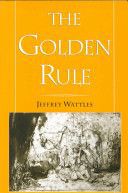
In an age plagued by selfishness, materialism, and violence, ethicists feel impelled to find a universal system of values. To arrive at such a “rule” requires that they struggle with a series of seemingly irreconcilable questions. First, are universal values possible in a pluralistic world, and how does one do justice to both human equality and to individual and cultural differences? How is one to understand the interface between religious moral teachings and the ethics of secular humanism? Finally, can such a system integrate moral intuition and moral reason? In the first scholarly book in English on the golden rule since the seventeenth century, Jeffrey Wattles demonstrates how a clear understanding of the psychological, philosophical, and religious ramifications of the rule can form the synthesis needed to solve these dilemas. The golden rule, “do to others as you would have others do to you,” is widely assumed to have a single meaning, shared by virtually all the world’s religions. It strikes the average person as intuitively true, though most modern philosophers reject it or recast it in more rational form. Wattles surveys the history of the golden rule and its spectrum of meanings in diverse contexts, ranging from Confusius to Plato and Aristotle, from classical Jewish literature to the New Testament. He also considers medieval, Reformation, and modern theological and philosophical responses and objections to the rule, as well as how some early twentieth-century American leaders have tried to use the rule. Wattles draws these diverse interpretation into a synthesis that responds, at the psychological, philosophical, and religious levels, to the challenges to moral living in any given culture. Emotionally, the rules counsels consideration for others feelings by asking that “you place yourself in their shoes.” Intellectually, it activates moral thinking about what is fair. At the same time, it retains a spiritual appeal as “the principle of the practice of the family of God.” Demonstrating how, despite its contentious history, this age-old ethical principle contiues to be relevant in dealing with contemporary issues, The Golden Rule should interest students and scholars working in religious studies, philosophy and ethics, and psychology, as well as anyone looking for an alternative to postmodern cynicism and alienation.
ما از اخلاق چه انتظاری داریم؟ این سوال شاید تاحدودی برای عموم مردم و یا متخصصان این رشته قابل پاسخ باشد؛ اینکه خوب بودن را به ما بیاموزد و در تنظیم روابط فردی م...

جشن کتاب تهران به ایستگاه سی و یکم رسیده است. حال و احوال نشر کتاب خوب نیست و باید فرهنگدوستان را به خرید و هدیه دادن کتاب ترغیب نمود. خانه اخلاقپژوهان جوان ب...

بنیاد کتابهای اخلاق اسلامی عمدتا پالایش جان از آلودگیها و آراستن آن به زیباییها است. اندیشه محوری این قبیل کتابها آن است که انسان فعلی آنی نیست که باید باشد...

-
0 Comments