Notice: تابع WP_Block_Type_Registry::register به طورنادرست فراخوانی شد. نامهای نوع بلوک نباید حروف بزرگ داشته باشند. لطفاً برای اطلاعات بیشتر، اشکال زدایی در وردپرس را مشاهده کنید. (این پیام در نگارش 5.0.0 افزوده شده است.) in /home/ethicsho/public_html/wp-includes/functions.php on line 5313
Warning: Use of undefined constant TDC_PATH_LEGACY - assumed 'TDC_PATH_LEGACY' (this will throw an Error in a future version of PHP) in /home/ethicsho/public_html/wp-content/plugins/td-composer/td-composer.php on line 109
Warning: Use of undefined constant TDSP_THEME_PATH - assumed 'TDSP_THEME_PATH' (this will throw an Error in a future version of PHP) in /home/ethicsho/public_html/wp-content/plugins/td-composer/td-composer.php on line 113 بایگانیهای 171 - خانه اخلاق پژوهان جوان Notice: Trying to access array offset on value of type bool in /home/ethicsho/public_html/wp-content/plugins/wp-ulike/inc/general-functions.php on line 807
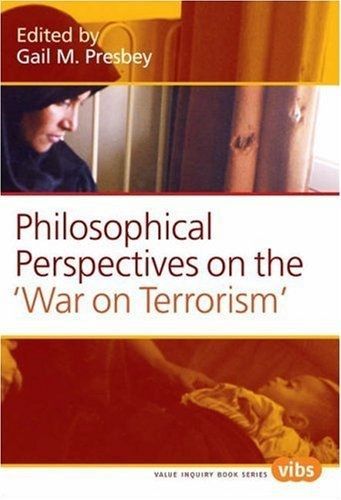
This book responds to the Bush Administration position on the “war on terror.” It examines preemption within the context of “just war”; justification for the United States-led invasion of Iraq, with some authors charging that its tactics serve to increase terror; global terrorism; and concepts such as reconciliation, Islamic identity, nationalism, and intervention.
Confronted daily with decisions on how to present their stories, what to write and what not to write, journalists and the media are frequently accused of sensationalizing, of choosing only to report the bad news, and of misquoting those they interview. In Morals and the Media, Nick Russell addresses many of the concerns the public has about the media. He focuses on the fundamental moral questions and ethical dilemmas faced by journalists and discusses how the media both reflect and influence society. Displaying a broad understanding of the issues, he examines how values have been developed and applied, suggesting value systems which can be used to judge special situations. The book covers all the major print and electronic media and addresses a wide range of ethical issues with candour and insight gained from the author’s long career as a practising journalist. He points out how Canadian media ethics differ from those in the United States and includes many examples drawn from his impressive knowledge of the Canadian journalistic scene. The ‘Tough Calls’ at the end of each chapter invite readers to test their own ethics in scenarios drawn from real news stories. Morals and the Media is the first book to tackle journalistic decision-making in Canada. It will be essential reading in journalism courses but also an important resource for journalists, as it offers criteria for analyzing complex situations and reaching justifiable decisions. It will also be of interest to the consumers of journalism – the readers, listeners, and watchers who wonder why the media do what they do.
Examining the emergence and development of legal positivism as a distinctive and particularly powerful tradition in legal thought, this book places particular emphasis on its relationship to traditional understandings of the common law and on forms of idealism. The focus throughout is on the consequences positivism holds for the idea of the rule of law and of law’s role in maintaining (and perhaps creating) conditions of stable social order. The book examines the shifts in thinking about the rule of law and the wider significance of law, brought about by changing conceptions of the nature of law: from an understanding of law in which the primary focus is on rights, to an articulation of the legal order as a body of deliberately posited rules and, finally, to an understanding of law as a corpus of systematic rules and principles, underpinned by an abiding concern with individual rights.
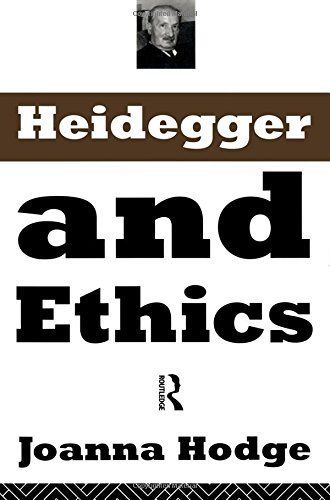
Heidegger and ethics is a contentious conjunction of terms. Martin Heidegger himself rejected the notion of ethics, while his endorsement of Nazism is widely seen as unethical. This major study examines the complex and controversial issues involved in bringing Heidegger and ethics together. Working backwards through his work, from his 1964 claim that philosophy has been completed to his first major book,Being and Time,Joanna Hodge questions Heidegger’s denial that his inquiries were concerned with ethics. She discovers a form of ethics in Heidegger’s thinking which elucidates his important distinction between metaphysics and philosophy. Opposing many contemporary views, Hodge proposes that ethics can be retrieved and questions the relation between ethics and metaphysics that Heidegger made so pervasive.
What distinguishes evils from ordinary wrongs? Is hatred a necessarily evil? Are some evils unforgivable? Are there evils we should tolerate? What can make evils hard to recognize? Are evils inevitable? How can we best respond to and live with evils? Claudia Card offers a secular theory of evil that responds to these questions and more. Evils, according to her theory, have two fundamental components. One component is reasonably foreseeable intolerable harm — harm that makes a life indecent and impossible or that makes a death indecent. Theother component is culpable wrongdoing. Atrocities, such as genocides, slavery, war rape, torture, and severe child abuse, are Card’s paradigms because in them these key elements are writ large. Atrocities deserve more attention than secular philosophers have so far paid them. They are distinguishedfrom ordinary wrongs not by the psychological states of evildoers but by the seriousness of the harm that is done. Evildoers need not be sadistic: they may simply be negligent or unscrupulous in pursuing their goals. Card’s theory represents a compromise between classic utilitarian and stoic alternatives (including Kant’s theory of radical evil). Utilitarians tend to reduce evils to their harms; Stoics tend to reduce evils to the wickedness of perpetrators: Card accepts neither reduction. She also responds toNietzsche’s challenges about the worth of the concept of evil, and she uses her theory to argue that evils are more important than merely unjust inequalities. She applies the theory in explorations of war rape and violence against intimates. She also takes up what Primo Levi called “the gray zone”,where victims become complicit in perpetrating on others evils that threaten to engulf themselves. While most past accounts of evil have focused on perpetrators, Card begins instead from the position of the victims, but then considers more generally how to respond to — and live with — evils, asvictims, as perpetrators, and as those who have become both.
ما از اخلاق چه انتظاری داریم؟ این سوال شاید تاحدودی برای عموم مردم و یا متخصصان این رشته قابل پاسخ باشد؛ اینکه خوب بودن را به ما بیاموزد و در تنظیم روابط فردی م...

جشن کتاب تهران به ایستگاه سی و یکم رسیده است. حال و احوال نشر کتاب خوب نیست و باید فرهنگدوستان را به خرید و هدیه دادن کتاب ترغیب نمود. خانه اخلاقپژوهان جوان ب...

بنیاد کتابهای اخلاق اسلامی عمدتا پالایش جان از آلودگیها و آراستن آن به زیباییها است. اندیشه محوری این قبیل کتابها آن است که انسان فعلی آنی نیست که باید باشد...

-
0 Comments