Notice: تابع WP_Block_Type_Registry::register به طورنادرست فراخوانی شد. نامهای نوع بلوک نباید حروف بزرگ داشته باشند. لطفاً برای اطلاعات بیشتر، اشکال زدایی در وردپرس را مشاهده کنید. (این پیام در نگارش 5.0.0 افزوده شده است.) in /home/ethicsho/public_html/wp-includes/functions.php on line 5313
Warning: Use of undefined constant TDC_PATH_LEGACY - assumed 'TDC_PATH_LEGACY' (this will throw an Error in a future version of PHP) in /home/ethicsho/public_html/wp-content/plugins/td-composer/td-composer.php on line 109
Warning: Use of undefined constant TDSP_THEME_PATH - assumed 'TDSP_THEME_PATH' (this will throw an Error in a future version of PHP) in /home/ethicsho/public_html/wp-content/plugins/td-composer/td-composer.php on line 113 بایگانیهای Richard Mason - خانه اخلاق پژوهان جوان Notice: Trying to access array offset on value of type bool in /home/ethicsho/public_html/wp-content/plugins/wp-ulike/inc/general-functions.php on line 807
Widely regarded as one of the foremost figures in contemporary philosophy of religion, Linda Zagzebski has written a new book that will be seen as a major contribution to ethical theory and theological ethics. At the core of the book lies a new form of virtue theory based on the emotions. Quite distinct from deontological, consequentialist and teleological virtue theories, this one has a particular theological, indeed Christian, foundation. The new theory helps to resolve philosophical problems and puzzles of various kinds: the dispute between cognitivism and non-cognitivism in moral psychology, the claims and counterclaims of realism and anti-realism in the metaphysics of value, and paradoxes of perfect goodness in natural theology, including the problem of evil. As with Zagzebski’s previous Cambridge book Virtues of the Mind, this new book will be sought out eagerly by a broad swathe of professionals and graduate students in philosophy and religious studies.
“This compact book is intended as a practical guide for students involved in research, and it fulfils that goal well. …The chapter on ‘The funding and sponsorship of research’ is an excellent example of the author’s willingness and ability to include relevant, sensitive and practical content that is often left out of texts on ethics. …This is an easy book to read, it is concise and keeps to relevant content. …It would make an excellent text for a course in research ethics and/or research methods, and it will also provide an excellent planning and self-review guide for a practising researcher.” Higher Education Review”The book is aimed primarily at higher education students in education and the social sciences who are conducting a (typically small scale) research project. That is not to say that the publication is of little value to the supervisors of such projects or to experienced researchers as a resource. …the successful integration of a wide range of theoretical perspectives on ethics in the text is… one of the main accomplishments of this publication” RTI Resource CentreThis essential guide examines the ethical issues and questions which occur in university and professional research. The book helps both beginning and experienced researchers to identify ethical issues when they are conducting research, and attempt to resolve those issues.* Examines ethical issues which arise throughout research, from the design stage through to data collection and analysis * Investigates topical issues including consent, confidentiality, ethical questions in the dissemination of research* Discusses ethical theories and how these may be applied towards resolving ethical problems* Provides examples of ethical dilemmas and case studies throughout the textInsightful, wide-ranging and accessible, this guide is an invaluable tool for both undergraduate and postgraduate students and professionals who research as part of their jobs.
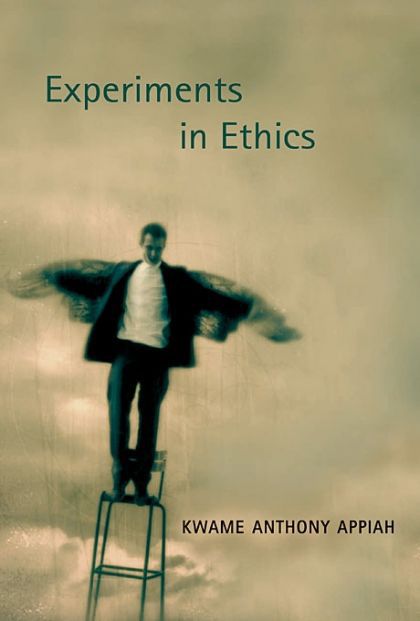
In the past few decades, scientists of human nature–including experimental and cognitive psychologists, neuroscientists, evolutionary theorists, and behavioral economists–have explored the way we arrive at moral judgments. They have called into question commonplaces about character and offered troubling explanations for various moral intuitions. Research like this may help explain what, in fact, we do and feel. But can it tell us what we ought to do or feel? In Experiments in Ethics, the philosopher Kwame Anthony Appiah explores how the new empirical moral psychology relates to the age-old project of philosophical ethics.Some moral theorists hold that the realm of morality must be autonomous of the sciences; others maintain that science undermines the authority of moral reasons. Appiah elaborates a vision of naturalism that resists both temptations. He traces an intellectual genealogy of the burgeoning discipline of “experimental philosophy,” provides a balanced, lucid account of the work being done in this controversial and increasingly influential field, and offers a fresh way of thinking about ethics in the classical tradition.Appiah urges that the relation between empirical research and morality, now so often antagonistic, should be seen in terms of dialogue, not contest. And he shows how experimental philosophy, far from being something new, is actually as old as philosophy itself. Beyond illuminating debates about the connection between psychology and ethics, intuition and theory, his book helps us to rethink the very nature of the philosophical enterprise.
ما از اخلاق چه انتظاری داریم؟ این سوال شاید تاحدودی برای عموم مردم و یا متخصصان این رشته قابل پاسخ باشد؛ اینکه خوب بودن را به ما بیاموزد و در تنظیم روابط فردی م...

جشن کتاب تهران به ایستگاه سی و یکم رسیده است. حال و احوال نشر کتاب خوب نیست و باید فرهنگدوستان را به خرید و هدیه دادن کتاب ترغیب نمود. خانه اخلاقپژوهان جوان ب...

بنیاد کتابهای اخلاق اسلامی عمدتا پالایش جان از آلودگیها و آراستن آن به زیباییها است. اندیشه محوری این قبیل کتابها آن است که انسان فعلی آنی نیست که باید باشد...

-
0 Comments