Notice: تابع WP_Block_Type_Registry::register به طورنادرست فراخوانی شد. نامهای نوع بلوک نباید حروف بزرگ داشته باشند. لطفاً برای اطلاعات بیشتر، اشکال زدایی در وردپرس را مشاهده کنید. (این پیام در نگارش 5.0.0 افزوده شده است.) in /home/ethicsho/public_html/wp-includes/functions.php on line 5313
Warning: Use of undefined constant TDC_PATH_LEGACY - assumed 'TDC_PATH_LEGACY' (this will throw an Error in a future version of PHP) in /home/ethicsho/public_html/wp-content/plugins/td-composer/td-composer.php on line 109
Warning: Use of undefined constant TDSP_THEME_PATH - assumed 'TDSP_THEME_PATH' (this will throw an Error in a future version of PHP) in /home/ethicsho/public_html/wp-content/plugins/td-composer/td-composer.php on line 113 بایگانیهای Graham Spencer - خانه اخلاق پژوهان جوان Notice: Trying to access array offset on value of type bool in /home/ethicsho/public_html/wp-content/plugins/wp-ulike/inc/general-functions.php on line 807
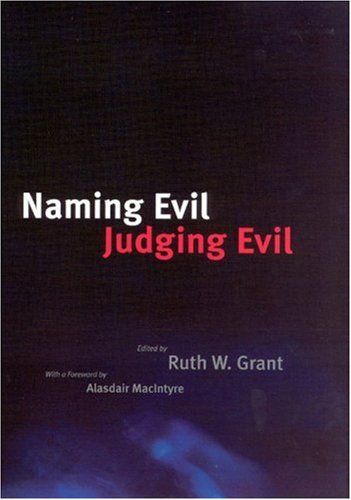
Is it more dangerous to call something evil or not to? This fundamental question deeply divides those who fear that the term oversimplifies grave problems and those who worry that, to effectively address such issues as terrorism and genocide, we must first acknowledge them as evil. Recognizing that the way we approach this dilemma can significantly affect both the harm we suffer and the suffering we inflict, a distinguished group of contributors engages in the debate with this series of timely and original essays. Drawing on Western conceptions of evil from the Middle Ages to the present, these pieces demonstrate that, while it may not be possible to definitively settle moral questions, we are still ableand in fact are obligatedto make moral arguments and judgments. Using a wide variety of approaches, the authors raise tough questions: Why is so much evil perpetrated in the name of good? Could evil ever be eradicated? How can liberal democratic politics help us strike a balance between the need to pass judgment and the need to remain tolerant? Their insightful answers exemplify how the sometimes rarefied worlds of political theory, philosophy, theology, and history can illuminate pressing contemporary concerns.
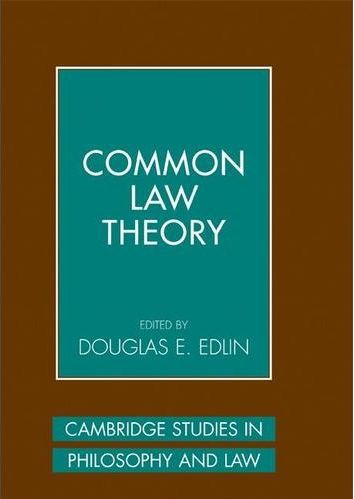
Legal scholars, philosophers, historians, and political scientists from Australia, Canada, New Zealand, the United Kingdom, and the United States analyze the common law through three of its classic themes: rules, reasoning, and constitutionalism. Their essays, specially commissioned for this volume, provide an opportunity for thinkers from different jurisdictions and disciplines to talk to each other and to their wider audience within and beyond the common law world. This book allows scholars and students to consider how these themes and concepts relate to one another. It will initiate and sustain a more inclusive and well-informed theoretical discussion of the common law’s method, process, and structure. It will be valuable to lawyers, philosophers, political scientists, and historians interested in constitutional law, comparative law, judicial process, legal theory, law and society, legal history, democratic theory, political philosophy, and the relationship of the common law tradition to other legal systems of the world.
Social Motivation, Justice, and the Moral Emotions proposes an attribution theory of interpersonal or social motivation that distinguishes between the role of thinking and feeling in determining action. The place of this theory within the larger fields of motivation and attributional analyses is explored. It features new thoughts concerning social motivation on such topics as help giving, aggression, achievement evaluation, compliance to commit a transgression, as well as new contributions to the understanding of social justice. Included also is material on moral emotions, with discussions of admiration, contempt, envy, gratitude, and other affects not considered in Professor Weiner’s prior work. The text also contains previously unexamined topics regarding social inferences of arrogance and modesty and the role of mediators versus moderators in theory building. Divided into five chapters, this book: *Considers the logical development and structure of a proposed theory of social motivation and justice; *Reviews meta-analytic tests of the theory within the contexts of help giving and aggression and examines issues related to cultural and individual differences; *Focuses on moral emotions including an analysis of admiration, envy, gratitude, jealousy, scorn, and others; *Discusses conditions where reward decreases motivation while punishment augments strivings; and *Provides applications that are beneficial in the classroom, in therapy, and in training programs. Social Motivation, Justice, and the Moral Emotions appeals to practicing and research psychologists and advanced students in a variety of fields including social, educational, personality, political/legal, health, and clinical psychology. It will also serve as a supplement in courses on motivational psychology, emotion and motivation, altruism and/or pro-social behavior, aggression, social judgment, and morality. Also included is the raw material (e.g., questionnaires, surveys, etc.) for 13 experiments relating to core predictions of the proposed attribution theory.
This book shows how torture spiritually assaults the person. The “war on terror” has sparked great debate about torture. What exactly is torture? Should we torture suspected terrorists if they have information about future violent acts? Defining torture carefully, the book defends the idea that all people are valuable, and rejects moral defenses of torture. It focuses particularly on practices like sensory deprivation, which perniciously attack the human psyche. It also calls for an absolute ban on all torture, and urges Americans to repent for the torture the U.S. committed in the “war on terror.”
ما از اخلاق چه انتظاری داریم؟ این سوال شاید تاحدودی برای عموم مردم و یا متخصصان این رشته قابل پاسخ باشد؛ اینکه خوب بودن را به ما بیاموزد و در تنظیم روابط فردی م...

جشن کتاب تهران به ایستگاه سی و یکم رسیده است. حال و احوال نشر کتاب خوب نیست و باید فرهنگدوستان را به خرید و هدیه دادن کتاب ترغیب نمود. خانه اخلاقپژوهان جوان ب...

بنیاد کتابهای اخلاق اسلامی عمدتا پالایش جان از آلودگیها و آراستن آن به زیباییها است. اندیشه محوری این قبیل کتابها آن است که انسان فعلی آنی نیست که باید باشد...

-
0 Comments