Notice: تابع WP_Block_Type_Registry::register به طورنادرست فراخوانی شد. نامهای نوع بلوک نباید حروف بزرگ داشته باشند. لطفاً برای اطلاعات بیشتر، اشکال زدایی در وردپرس را مشاهده کنید. (این پیام در نگارش 5.0.0 افزوده شده است.) in /home/ethicsho/public_html/wp-includes/functions.php on line 5313
Warning: Use of undefined constant TDC_PATH_LEGACY - assumed 'TDC_PATH_LEGACY' (this will throw an Error in a future version of PHP) in /home/ethicsho/public_html/wp-content/plugins/td-composer/td-composer.php on line 109
Warning: Use of undefined constant TDSP_THEME_PATH - assumed 'TDSP_THEME_PATH' (this will throw an Error in a future version of PHP) in /home/ethicsho/public_html/wp-content/plugins/td-composer/td-composer.php on line 113 بایگانیهای Alfred R. Mele - خانه اخلاق پژوهان جوان Notice: Trying to access array offset on value of type bool in /home/ethicsho/public_html/wp-content/plugins/wp-ulike/inc/general-functions.php on line 807
First published in 1980, Natural Law and Natural Rights is widely heralded as a seminal contribution to the philosophy of law, and an authoritative restatement of natural law doctrine. It has offered generations of students and other readers a thorough grounding in the central issues of legal, moral, and political philosophy from Finnis’s distinctive perspective. This new edition includes a substantial postscript by the author, in which he responds to thirty years of discussion, criticism and further work in the field to develop and refine the original theory.The book closely integrates the philosophy of law with ethics, social theory and political philosophy. The author develops a sustained and substantive argument; it is not a review of other people’s arguments but makes frequent illustrative and critical reference to classical, modern, and contemporary writers in ethics, social and political theory, and jurisprudence.The preliminary First Part reviews a century of analytical jurisprudence to illustrate the dependence of every descriptive social science upon evaluations by the theorist. A fully critical basis for such evaluations is a theory of natural law. Standard contemporary objections to natural law theory are reviewed and shown to rest on serious misunderstandings.The Second Part develops in ten carefully structured chapters an account of: basic human goods and basic requirements of practical reasonableness, community and ‘the common good’; justice; the logical structure of rights-talk; the bases of human rights, their specification and their limits; authority, and the formation of authoritative rules by non-authoritative persons and procedures; law, the Rule of Law, and the derivation of laws from the principles of practical reasonableness; the complex relation between legal and moral obligation; and the practical and theoretical problems created by unjust laws.A final Part develops a vigorous argument about the relation between ‘natural law’, ‘natural theology’ and ‘revelation’ – between moral concern and other ultimate questions.
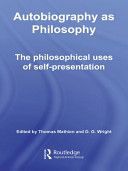
Since Plato a surprisingly large number of philosophers have chosen to write in the first person about their own lives either in works that were primarily autobiographical or in the context of other more conventionally written texts. These texts stand in marked contrast to the bulk of philosophical writing, particularly in the past century during which the discipline has become ever more professionalized and specialized. Instead of the common impersonal and argumentative forms of ordinary philosophic discussion, these autobiographical texts are deeply personal and largely narrative or explanatory. The contributors to this book examine the philosophical significance of philosophers’ autobiographies and whether or not there are broadly philosophical tasks for which this sort of writing is particularly suited. Autobiography as Philosophy contains a general discussion about the relation between philosophical and autobiographical writing, and essays on the specific writings of Augustine, Abelard, Montaigne,Descartes, Vico, Hume, Rousseau, Newman, Mill, Nietzsche, Collingwood and Russell by specialists on the works of these individuals. The book is original and distinctive in its efforts to think about the writings of historically recognized philosophers as communicative acts governed by their own distinctive interests and purposes. It is, therefore as much about the texts and the authors as about their doctrines and arguments. As a result the book steps back from many of the issues of substantive philosophical discussion to reflect on certain forms of writing as means to philosophical ends, to consider what those ends have included.
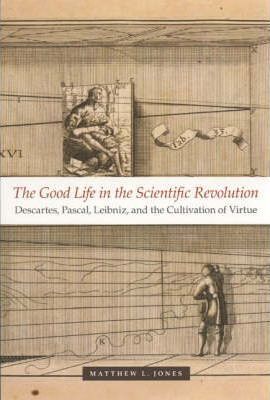
Amid the unrest, dislocation, and uncertainty of seventeenth-century Europe, readers seeking consolation and assurance turned to philosophical and scientific books that offered ways of conquering fears and training the mind—guidance for living a good life. The Good Life in the Scientific Revolution presents a triptych showing how three key early modern scientists, René Descartes, Blaise Pascal, and Gottfried Leibniz, envisioned their new work as useful for cultivating virtue and for pursuing a good life. Their scientific and philosophical innovations stemmed in part from their understanding of mathematics and science as cognitive and spiritual exercises that could create a truer mental and spiritual nobility. In portraying the rich contexts surrounding Descartes’ geometry, Pascal’s arithmetical triangle, and Leibniz’s calculus, Matthew L. Jones argues that this drive for moral therapeutics guided important developments of early modern philosophy and the Scientific Revolution.
This evocative and broad-ranging book traces the history of moral regulation in Britain and the US from the late seventeenth century to the present day. Specific coverage is given to movements such as the Society for the Reformation of Manners and the Vice Society, the sexual abuse and anti-pornography movements, and contemporary self-help movements. Hunt argues that the main impetus for moral regulations often stems from the middle classes, rather than those with institutional power, but most significantly they provide classic instances of the intimate link between the ‘governance of others’ and the ‘governance of the self’. Using the work of Foucault, this book analyses how projects of self-regulation can manifest themselves into the regulation of others. Concurrent with this is the rise of health discourses, which play a central role in contemporary discussions of moral governance.
ما از اخلاق چه انتظاری داریم؟ این سوال شاید تاحدودی برای عموم مردم و یا متخصصان این رشته قابل پاسخ باشد؛ اینکه خوب بودن را به ما بیاموزد و در تنظیم روابط فردی م...

جشن کتاب تهران به ایستگاه سی و یکم رسیده است. حال و احوال نشر کتاب خوب نیست و باید فرهنگدوستان را به خرید و هدیه دادن کتاب ترغیب نمود. خانه اخلاقپژوهان جوان ب...

بنیاد کتابهای اخلاق اسلامی عمدتا پالایش جان از آلودگیها و آراستن آن به زیباییها است. اندیشه محوری این قبیل کتابها آن است که انسان فعلی آنی نیست که باید باشد...

-
0 Comments