Notice: تابع WP_Block_Type_Registry::register به طورنادرست فراخوانی شد. نامهای نوع بلوک نباید حروف بزرگ داشته باشند. لطفاً برای اطلاعات بیشتر، اشکال زدایی در وردپرس را مشاهده کنید. (این پیام در نگارش 5.0.0 افزوده شده است.) in /home/ethicsho/public_html/wp-includes/functions.php on line 5313
Warning: Use of undefined constant TDC_PATH_LEGACY - assumed 'TDC_PATH_LEGACY' (this will throw an Error in a future version of PHP) in /home/ethicsho/public_html/wp-content/plugins/td-composer/td-composer.php on line 109
Warning: Use of undefined constant TDSP_THEME_PATH - assumed 'TDSP_THEME_PATH' (this will throw an Error in a future version of PHP) in /home/ethicsho/public_html/wp-content/plugins/td-composer/td-composer.php on line 113 بایگانیهای Work - Religious Aspects - خانه اخلاق پژوهان جوان Notice: Trying to access array offset on value of type bool in /home/ethicsho/public_html/wp-content/plugins/wp-ulike/inc/general-functions.php on line 807
Presenting the basic tools for the identification, analysis, and evaluation of common arguments for beginners, this book informs by using examples of arguments in dialogues, both in the text itself and in the exercises. (Examples of controversial legal, political, and ethical arguments are analyzed.) Illustrating the most common kinds of arguments, the book also explains how to evaluate each kind by critical questioning. Douglas Walton demonstrates the reasonable nature of arguments under the right dialogue conditions by using critical questions to evaluate them.
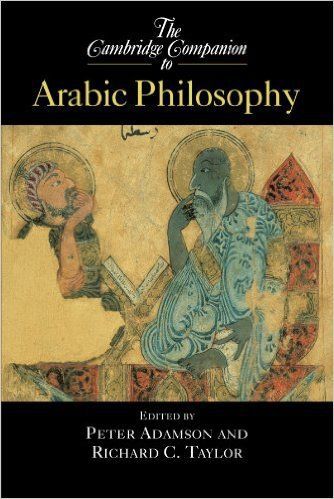
Philosophy written in Arabic and in the Islamic world represents one of the great traditions of Western philosophy. Inspired by Greek philosophical works and the indigenous ideas of Islamic theology, Arabic philosophers from the ninth century onwards put forward ideas of great philosophical and historical importance. This collection of essays, by some of the leading scholars in Arabic philosophy, provides an introduction to the field by way of chapters devoted to individual thinkers (such as al-Farabi, Avicenna and Averroes) or groups, especially during the classical period from the ninth to the twelfth centuries. It also includes chapters on areas of philosophical inquiry across the tradition, such as ethics and metaphysics. Finally, it includes chapters on later Islamic thought, and on the connections between Arabic philosophy and Greek, Jewish, and Latin philosophy. The volume also includes a useful bibliography and a chronology of the most important Arabic thinkers.
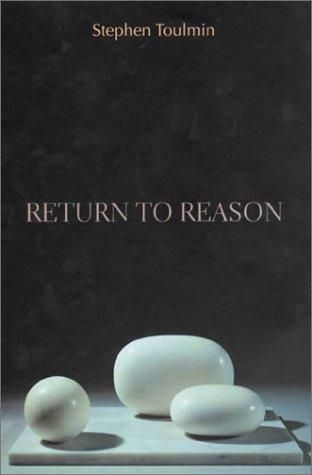
The turmoil and brutality of the twentieth century have made it increasingly difficult to maintain faith in the ability of reason to fashion a stable and peaceful world. After the ravages of global conflict and a Cold War that divided the world’s loyalties, how are we to master our doubts and face the twenty-first century with hope?In Return to Reason, Stephen Toulmin argues that the potential for reason to improve our lives has been hampered by a serious imbalance in our pursuit of knowledge. The centuries-old dominance of rationality, a mathematical mode of reasoning modeled on theory and universal certainties, has diminished the value of reasonableness, a system of humane judgments based on personal experience and practice. To this day, academic disciplines such as economics and professions such as law and medicine often value expert knowledge and abstract models above the testimony of diverse cultures and the practical experience of individuals.Now, at the beginning of a new century, Toulmin sums up a lifetime of distinguished work and issues a powerful call to redress the balance between rationality and reasonableness. His vision does not reject the valuable fruits of science and technology, but requires awareness of the human consequences of our discoveries. Toulmin argues for the need to confront the challenge of an uncertain and unpredictable world, not with inflexible ideologies and abstract theories, but by returning to a more humane and compassionate form of reason, one that accepts the diversity and complexity that is human nature as an essential beginning for all intellectual inquiry.
Complementary and Alternative Medicine examines the real-life implications of patient issues and the healthcare system in which care is delivered. Because complementary and alternative medicine (CAM) are not presently considered to be a part of conventional medicine, this book discusses the effect that CAM has on patients, physicians, healthcare, and policymakers. Also included are the implications that CAM has on traditional patient-physician relationships as well as the physician’s ethical obligations on this subject.
ما از اخلاق چه انتظاری داریم؟ این سوال شاید تاحدودی برای عموم مردم و یا متخصصان این رشته قابل پاسخ باشد؛ اینکه خوب بودن را به ما بیاموزد و در تنظیم روابط فردی م...

جشن کتاب تهران به ایستگاه سی و یکم رسیده است. حال و احوال نشر کتاب خوب نیست و باید فرهنگدوستان را به خرید و هدیه دادن کتاب ترغیب نمود. خانه اخلاقپژوهان جوان ب...

بنیاد کتابهای اخلاق اسلامی عمدتا پالایش جان از آلودگیها و آراستن آن به زیباییها است. اندیشه محوری این قبیل کتابها آن است که انسان فعلی آنی نیست که باید باشد...

-
0 Comments