Notice: تابع WP_Block_Type_Registry::register به طورنادرست فراخوانی شد. نامهای نوع بلوک نباید حروف بزرگ داشته باشند. لطفاً برای اطلاعات بیشتر، اشکال زدایی در وردپرس را مشاهده کنید. (این پیام در نگارش 5.0.0 افزوده شده است.) in /home/ethicsho/public_html/wp-includes/functions.php on line 5313
Warning: Use of undefined constant TDC_PATH_LEGACY - assumed 'TDC_PATH_LEGACY' (this will throw an Error in a future version of PHP) in /home/ethicsho/public_html/wp-content/plugins/td-composer/td-composer.php on line 109
Warning: Use of undefined constant TDSP_THEME_PATH - assumed 'TDSP_THEME_PATH' (this will throw an Error in a future version of PHP) in /home/ethicsho/public_html/wp-content/plugins/td-composer/td-composer.php on line 113 بایگانیهای Stem Cells - English - خانه اخلاق پژوهان جوان Notice: Trying to access array offset on value of type bool in /home/ethicsho/public_html/wp-content/plugins/wp-ulike/inc/general-functions.php on line 807
Programs of ethical relativism notoriously face two great difficulties: 1) how can they account for our need to make ethical judgements about other groups and individuals with whom we come into conflict? and 2) how can they allow for us to criticize the group, set of desires, etc. to which our ethical norms are said to be relative? “Integrity and Moral Relativism develops a moderate version of cultural relativism that can answer these questions. After examining and defending the notion of a “world-picture,” and of incommensurable differences across world-pictures, the book brings its theoretical framework together with the history of anthropology to argue that a culture is indeed the appropriate expression of a world picture. It then draws on literary, philosophical and historical resources to illustrate the way in which Western society, specifically, contains traditions distinguishing legitimate cross-cultural judgment, and legitimate from illegitimate cultural self-criticism. As long as there is a language for these possibilities, an individual can see ethics as culturally based without compromising his or her integrity.
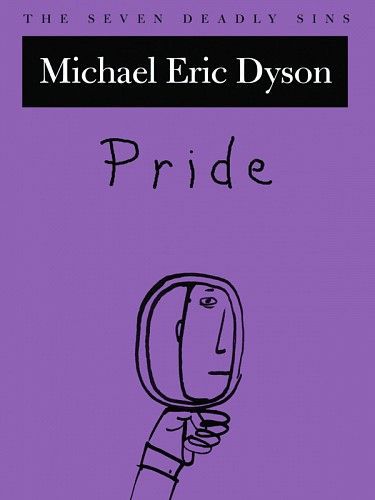
Of the seven deadly sins, pride is the only one with a virtuous side. It is certainly a good thing to have pride in one’s country, in one’s community, in oneself. But when taken too far, as Michael Eric Dyson shows in Pride, these virtues become deadly sins. Dyson, named by Ebony magazine as one of the 100 most influential African Americans, here looks at the many dimensions of pride. Ranging from Augustine and Aquinas, MacIntyre and Hauerwas, to Niebuhr and King, Dyson offers a thoughtful, multifaceted look at this “virtuous vice.” He probes the philosophical and theological roots of pride in examining its transformation in Western culture. Dyson discusses how black pride keeps blacks from being degraded and excluded by white pride, which can be invisible, unspoken, but nonetheless very powerful. Dyson also offers a moving glimpse into the teachers and books that shaped his personal pride and vocation. Dyson also looks at less savory aspects of national pride. Since 9/11, he notes, we have had to close ranks. But the collective embrace of all things American, to the exclusion of anything else, has taken the place of a much richer, much more enduring, much more profound version of love of country. This unchecked pride asserts the supremacy of America above all others–elevating our national beliefs above any moral court in the world–and attacking critics of American foreign policy as unpatriotic and even traitorous. Hubris, temerity, arrogance–the unquestioned presumption that one’s way of life defines how everyone else should live–pride has many destructive manifestations. In this engaging and energetic volume, Michael Eric Dyson, one of the nation’s foremost public intellectuals, illuminates this many-sided human emotion, one that can be an indispensable virtue or a deadly sin.
In Against Moral Responsibility, Bruce Waller launches a spirited attack on a system that is profoundly entrenched in our society and its institutions, deeply rooted in our emotions, and vigorously defended by philosophers from ancient times to the present. Waller argues that, despite the creative defenses of it by contemporary thinkers, moral responsibility cannot survive in our naturalistic-scientific system. The scientific understanding of human behavior and the causes that shape human character, he contends, leaves no room for moral responsibility. Waller argues that moral responsibility in all its forms–including criminal justice, distributive justice, and all claims of just deserts–is fundamentally unfair and harmful and that its abolition will be liberating and beneficial. What we really want–natural human free will, moral judgments, meaningful human relationships, creative abilities–would survive and flourish without moral responsibility. In the course of his argument, Waller examines the origins of the basic belief in moral responsibility, proposes a naturalistic understanding of free will, offers a detailed argument against moral responsibility and critiques arguments in favor of it, gives a general account of what a world without moral responsibility would look like, and examines the social and psychological aspects of abolishing moral responsibility. Waller not only mounts a vigorous, and philosophically rigorous, attack on the moral responsibility system, but also celebrates the benefits that would result from its total abolition.
ما از اخلاق چه انتظاری داریم؟ این سوال شاید تاحدودی برای عموم مردم و یا متخصصان این رشته قابل پاسخ باشد؛ اینکه خوب بودن را به ما بیاموزد و در تنظیم روابط فردی م...

جشن کتاب تهران به ایستگاه سی و یکم رسیده است. حال و احوال نشر کتاب خوب نیست و باید فرهنگدوستان را به خرید و هدیه دادن کتاب ترغیب نمود. خانه اخلاقپژوهان جوان ب...

بنیاد کتابهای اخلاق اسلامی عمدتا پالایش جان از آلودگیها و آراستن آن به زیباییها است. اندیشه محوری این قبیل کتابها آن است که انسان فعلی آنی نیست که باید باشد...

-
0 Comments