





Notice: تابع WP_Block_Type_Registry::register به طورنادرست فراخوانی شد. نامهای نوع بلوک نباید حروف بزرگ داشته باشند. لطفاً برای اطلاعات بیشتر، اشکال زدایی در وردپرس را مشاهده کنید. (این پیام در نگارش 5.0.0 افزوده شده است.) in /home/ethicsho/public_html/wp-includes/functions.php on line 5313
Warning: Use of undefined constant TDC_PATH_LEGACY - assumed 'TDC_PATH_LEGACY' (this will throw an Error in a future version of PHP) in /home/ethicsho/public_html/wp-content/plugins/td-composer/td-composer.php on line 109
Warning: Use of undefined constant TDSP_THEME_PATH - assumed 'TDSP_THEME_PATH' (this will throw an Error in a future version of PHP) in /home/ethicsho/public_html/wp-content/plugins/td-composer/td-composer.php on line 113 بایگانیهای Professional Ethics - خانه اخلاق پژوهان جوان Notice: Trying to access array offset on value of type bool in /home/ethicsho/public_html/wp-content/plugins/wp-ulike/inc/general-functions.php on line 807
Philosophers have increasingly advocated a virtue-based ethics that challenges traditional moral theories founded on moral obligation and delineation of right or wrong in given situations. Stan van Hooft provides a broad overview of the history of virtue ethics from Aristotle to Nietzsche to the ideas of contemporary writers Ricoeur and Levinas. He explores the major themes of moral theory and shows how a virtue ethics approach differs from those of other traditions. Van Hooft considers how morally complex practical problems, such as abortion, euthanasia, and integrity in politics, might be approached from a virtue perspective and addresses the charges of relativism and egoism that are often mounted against virtue ethics, arguing that virtue ethics is highly relevant to our understanding of the moral dimensions of professional roles.
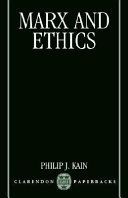
This book traces the development of Marx’s ethics as they underwent various shifts and changes during different periods of his thought. In his early writings, his ethics were based on a concept of essence much like Aristotle’s, which Marx tried to link to a principle of universalization similar to Kant’s “categorical imperative.” In the period 1845-46, Marx abandoned this view, holding morality to be incompatible with his historical materialism. In the later work he was less of a determinist. Though he no longer wished to reject morality, he did want to transcend a morality of burdensome obligation and constraint in order to realize a community built upon spontaneous bonds of solidarity.
This introduction to ethics judiciously combines moral theory with applied ethics to give an opportunity for students to develop acute thinking About Ethical Matters.; The Author Begins Motivating A Concern For moral discourse by dispelling often met objections over relativism and subjectivity. interweaving normative and meta-ethical considerations, a convincing modern account of moral thinking emerges.; Moral theories – consequentialism, Kantianism, contractualism – are explained and illustrated in a way that holds the reader’s attention, and students of ethics will take away a perceptive and practical understanding of the nature of moral reasoning and an ability, on such matters, to think afresh for themselves.
Evil has long fascinated psychologists, philosophers, novelists and playwrights but remains an incredibly difficult concept to talk about. On Evilis a compelling and at times disturbing tour of the many faces of evil. What is evil, and what makes people do awful things? If we can explain evil, do we explain it away? Can we imagine the mind of a serial killer, or does such evil defy description? Does evil depend on a contrast with good, as religion tells us, or can there be evil for evil’s sake? Adam Morton argues that any account of evil must help us understand three things: why evil occurs; why evil often arises out of banal or everyday situations; and how wecan be seen as evil. Drawing on fascinating examples as diverse as Augustine, Buffy the Vampire Slayer, psychological studies of deviant behaviour and profiles of serial killers, Adam Morton argues that evil occurs when internal, mental barriers against it simply break down. He also introduces us to some nightmare people, such as Adolf Eichmann and Hannibal Lecter, reminding us that understanding their actions as humans brings us closer to understanding evil. Exciting and thought-provoking, On Evilis essential reading for anyone interested in a topic that attracts and repels us in equal measure.
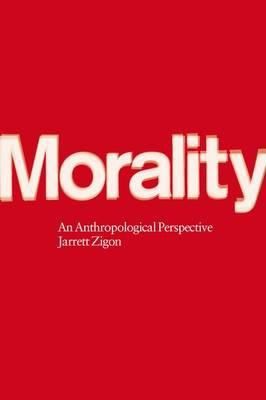
Morality: An Anthropological Perspective provides the first account of anthropological approaches to the question of morality. By considering how morality is viewed and enacted in different cultures, and how it is related to key social institutions such as religion, law, gender, sexuality and medical practice, Morality takes a closer look at some of the most central questions of the morality debates of our time. The book is accessibly written and combines theory with practical case studies for student use. Drawing on anthropological, philosophical and general social scientific literature, the book will be useful for both undergraduate students and researchers.
ما از اخلاق چه انتظاری داریم؟ این سوال شاید تاحدودی برای عموم مردم و یا متخصصان این رشته قابل پاسخ باشد؛ اینکه خوب بودن را به ما بیاموزد و در تنظیم روابط فردی م...

جشن کتاب تهران به ایستگاه سی و یکم رسیده است. حال و احوال نشر کتاب خوب نیست و باید فرهنگدوستان را به خرید و هدیه دادن کتاب ترغیب نمود. خانه اخلاقپژوهان جوان ب...

بنیاد کتابهای اخلاق اسلامی عمدتا پالایش جان از آلودگیها و آراستن آن به زیباییها است. اندیشه محوری این قبیل کتابها آن است که انسان فعلی آنی نیست که باید باشد...

-
0 Comments