Notice: تابع WP_Block_Type_Registry::register به طورنادرست فراخوانی شد. نامهای نوع بلوک نباید حروف بزرگ داشته باشند. لطفاً برای اطلاعات بیشتر، اشکال زدایی در وردپرس را مشاهده کنید. (این پیام در نگارش 5.0.0 افزوده شده است.) in /home/ethicsho/public_html/wp-includes/functions.php on line 5313
Warning: Use of undefined constant TDC_PATH_LEGACY - assumed 'TDC_PATH_LEGACY' (this will throw an Error in a future version of PHP) in /home/ethicsho/public_html/wp-content/plugins/td-composer/td-composer.php on line 109
Warning: Use of undefined constant TDSP_THEME_PATH - assumed 'TDSP_THEME_PATH' (this will throw an Error in a future version of PHP) in /home/ethicsho/public_html/wp-content/plugins/td-composer/td-composer.php on line 113 بایگانیهای International Business Enterprises - Political Activity - خانه اخلاق پژوهان جوان Notice: Trying to access array offset on value of type bool in /home/ethicsho/public_html/wp-content/plugins/wp-ulike/inc/general-functions.php on line 807
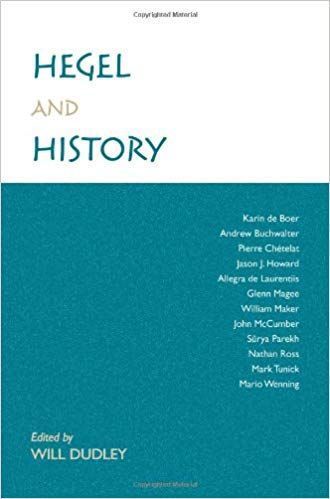
Nearly two centuries after declaring “the end of history,” Hegel remains a rich source of insights into our historical nature. The essays collected here interpret and develop those insights, while also challenging Hegel’s philosophical approach to comprehend present and future phenomena that he could neither experience nor imagine. They represent the very best in contemporary scholarship on Hegel and history, and collectively they address all of the important and disputed topics in the field: Hegel’s claim that history has an end, whether his philosophy of history is Eurocentric or racist, how elements of what he terms “subjective spirit” and “objective spirit” contribute to historical development, and the relationship between religion and his philosophy of history.
How can higher education today create a community of critical thinkers and searchers for truth that transcends the boundaries of class, gender, and nation? Martha C. Nussbaum, philosopher and classicist, argues that contemporary curricular reform is already producing such “citizens of the world” in its advocacy of diverse forms of cross-cultural studies. Her vigorous defense of “the new education” is rooted in Seneca’s ideal of the citizen who scrutinizes tradition critically and who respects the ability to reason wherever it is found–in rich or poor, native or foreigner, female or male.Drawing on Socrates and the Stoics, Nussbaum establishes three core values of liberal education–critical self-examination, the ideal of the world citizen, and the development of the narrative imagination. Then, taking us into classrooms and campuses across the nation, including prominent research universities, small independent colleges, and religious institutions, she shows how these values are (and in some instances are not) being embodied in particular courses. She defends such burgeoning subject areas as gender, minority, and gay studies against charges of moral relativism and low standards, and underscores their dynamic and fundamental contribution to critical reasoning and world citizenship.For Nussbaum, liberal education is alive and well on American campuses in the late twentieth century. It is not only viable, promising, and constructive, but it is essential to a democratic society. Taking up the challenge of conservative critics of academe, she argues persuasively that sustained reform in the aim and content of liberal education is the most vital and invigorating force in higher education today.
“When After Virtue first appeared in 1981, it was recognized as a significant and potentially controversial critique of contemporary moral philosophy. Newsweek called it “a stunning new study of ethics by one of the foremost moral philosophers in the English-speaking world.” Now, twenty-five years later, the University of Notre Dame Press is pleased to release the third edition of After Virtue, which includes a new prologue “After Virtue after a Quarter of a Century.”” “In this classic work, Alasdair MacIntyre examines the historical and conceptual roots of the idea of virtue, diagnoses the reasons for its absence in personal and public life, and offers a tentative proposal for its recovery. While the individual chapters are wide-ranging, once pieced together they comprise a penetrating and focused argument about the price of modernity.”–BOOK JACKET.
ما از اخلاق چه انتظاری داریم؟ این سوال شاید تاحدودی برای عموم مردم و یا متخصصان این رشته قابل پاسخ باشد؛ اینکه خوب بودن را به ما بیاموزد و در تنظیم روابط فردی م...

جشن کتاب تهران به ایستگاه سی و یکم رسیده است. حال و احوال نشر کتاب خوب نیست و باید فرهنگدوستان را به خرید و هدیه دادن کتاب ترغیب نمود. خانه اخلاقپژوهان جوان ب...

بنیاد کتابهای اخلاق اسلامی عمدتا پالایش جان از آلودگیها و آراستن آن به زیباییها است. اندیشه محوری این قبیل کتابها آن است که انسان فعلی آنی نیست که باید باشد...

-
0 Comments