Notice: تابع WP_Block_Type_Registry::register به طورنادرست فراخوانی شد. نامهای نوع بلوک نباید حروف بزرگ داشته باشند. لطفاً برای اطلاعات بیشتر، اشکال زدایی در وردپرس را مشاهده کنید. (این پیام در نگارش 5.0.0 افزوده شده است.) in /home/ethicsho/public_html/wp-includes/functions.php on line 5313
Warning: Use of undefined constant TDC_PATH_LEGACY - assumed 'TDC_PATH_LEGACY' (this will throw an Error in a future version of PHP) in /home/ethicsho/public_html/wp-content/plugins/td-composer/td-composer.php on line 109
Warning: Use of undefined constant TDSP_THEME_PATH - assumed 'TDSP_THEME_PATH' (this will throw an Error in a future version of PHP) in /home/ethicsho/public_html/wp-content/plugins/td-composer/td-composer.php on line 113 بایگانیهای Intellectual Property - Popular Works. - United States - خانه اخلاق پژوهان جوان Notice: Trying to access array offset on value of type bool in /home/ethicsho/public_html/wp-content/plugins/wp-ulike/inc/general-functions.php on line 807
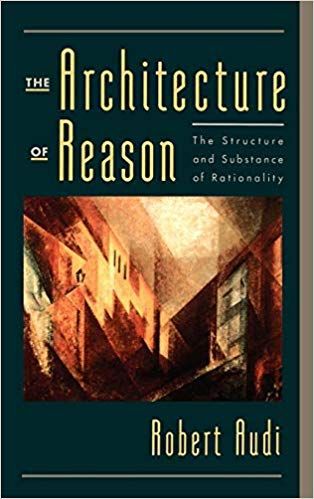
The literature on theoretical reason has been dominated by epistemological concerns, treatments of practical reason by ethical concerns. This book overcomes the limitations of dealing with each separately. It sets out a comprehensive theory of rationality applicable to both practical and theoretical reason. In both domains, Audi explains how experience grounds rationality, delineates the structure of central elements, and attacks the egocentric conception of rationality. He establishes the rationality of altruism and thereby supports major moral principles. The concluding part describes the pluralism and relativity his conception of rationality accommodates and, taking the unified account of theoretical and practical rationality in that light, constructs a theory of global rationality–the overall rationality of persons. Rich in narrative examples, intriguing analogies, and intuitively appealing arguments, this beautifully crafted book will spur advances in ethics and epistemology as well in philosophy of mind and action and the theory of rationality itself.
The Ten Commandments are the crystallization of God’s law. All across our nation they appear in churches, homes, and even some public buildings. But how do we apply them today, and how do they relate to the Gospel?Philip Graham Ryken believes that the Ten Commandments are an expression of God’s eternal character and thus have binding force today. In this book he explains the value of the law for usto convict us of our sin, to restrain sin in society, and to show us how to live for Christ. Dr. Ryken offers basic principles for interpreting and applying God’s law and explains these holy words commandment by commandment, illustrating each with a biblical account and relating each to the person and redemptive work of Jesus Christ.This is a book to be read and savored with reflection. God’s holiness and his standards for life are clearly related, and the joy of living by God’s law is vividly portrayed. Readers will find themselves examining their own lives, changing their ways, and delighting in the grace of God.
The intellectual scope and courage to contend with the largest puzzles of human existence and organization distinguish great social thinkers. Barrington Moore’s Social Origins of Dictatorship and Democracy was a foundational work of historical sociology that influenced a generation of social scientists and, decades later, continues to be widely read and taught. Here, Moore takes up the same tools of historical comparison to investigate why groups of people kill and torture each other. His answer is arrestingly simple: people persecute those whom they perceive as polluting due to their “impure” religious, political, or economic ideas.Moore’s search begins with the Old Testament’s restrictions on sexual behavior, idolatry, diet, and handling unclean objects. He argues that religious authorities seeking to distinguish the ancient Hebrews from competing groups invented, along with monotheism, the association of impure things with moral failure and the violation of God’s will. This allowed people to view those holding competing ideas as contaminated and, more important, contaminating. Moore moves next to the French Wars of Religion, in which Protestants and Catholics massacred each other over the control of purity, and the French Revolution, which perfected terror and secularized purity. He then combs the major Asian religions and finds–to his surprise–that violent efforts to eradicate the “impure” were largely absent before substantial Western influence.Moore’s provocative conclusion is that monotheism–with its monopoly on virtue and failure to provide supernatural scapegoats–is responsible for some of the most virulent forms of intolerance and is a major cause of human nastiness and suffering. Moore does not say that the monotheist tradition was the primary source of Nazism, Stalinism, Maoism, violent Hindu fundamentalism, or ethnic cleansing in Rwanda and the former Yugoslavia, but he does identify it as an indispensable cause because it justified, encouraged, and spread vindictive persecution throughout the world.Once again, Moore has drawn on his comprehensive understanding of history and talent for speaking directly to readers to address one of the most crucial questions about human past and future. This book is for anyone who has ever heard the word genocide and asked why.
ما از اخلاق چه انتظاری داریم؟ این سوال شاید تاحدودی برای عموم مردم و یا متخصصان این رشته قابل پاسخ باشد؛ اینکه خوب بودن را به ما بیاموزد و در تنظیم روابط فردی م...

جشن کتاب تهران به ایستگاه سی و یکم رسیده است. حال و احوال نشر کتاب خوب نیست و باید فرهنگدوستان را به خرید و هدیه دادن کتاب ترغیب نمود. خانه اخلاقپژوهان جوان ب...

بنیاد کتابهای اخلاق اسلامی عمدتا پالایش جان از آلودگیها و آراستن آن به زیباییها است. اندیشه محوری این قبیل کتابها آن است که انسان فعلی آنی نیست که باید باشد...

-
0 Comments