Notice: تابع WP_Block_Type_Registry::register به طورنادرست فراخوانی شد. نامهای نوع بلوک نباید حروف بزرگ داشته باشند. لطفاً برای اطلاعات بیشتر، اشکال زدایی در وردپرس را مشاهده کنید. (این پیام در نگارش 5.0.0 افزوده شده است.) in /home/ethicsho/public_html/wp-includes/functions.php on line 5313
Warning: Use of undefined constant TDC_PATH_LEGACY - assumed 'TDC_PATH_LEGACY' (this will throw an Error in a future version of PHP) in /home/ethicsho/public_html/wp-content/plugins/td-composer/td-composer.php on line 109
Warning: Use of undefined constant TDSP_THEME_PATH - assumed 'TDSP_THEME_PATH' (this will throw an Error in a future version of PHP) in /home/ethicsho/public_html/wp-content/plugins/td-composer/td-composer.php on line 113 بایگانیهای Intellectual Property/ European Union Countries - خانه اخلاق پژوهان جوان Notice: Trying to access array offset on value of type bool in /home/ethicsho/public_html/wp-content/plugins/wp-ulike/inc/general-functions.php on line 807
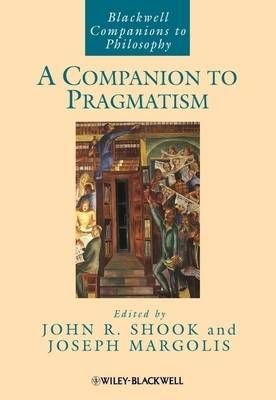
A Companion to Pragmatism, comprised of 38 newly commissioned essays, provides comprehensive coverage of one of the most vibrant and exciting fields of philosophy today. Unique in depth and coverage of classical figures and their philosophies as well as pragmatism as a living force in philosophy. Chapters include discussions on philosophers such as John Dewey, Jürgen Habermas and Hilary Putnam.
Virtue ethics is perhaps the most important development within late twentieth-century moral philosophy. Rosalind Hursthouse, who has made notable contributions to this development, now presents a full exposition and defence of her neo-Aristotelian version of virtue ethics. She shows how virtueethics can provide guidance for action, illuminate moral dilemmas, and bring out the moral significance of the emotions. Deliberately avoiding a combative stance, she finds less disagreement between Kantian and neo-Aristotelian approaches than is usual, and she offers the first account from a virtueethics perspective of acting ‘from a sense of duty’. She considers the question which character traits are virtues, and explores how answers to this question can be justified by appeal to facts about human nature. Written in a clear, engaging style which makes it accessible to non-specialists, OnVirtue Ethics will appeal to anyone with an interest in moral philosophy.
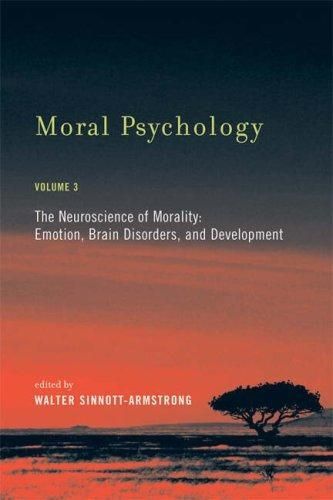
For much of the twentieth century, philosophy and science went their separate ways. In moral philosophy, fear of the so-called naturalistic fallacy kept moral philosophers from incorporating developments in biology and psychology. Since the 1990s, however, many philosophers have drawn on recent advances in cognitive psychology, brain science, and evolutionary psychology to inform their work. This collaborative trend is especially strong in moral philosophy, and these three volumes bring together some of the most innovative work by both philosophers and psychologists in this emerging interdisciplinary field.Contributors to Volume 3:Abigail Baird (Vassar College), William Casebeer (Air Force Academy), Cordelia Fine (Monash University), Nathan Fox (University of Maryland), Uta Frith (University College London, Institute of Cognitive Neuroscience), Jordan Grafman (National Institute of Health), Joshua Greene (Harvard University), Catherine Hynes (School of Psychology, University of Queensland), Fatima Azavedo Ignacio (Cognitive Psychology, Instituto Philippe Pinel), Richard Joyce (Australian National University Research School of Social Science), Jerome Kagan (Harvard University) Leonard Katz (Massachusetts Institute of Technology), Kent Kiehl (Yale University), Jeanette Kennett (Center for Applied Philosophy and Public Ethics, Australian National University), Melanie Killen (University of Maryland), Daniel Lapsley (Ball State University), Heidi Maibom (Carleton University), Victoria McGeer (Princeton University), John Mikhail (Georgetown Law School), Jorge Moll (National Institute of Health), Shaun Nichols (University of Arizona), Ricardo de Oliveira-Souza (Universidade do Rio de Janeiro), Adina Roskies (Dartmouth College), Mirella L. M. F. Paiva (National Institutes of Health), Jana Schaich Borg (Olin Neuropsychiatry Research Center, Institute of Living), Katrina Sifferd (Dartmouth College), Walter Sinnott-Armstrong (Dartmouth College), Michael Smith (Princeton University), Mark Timmons (University of Arizona), Frederick de Vignemont (Institut des sciences cognitives, CNRS), Paul Whalen (Dartmouth College), Roland Zahn (National Institute of Health).
ما از اخلاق چه انتظاری داریم؟ این سوال شاید تاحدودی برای عموم مردم و یا متخصصان این رشته قابل پاسخ باشد؛ اینکه خوب بودن را به ما بیاموزد و در تنظیم روابط فردی م...

جشن کتاب تهران به ایستگاه سی و یکم رسیده است. حال و احوال نشر کتاب خوب نیست و باید فرهنگدوستان را به خرید و هدیه دادن کتاب ترغیب نمود. خانه اخلاقپژوهان جوان ب...

بنیاد کتابهای اخلاق اسلامی عمدتا پالایش جان از آلودگیها و آراستن آن به زیباییها است. اندیشه محوری این قبیل کتابها آن است که انسان فعلی آنی نیست که باید باشد...

-
0 Comments