Notice: تابع WP_Block_Type_Registry::register به طورنادرست فراخوانی شد. نامهای نوع بلوک نباید حروف بزرگ داشته باشند. لطفاً برای اطلاعات بیشتر، اشکال زدایی در وردپرس را مشاهده کنید. (این پیام در نگارش 5.0.0 افزوده شده است.) in /home/ethicsho/public_html/wp-includes/functions.php on line 5313
Warning: Use of undefined constant TDC_PATH_LEGACY - assumed 'TDC_PATH_LEGACY' (this will throw an Error in a future version of PHP) in /home/ethicsho/public_html/wp-content/plugins/td-composer/td-composer.php on line 109
Warning: Use of undefined constant TDSP_THEME_PATH - assumed 'TDSP_THEME_PATH' (this will throw an Error in a future version of PHP) in /home/ethicsho/public_html/wp-content/plugins/td-composer/td-composer.php on line 113 بایگانیهای Ethics, Jewish - خانه اخلاق پژوهان جوان Notice: Trying to access array offset on value of type bool in /home/ethicsho/public_html/wp-content/plugins/wp-ulike/inc/general-functions.php on line 807
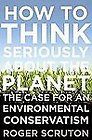
“The environment has long been the undisputed territory of the political Left, which casts international capitalism, consumerism, and the over-exploitation of natural resources as the principle threats to the planet, and sees top-down interventions as the most effective solution. In How to Think Seriously About the Planet, Roger Scruton rejects this view and offers a fresh approach to tackling the most important political problem of our time. The environmental movement, he contends, is philosophically confused and has unrealistic agendas. Its sights are directed at the large-scale events and the confrontation between international politics and multinational business. But Scruton argues that no large-scale environmental project, however well-intentioned, will succeed if it is not rooted in small-scale practical reasoning. Seeing things on a large scale promotes top-down solutions, managed by unaccountable bureaucracies that fail to assess local conditions and are rife with unintended consequences. Scruton argues for the greater efficacy of local initiatives over global schemes, civil association over political activism, and small-scale institutions of friendship over regulatory hyper-vigilance. And he suggests that conservatism is far better suited to solving environmental problems than either liberalism or socialism. Rather than entrusting the environment to unwieldy NGOs and international committees, we must assume personal responsibility and foster local control. People must be empowered to take charge of their environment, to care for it as they would a home, and to involve themselves through the kind of local associations that have been the traditional goal of conservative politics. Our common future is by no means assured, but as Roger Scruton clearly demonstrates in this important book, there is a path that can ensure the future safety of our planet and our species.”–
The past decade has seen an explosion of writing about media ethics and accountability. Most of the work has been focused on the normative side of the subject: ethical philosophies, ethics codes, suggestions for how journalists (and other media workers) can make justifiable decisions when faced with tough ethical questions.Empirical research into media ethics and accountability, by contrast, is hard to find. Relatively little of the past decade’s work–and virtually none of the book-length treatments of the subject–focus on how media accountability works in practice. The gap in practical knowledge is somewhat puzzling, given that most faculty who teach media ethics and accountability work in academic departments that have professional training as part of their academic mission.The underlying assumption of Holding the Media Accountable is that systems of norms such as media law and journalism ethics have meaning only in the context of the actual workings of mechanisms of accountability. No other volume has adopted such an approach.
This volume provides a systematic overview and comprehensive assessment of Bernard Williams’s contribution to moral philosophy, a field in which Williams was one of the most influential of contemporary philosophers. The seven essays, which were specially commissioned for this volume, examine his work on moral objectivity, the nature of practical reason, moral emotion, the critique of the “morality system,” Williams’s assessment of the ethical thought of the ancient world, and his later adoption of Nietzsche’s method of “genealogy.”
ما از اخلاق چه انتظاری داریم؟ این سوال شاید تاحدودی برای عموم مردم و یا متخصصان این رشته قابل پاسخ باشد؛ اینکه خوب بودن را به ما بیاموزد و در تنظیم روابط فردی م...

جشن کتاب تهران به ایستگاه سی و یکم رسیده است. حال و احوال نشر کتاب خوب نیست و باید فرهنگدوستان را به خرید و هدیه دادن کتاب ترغیب نمود. خانه اخلاقپژوهان جوان ب...

بنیاد کتابهای اخلاق اسلامی عمدتا پالایش جان از آلودگیها و آراستن آن به زیباییها است. اندیشه محوری این قبیل کتابها آن است که انسان فعلی آنی نیست که باید باشد...

-
0 Comments