Notice: تابع WP_Block_Type_Registry::register به طورنادرست فراخوانی شد. نامهای نوع بلوک نباید حروف بزرگ داشته باشند. لطفاً برای اطلاعات بیشتر، اشکال زدایی در وردپرس را مشاهده کنید. (این پیام در نگارش 5.0.0 افزوده شده است.) in /home/ethicsho/public_html/wp-includes/functions.php on line 5313
Warning: Use of undefined constant TDC_PATH_LEGACY - assumed 'TDC_PATH_LEGACY' (this will throw an Error in a future version of PHP) in /home/ethicsho/public_html/wp-content/plugins/td-composer/td-composer.php on line 109
Warning: Use of undefined constant TDSP_THEME_PATH - assumed 'TDSP_THEME_PATH' (this will throw an Error in a future version of PHP) in /home/ethicsho/public_html/wp-content/plugins/td-composer/td-composer.php on line 113 بایگانیهای Journalistic Ethics - United States - خانه اخلاق پژوهان جوان Notice: Trying to access array offset on value of type bool in /home/ethicsho/public_html/wp-content/plugins/wp-ulike/inc/general-functions.php on line 807
What rational justification is there for conceiving of all living things as possessing inherent worth? In Respect for Nature, Paul Taylor draws on biology, moral philosophy, and environmental science to defend a biocentric environmental ethic in which all life has value. Without making claims for the moral rights of plants and animals, he offers a reasoned alternative to the prevailing anthropocentric view–that the natural environment and its wildlife are valued only as objects for human use or enjoyment. Respect for Nature provides both a full account of the biological conditions for life–human or otherwise–and a comprehensive view of the complex relationship between human beings and the whole of nature. This classic book remains a valuable resource for philosophers, biologists, and environmentalists alike–along with all those who care about the future of life on Earth. A new foreword by Dale Jamieson looks at how the original 1986 edition of Respect for Nature has shaped the study of environmental ethics, and shows why the work remains relevant to debates today.
Accessible to students with no background in the subject, A Contemporary Introduction to Free Will provides an extensive and up-to-date overview of all the latest views on this central problem of philosophy. Opening with a concise introduction to the history of the problem of free will–and its place in the history of philosophy–the book then turns to contemporary debates and theories about free will, determinism, and related subjects like moral responsibility, coercion,compulsion, autonomy, agency, rationality, freedom, and more. Classical compatibilist and new compatibilist theories of free will are considered along with the latest incompatibilist or libertarian theories and the most recent skeptical challenges to free will. Separate chapters are devoted to the relation offree will to moral responsibility and ethics; to modern science; and to religious questions about predestination, divine foreknowledge, and human freedom. Numerous down-to-earth examples and challenging thought experiments enliven the the text. The book is an ideal addition to introduction to philosophy, metaphysics, and free will courses.
Criminal proceedings in which people can lose life, liberty, or reputation tell us a great deal about the character of any society. In Japan, it is prosecutors who wield the greatest control over these values and who therefore reveal most clearly the character of the Japanese way of justice. In this book, David T. Johnson portrays Japanese prosecutors at work; the social, political, and legal contexts that enable and constrain their actions; and the content of the justice thereby delivered. Johnson is the first researcher, Japanese or foreign, to gain access to the frontline prosecutors who charge cases and the backstage prosecutors who manage and direct them. He shows that prosecutors in Japan frequently harmonize to imperlatives of justice that Americans often regard as irreconcilable: the need to individualize cases alike. However, their capacity to correct offenders and to obtain contrite, complete confessions from criminal suspects. Johnson argues that this extreme reliance on confessions occasionally leads to extreme efforts to extract them. Indeed, much of the most disturbing prosecutor behavior springs directly or indirectly from the system’s inordinate dependence on admissions of guilt. The major achievements of Japanese criminal justice are thus inextricably intertwined with its most notable defects, and efforts to fix the defects threaten to undermine the accomplishments. Clearly written and skillfully argued, this comparative analysis will be of interest to students of Japan, criminology, and law and society. It illuminates unexplored realms in Japan’s criminal justice system while challenging readers to examine their assumptions about how crime should be prosecuted in their own systems of criminal justice.
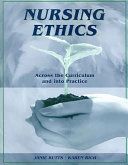
Spanning the nursing curriculum, Nursing Ethics: Across the Curriculum and Into Practice is derived from theoretical foundations, clinical evidence and case study. Based on the concept that compassionate relationships between nurses and patients form a vital element of humanistic nursing, this text provides foundational knowledge about ethics and decision-making strategies to prepare nurses for the moral issues they experience daily. Nursing Ethics includes decision-making approaches and models, rationale for decisions, and management of care for various topics. Instructor’s Resources Now Available! (Click on Supplements on the left-hand-menu to view.)
ما از اخلاق چه انتظاری داریم؟ این سوال شاید تاحدودی برای عموم مردم و یا متخصصان این رشته قابل پاسخ باشد؛ اینکه خوب بودن را به ما بیاموزد و در تنظیم روابط فردی م...

جشن کتاب تهران به ایستگاه سی و یکم رسیده است. حال و احوال نشر کتاب خوب نیست و باید فرهنگدوستان را به خرید و هدیه دادن کتاب ترغیب نمود. خانه اخلاقپژوهان جوان ب...

بنیاد کتابهای اخلاق اسلامی عمدتا پالایش جان از آلودگیها و آراستن آن به زیباییها است. اندیشه محوری این قبیل کتابها آن است که انسان فعلی آنی نیست که باید باشد...

-
0 Comments