Notice: تابع WP_Block_Type_Registry::register به طورنادرست فراخوانی شد. نامهای نوع بلوک نباید حروف بزرگ داشته باشند. لطفاً برای اطلاعات بیشتر، اشکال زدایی در وردپرس را مشاهده کنید. (این پیام در نگارش 5.0.0 افزوده شده است.) in /home/ethicsho/public_html/wp-includes/functions.php on line 5313
Warning: Use of undefined constant TDC_PATH_LEGACY - assumed 'TDC_PATH_LEGACY' (this will throw an Error in a future version of PHP) in /home/ethicsho/public_html/wp-content/plugins/td-composer/td-composer.php on line 109
Warning: Use of undefined constant TDSP_THEME_PATH - assumed 'TDSP_THEME_PATH' (this will throw an Error in a future version of PHP) in /home/ethicsho/public_html/wp-content/plugins/td-composer/td-composer.php on line 113 بایگانیهای Environmental Ethics - History - خانه اخلاق پژوهان جوان Notice: Trying to access array offset on value of type bool in /home/ethicsho/public_html/wp-content/plugins/wp-ulike/inc/general-functions.php on line 807
Ancient Greece was a place of tremendous political experiment and innovation, and it was here too that the first serious political thinkers emerged. Using carefully selected case-studies, Professor Cartledge investigates the dynamic interaction between ancient Greek political thought and practice from early historic times to the early Roman Empire. Of concern throughout are three major issues: first, the relationship of political thought and practice; second, the relevance of class and status to explaining political behaviour and thinking; third, democracy – its invention, development and expansion, and extinction, prior to its recent resuscitation and even apotheosis. In addition, monarchy in various forms and at different periods and the peculiar political structures of Sparta are treated in detail over a chronological range extending from Homer to Plutarch. The book provides an introduction to the topic for all students and non-specialists who appreciate the continued relevance of ancient Greece to political theory and practice today.
In Unlimited Love: Altruism, Compassion, and Service, author Stephen Post presents an argument for the creation of a new interdisciplinary field for the study of love from a scientific perspective. These insights are essential to our future; in fact, Teilhard de Chardin noted that the discovery of the scientific understanding of the power of unselfish love would be as significant in human history as the discovery of fire. In order to fully explore these ideas, Post established the Institute for Research on Unlimited Love, whose mission is to fund high-level scientific research, develop a dialogue between science and religion on the topic, and disseminate the results of these studies. In this book, he outlines the challenges of exploring the intersection of science, human experience, and the underlying metaphysics of divine love. Book jacket.
In this book, C. G. Prado addresses the difficult question of when and whether it is rational to end one’s life in order to escape devastating terminal illness. He specifically considers this question in light of the impact of multiculturalism on perceptions and judgments about what is right and wrong, permissible and impermissible. Prado introduces the idea of a “coincidental culture” to clarify the variety of values and commitments that influence decision. He also introduces the idea of a “proxy premise” to deal with reasoning issues that are raised by intractably held beliefs. Primarily intended for medical ethicists, this book will be of interest to anyone concerned about the ability of modern medicine to keep people alive, thereby forcing people to choose between living and dying. In addition, Prado calls upon medical ethicists and practitioners to appreciate the value of a theoretical basis for their work.
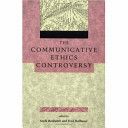
This timely reader in moral philosophy addresses a controversy that strongly affected recent European reflections on the relevance of ethics for theories of democratic institutions and democratic legitimacy. The debate centers around the idea of a communicative ethics as articulated by Jurgen Habermas and Karl-Otto Apel, and it is representative both of recent attempts to bridge the gap between Continental and Anglo-American philosophy and of the turn to language that has characterized much of recent philosophy.The Communicative Ethics Controversy illustrates philosophical dialogue in action, moving from theses to counterarguments to rejoinders. Theoretical statements by Habermas, Apel, and two of their leading students, Dietrich Bohler and Robert Alexy, are followed by a series of five arguments by their leading critics, who represent viewpoints ranging from Kantian idealism to Wittgensteinian ordinary-language theory. Fred Dallmayr’s introduction and Seyla Benhabib’s incisive conclusion place the debate in perspective, bringing it up to date and relating it to the Anglo-American context.Seyla Benhabib is Associate Professor of Philosophy and Women’s Studies at the State University of New York, Stony Brook. Fred Dallmayr is Packey Dee Professor of Government at the University of Notre Dame.Contributors: Robert Alexy. Karl-Otto Apel. Seyla Benhabib. Dietrich Bohler. Jurgen Habermas. Otfried Hoffe. KarlHeinz Ilting. Hermann Lubbe. Herbert Schnadelbach. Albrecht Wellmer.
ما از اخلاق چه انتظاری داریم؟ این سوال شاید تاحدودی برای عموم مردم و یا متخصصان این رشته قابل پاسخ باشد؛ اینکه خوب بودن را به ما بیاموزد و در تنظیم روابط فردی م...

جشن کتاب تهران به ایستگاه سی و یکم رسیده است. حال و احوال نشر کتاب خوب نیست و باید فرهنگدوستان را به خرید و هدیه دادن کتاب ترغیب نمود. خانه اخلاقپژوهان جوان ب...

بنیاد کتابهای اخلاق اسلامی عمدتا پالایش جان از آلودگیها و آراستن آن به زیباییها است. اندیشه محوری این قبیل کتابها آن است که انسان فعلی آنی نیست که باید باشد...

-
0 Comments