Notice: تابع WP_Block_Type_Registry::register به طورنادرست فراخوانی شد. نامهای نوع بلوک نباید حروف بزرگ داشته باشند. لطفاً برای اطلاعات بیشتر، اشکال زدایی در وردپرس را مشاهده کنید. (این پیام در نگارش 5.0.0 افزوده شده است.) in /home/ethicsho/public_html/wp-includes/functions.php on line 5313
Warning: Use of undefined constant TDC_PATH_LEGACY - assumed 'TDC_PATH_LEGACY' (this will throw an Error in a future version of PHP) in /home/ethicsho/public_html/wp-content/plugins/td-composer/td-composer.php on line 109
Warning: Use of undefined constant TDSP_THEME_PATH - assumed 'TDSP_THEME_PATH' (this will throw an Error in a future version of PHP) in /home/ethicsho/public_html/wp-content/plugins/td-composer/td-composer.php on line 113 بایگانیهای Death - Moral And Ethical Aspects - Cross-cultural Studies - خانه اخلاق پژوهان جوان Notice: Trying to access array offset on value of type bool in /home/ethicsho/public_html/wp-content/plugins/wp-ulike/inc/general-functions.php on line 807
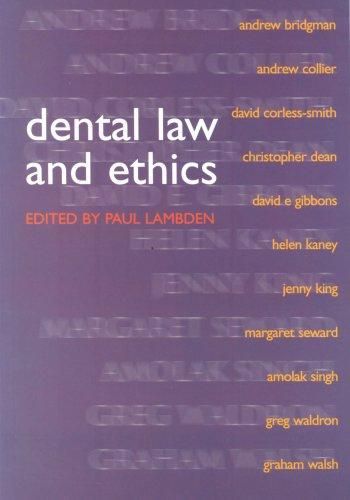
Invaluable book for practitioners and students alike. Readable and authoritative, subjects range from confidentiality, consent, mental disabilities and negligence, and the practical aspects of managing complaints and claims. Where differences occur, as in Scotland, these are fully explained. Developments in revalidation and continuing professional education make this a timely publication which should be readily available to every dentist and dental student. It provides clear and comprehensive guidance on key legal and ethical issues, and emphasises the standards which are now expected by patients and the profession.
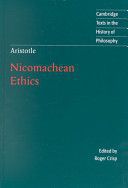
Aristotles Nicomachean Ethics, based on lectures that he gave in Athens in the fourth century BCE, is one of the most significant works in moral philosophy, and has profoundly influenced the whole course of subsequent philosophical endeavour. It is soundly located within a philosophical tradition, but its argument differs markedly from those of Plato and Socrates in its emphasis on the exercise – as opposed to the mere possession – of virtue as the key to human happiness, offering seminal discussions of ethical issues that are practical in their intent. Topics covered include the role of luck in human wellbeing, moral education, responsibility, courage, justice, moral weakness, friendship and pleasure. This accessible new translation by Roger Crisp follows the Greek text closely and also provides a non-Greek-reader with the flavour of the original. The volume also includes a historical and philosophical introduction and notes on further reading.
“Two Books of the Elements of Universal Jurisprudence” was Pufendorf’s first work, published in 1660. Its appearance effectively inaugurated the modern natural-law movement in the German-speaking world. The work also established Pufendorf as a key figure and laid the foundations for his major works, which were to sweep across Europe and North America. ‘Elements of Universal Jurisprudence’ established Pufendorf’s political theory, which, when fully developed, became the most significant alternative to rights-based theories. Pufendorf rejected the concept of natural rights as liberties and the suggestion that political government is justified by its protection of such rights, arguing instead for a principled limit to the state’s role in human life. The Liberty Fund edition is based on the translation by William Abbott Oldfather prepared for the Classics of International Law series published by the Carnegie Endowment for International Peace.
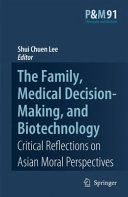
East Asian medicine, biomedical research, and health care policy are framed by their own set of moral and cultural commitments. Chief among these is the influence of Confucian ideas. A rich portrayal is offered of the implications of Confucian moral and ontological understandings for medical decision-making, human embryonic stem cell research, and health care financing. What is offered is a multifaceted insight into what distinguishes East Asian bioethical reflections. This volume opens with an exploration of the Confucian recognition of the family as an entity existing in its own right and which is not reducible to its members or their interests. As the essays in this volume show, this recognition of the family supports a notion of family autonomy that contrasts with Western individualistic accounts of proper medical decision-making. There are analyses of basic concepts as well as explorations of their implications for actual medical practice. The conflicts in East Asian countries between traditional Confucian and Western bioethics are explored as well as the tension between the new reproductive technologies and traditional understandings of the family. The studies of East Asian reflections concerning the moral status of human embryos and the morality of human embryo stem cell research disclose a set of concerns quite different from those anchored in Christian and Muslim cultural perspectives. The volume closes with an exploration of how Confucian cultural resources can be drawn upon to meet the contemporary challenges of health care financing.
ما از اخلاق چه انتظاری داریم؟ این سوال شاید تاحدودی برای عموم مردم و یا متخصصان این رشته قابل پاسخ باشد؛ اینکه خوب بودن را به ما بیاموزد و در تنظیم روابط فردی م...

جشن کتاب تهران به ایستگاه سی و یکم رسیده است. حال و احوال نشر کتاب خوب نیست و باید فرهنگدوستان را به خرید و هدیه دادن کتاب ترغیب نمود. خانه اخلاقپژوهان جوان ب...

بنیاد کتابهای اخلاق اسلامی عمدتا پالایش جان از آلودگیها و آراستن آن به زیباییها است. اندیشه محوری این قبیل کتابها آن است که انسان فعلی آنی نیست که باید باشد...

-
0 Comments