Notice: تابع WP_Block_Type_Registry::register به طورنادرست فراخوانی شد. نامهای نوع بلوک نباید حروف بزرگ داشته باشند. لطفاً برای اطلاعات بیشتر، اشکال زدایی در وردپرس را مشاهده کنید. (این پیام در نگارش 5.0.0 افزوده شده است.) in /home/ethicsho/public_html/wp-includes/functions.php on line 5313
Warning: Use of undefined constant TDC_PATH_LEGACY - assumed 'TDC_PATH_LEGACY' (this will throw an Error in a future version of PHP) in /home/ethicsho/public_html/wp-content/plugins/td-composer/td-composer.php on line 109
Warning: Use of undefined constant TDSP_THEME_PATH - assumed 'TDSP_THEME_PATH' (this will throw an Error in a future version of PHP) in /home/ethicsho/public_html/wp-content/plugins/td-composer/td-composer.php on line 113 بایگانیهای Environmental Conservation & Protection Policy - خانه اخلاق پژوهان جوان Notice: Trying to access array offset on value of type bool in /home/ethicsho/public_html/wp-content/plugins/wp-ulike/inc/general-functions.php on line 807
Containing material from hundreds of highly distinguished contributors representing the world’s top universities and institutions, the second edition has a truly global perspective. It contains more than 2,100 entries — including more than 450 new articles. Among the many topics covered are African, Islamic, Jewish, Russian, Chinese, and Buddhist philosophies; bioethics and biomedical ethics; art and aesthetics; epistemology; metaphysics; peace and war; social and political philosophy; the Holocaust; feminist thought; and much more. Additionally, the second edition also features 1,000 biographical entries on major figures in philosophical thought throughout history.
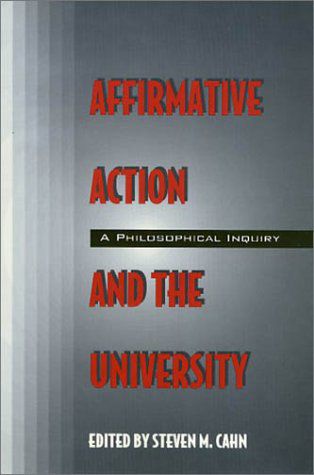
This book is recommended for anyone interested in understanding, questioning, articulating, and acting on the basis of their own and others’ perspectives on sexism, racism, and affirmative action in American higher education. –ChoiceWhile equal opportunity for all candidates is widely recognized as a goal within academia, the implementation of specific procedures to achieve equality has resulted in vehement disputes regarding both the means and ends. To encourage a reexamination of this issue, Cahn asked three prominent American social philosophers–Leslie Pickering Francis, Robert L. Simon, and Lawrence C. Becker–who hold divergent views about affirmative action, to write extended essays presenting their views. Twenty-two other philosophers then respond to these three principal essays. While no consensus is reached, the resulting clash of reasoned judgments will serve to revitalize the issues raised by affirmative action.ContentsIntroduction – Steven M. CahnPart I1. In Defense of Affirmative Action – Leslie Pickering Francis2. Affirmative Action and the University: Faculty Appointment and Preferential Treatment – Robert L. Simon3. Affirmative Action and Faculty Appointments – Lawrence C. BeckerPart II4. What Good Am I? – Laurence Thomas5. Who Counts on Campus? – Ann Hartle6. Reflections on Affirmative Action in Academia – Robert G. Turnbull7. The Injustice of Strong Affirmative Action – John Kekes8. Preferential Treatment Versus Purported Meritocratic Rights – Richard J. Arneson9. Faculties as Civil Societies: A Misleading Model for Affirmative Action – Jeffrie G. Murphy10. Facing Facts and Responsibilities – The White Man’s Burden and the Burden of Proof – Karen Hanson11. Affirmative Action: Relevant Knowledge and Relevant Ignorance – Joel J. Kupperman12. Remarks on Affirmative Action – Andrew Oldenquist13. Affirmative Action and the Multicultural Ideal – Philip L. Quinn14. Affirmative Action in the Cultural Wars – Frederick A. Olafson15. Quotas by Any Name: Some Problems of Affirmative Action in Faculty Appointments – Tom L. Beauchamp16. Are Quotas Sometimes Justified? – James Rachels17. Proportional Representation of Women and Minorities – Celia Wolf-Devine18. An Ecological Concept of Diversity – La Verne Shelton19. Careers Open to Talent – Ellen Frankel Paul20. Some Sceptical Doubts – Alasdair MacIntyre21. Affirmative Action and Tenure Decisions – Richard T. De George22. Affirmative Action and the Awarding of Tenure – Peter J. Markie23. The Case for Preferential Treatment – James P. Sterba24. Saying What We Think – Fred Sommers25. Comments on Compromise and Affirmative Action – Alan H. GoldmanAbout the AuthorsIndex About the Author(s)Steven M. Cahn is Professor of Philosophy and former Provost and Vice President for Academic Affairs at the Graduate Center of the City University of New York. He has published numerous other books, including Morality, Responsibility, and the University (Temple).Contributors: Laurence Thomas, Ann Hartle, Robert G. Turnbull, John Kekes, Richard J. Arneson, Jeffrie G. Murphy, Karen Hanson, Joel J. Kupperman, Andrew Oldenquist, Philip L. Quinn, Frederick A. Olafson, Tom L. Beauchamp, James Rachels, Celia Wolf-Devine, La Verne Shelton, Ellen Frankel Paul, Alasdair MacIntyre, Richard T. De George, Peter J. Markie, James P. Sterba, Fred Sommers, Alan H. Goldman, and the editor.
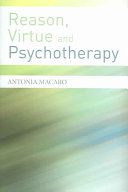
In recent years philosophy has become increasingly popular as an alternative source of inspiration in helping people to lead a good life. Ancient Greek philosophy in particular was conceived as a practical endeavour intended to have an impact on how people lived.This book, loosely organised around the structure of Aristotle’s Nicomachean Ethics, draws on Aristotle’s ideas about virtue and on contemporary virtue ethics to create a framework that can be used by psychotherapists and counsellors in helping their clients – or themselves – to live flourishing lives. It provides a clear discussion of Aristotle’s key ideas about virtue and the good life and places these within the context of other philosophical and psychological theories, both ancient and contemporary. It goes on to address the practical relevance of these ideas to the everyday work of the therapist, providing suggestions for practice and a number of useful exercises. These will be particularly helpful for practitioners working with issues such as finding value and meaning in life, making difficult decisions, developing helpful character traits, managing disruptive emotions and increasing self-control.Reason, Virtue and Psychotherapy bridges the gap between academic philosophy and real life. It will be of interest to practising counsellors and psychotherapists as well as students and trainees in these areas. Since it is written in a clear, jargon-free style, it is also appropriate for all those who are curious about how ancient understandings can improve their life.
A Companion to Genethics is the first substantial study of the multifaceted dimensions of the genetic revolution and its philosophical, ethical, social and political significance.Brings together the best and most influential writing about the ethics of genetics; Includes 33 newly-commissioned essays, all written by prominent figures in the field; Shows how there is scarcely a part of our lives left unaffected by the impact of the new genetics.
ما از اخلاق چه انتظاری داریم؟ این سوال شاید تاحدودی برای عموم مردم و یا متخصصان این رشته قابل پاسخ باشد؛ اینکه خوب بودن را به ما بیاموزد و در تنظیم روابط فردی م...

جشن کتاب تهران به ایستگاه سی و یکم رسیده است. حال و احوال نشر کتاب خوب نیست و باید فرهنگدوستان را به خرید و هدیه دادن کتاب ترغیب نمود. خانه اخلاقپژوهان جوان ب...

بنیاد کتابهای اخلاق اسلامی عمدتا پالایش جان از آلودگیها و آراستن آن به زیباییها است. اندیشه محوری این قبیل کتابها آن است که انسان فعلی آنی نیست که باید باشد...

-
0 Comments