Notice: تابع WP_Block_Type_Registry::register به طورنادرست فراخوانی شد. نامهای نوع بلوک نباید حروف بزرگ داشته باشند. لطفاً برای اطلاعات بیشتر، اشکال زدایی در وردپرس را مشاهده کنید. (این پیام در نگارش 5.0.0 افزوده شده است.) in /home/ethicsho/public_html/wp-includes/functions.php on line 5313
Warning: Use of undefined constant TDC_PATH_LEGACY - assumed 'TDC_PATH_LEGACY' (this will throw an Error in a future version of PHP) in /home/ethicsho/public_html/wp-content/plugins/td-composer/td-composer.php on line 109
Warning: Use of undefined constant TDSP_THEME_PATH - assumed 'TDSP_THEME_PATH' (this will throw an Error in a future version of PHP) in /home/ethicsho/public_html/wp-content/plugins/td-composer/td-composer.php on line 113 بایگانیهای Embryonic Stem Cells - Research - Moral And Ethical Aspects - United States - خانه اخلاق پژوهان جوان Notice: Trying to access array offset on value of type bool in /home/ethicsho/public_html/wp-content/plugins/wp-ulike/inc/general-functions.php on line 807
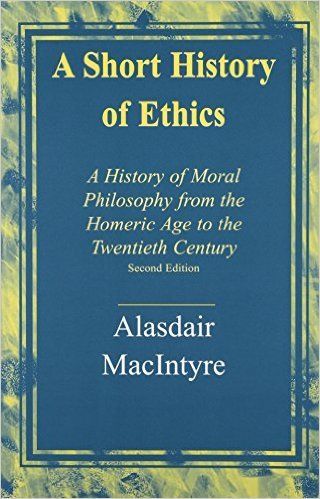
The author writes…’This history of moral philosophy which runs from the Greeks to contemporary Anglo-Saxon discussion is necessarily compressed and selective, but is intended to enable the general reader and the student to place particular texts in moral philosophy in an historical perspective. The function of this perspective is to clarify three kinds of historical and philosophical connection whose importance is often underrated. The first is a matter of the debts which moral philosophers owe to their predecessors; the second concerns the question of the nature of the moral concepts which furnish any moral philosopher with the objects of his enquiry upon moral concepts themselves and the extent to which the philosophical analysis of a concept may play a part in transforming or even discrediting it. A consequence of these preoccupations is that the book contains a higher proportion of purely philosophical enquiry than might be expected in an historical work.’
This evocative and broad-ranging book traces the history of moral regulation in Britain and the US from the late seventeenth century to the present day. Specific coverage is given to movements such as the Society for the Reformation of Manners and the Vice Society, the sexual abuse and anti-pornography movements, and contemporary self-help movements. Hunt argues that the main impetus for moral regulations often stems from the middle classes, rather than those with institutional power, but most significantly they provide classic instances of the intimate link between the ‘governance of others’ and the ‘governance of the self’. Using the work of Foucault, this book analyses how projects of self-regulation can manifest themselves into the regulation of others. Concurrent with this is the rise of health discourses, which play a central role in contemporary discussions of moral governance.
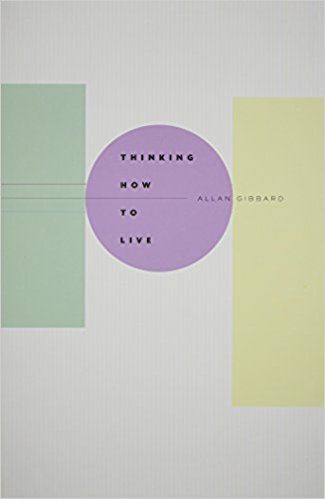
Philosophers have long suspected that thought and discourse about what we ought to do differ in some fundamental way from statements about what is. But the difference has proved elusive, in part because the two kinds of statement look alike. Focusing on judgments that express decisions–judgments about what is to be done, all things considered–Allan Gibbard offers a compelling argument for reconsidering, and reconfiguring, the distinctions between normative and descriptive discourse–between questions of “ought” and “is.” Gibbard considers how our actions, and our realities, emerge from the thousands of questions and decisions we form for ourselves. The result is a book that investigates the very nature of the questions we ask ourselves when we ask how we should live, and that clarifies the concept of “ought” by understanding the patterns of normative concepts involved in beliefs and decisions. An original and elegant work of metaethics, this book brings a new clarity and rigor to the discussion of these tangled issues, and will significantly alter the long-standing debate over “objectivity” and “factuality” in ethics. Table of Contents: I. Preliminaries 1. Introduction: A Possibility Proof 2. Intuitionism as Template: Emending Moore II. The Thing to Do 3. Planning and Ruling Out: The “Frege-Geach” Problem 4. Judgment, Disagreement, Negation 5. Supervenience and Constitution 6. Character and Import III. Normative Concepts 7. Ordinary Oughts: Meaning and Motivation 8. Normative Kinds: Patterns of Engagement 9. What to Say about the Thing to Do: The Expressivistic Turn and What it Gains Us IV. Knowing What to Do 10. Explaining with Plans 11. Knowing What to Do 12. Ideal Response Concepts 13. Deep Vindication and Practical Confidence 14. Impasse and Dissent References Index This is a remarkable book. It takes up a central and much-discussed problem – the difference between normative thought (and discourse) and “descriptive” thought (and discourse). It develops a compelling response to that problem with ramifications for much else in philosophy. But perhaps most importantly, it brings new clarity and rigor to the discussion of these tangled issues. It will take some time to come to terms with the details of Gibbard’s discussion. It is absolutely clear, however, that the book will reconfigure the debate over objectivity and “factuality” in ethics.–Gideon Rosen, Professor of Philosophy, Princeton UniversityGibbard,/author> writes elegantly, and the theory he develops is innovative, philosophically sophisticated, and challenging. Gibbard defends his theory vigorously and with admirable intellectual honesty.–David Copp, Professor of Philosophy, Bowling Green State University
Many words and expressions are viewed as ‘taboo’, such as those used to describe sex, our bodies and their functions, and those used to insult other people. This book provides a fascinating insight into taboo language and its role in everyday life. It looks at the ways we use language to be polite or impolite, politically correct or offensive, depending on whether we are ‘sweet-talking’, ‘straight-talking’ or being deliberately rude. Using a range of colourful examples, it shows how we use language playfully and figuratively in order to swear, to insult, and also to be politically correct, and what our motivations are for doing so. It goes on to examine the differences between institutionalized censorship and the ways individuals censor their own language. Lively and revealing, Forbidden Words will fascinate anyone who is interested in how and why we use and avoid taboos in daily conversation.
ما از اخلاق چه انتظاری داریم؟ این سوال شاید تاحدودی برای عموم مردم و یا متخصصان این رشته قابل پاسخ باشد؛ اینکه خوب بودن را به ما بیاموزد و در تنظیم روابط فردی م...

جشن کتاب تهران به ایستگاه سی و یکم رسیده است. حال و احوال نشر کتاب خوب نیست و باید فرهنگدوستان را به خرید و هدیه دادن کتاب ترغیب نمود. خانه اخلاقپژوهان جوان ب...

بنیاد کتابهای اخلاق اسلامی عمدتا پالایش جان از آلودگیها و آراستن آن به زیباییها است. اندیشه محوری این قبیل کتابها آن است که انسان فعلی آنی نیست که باید باشد...

-
0 Comments