Notice: تابع WP_Block_Type_Registry::register به طورنادرست فراخوانی شد. نامهای نوع بلوک نباید حروف بزرگ داشته باشند. لطفاً برای اطلاعات بیشتر، اشکال زدایی در وردپرس را مشاهده کنید. (این پیام در نگارش 5.0.0 افزوده شده است.) in /home/ethicsho/public_html/wp-includes/functions.php on line 5313
Warning: Use of undefined constant TDC_PATH_LEGACY - assumed 'TDC_PATH_LEGACY' (this will throw an Error in a future version of PHP) in /home/ethicsho/public_html/wp-content/plugins/td-composer/td-composer.php on line 109
Warning: Use of undefined constant TDSP_THEME_PATH - assumed 'TDSP_THEME_PATH' (this will throw an Error in a future version of PHP) in /home/ethicsho/public_html/wp-content/plugins/td-composer/td-composer.php on line 113 بایگانیهای Differentiefilosofie - خانه اخلاق پژوهان جوان Notice: Trying to access array offset on value of type bool in /home/ethicsho/public_html/wp-content/plugins/wp-ulike/inc/general-functions.php on line 807
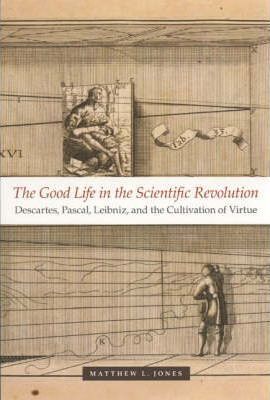
Amid the unrest, dislocation, and uncertainty of seventeenth-century Europe, readers seeking consolation and assurance turned to philosophical and scientific books that offered ways of conquering fears and training the mind—guidance for living a good life. The Good Life in the Scientific Revolution presents a triptych showing how three key early modern scientists, René Descartes, Blaise Pascal, and Gottfried Leibniz, envisioned their new work as useful for cultivating virtue and for pursuing a good life. Their scientific and philosophical innovations stemmed in part from their understanding of mathematics and science as cognitive and spiritual exercises that could create a truer mental and spiritual nobility. In portraying the rich contexts surrounding Descartes’ geometry, Pascal’s arithmetical triangle, and Leibniz’s calculus, Matthew L. Jones argues that this drive for moral therapeutics guided important developments of early modern philosophy and the Scientific Revolution.
The concept of global justice makes visible how we citizens of affluent countries are potentially implicated in the horrors so many must endure in the so-called less developed countries.Distinct conceptions of global justice differ in their specific criteria of global justice. However, they agree that the touchstone is how well our global institutional order is doing, compared to its feasible alternatives, in regard to the fundamental human interests that matter from a moral point of view.We are responsible for global regimes such as the global trading system and the rules governing military interventions. These institutional arrangements affect human beings worldwide, for instance by shaping the options and incentives of governments and corporations. Alternative paths of globalization would have differed in how much violence, oppression, and extreme poverty they engender. And global institutional reforms could greatly enhance human rights fullfillment in the future.The importance of this global justice approach reaches well beyond philosophy. It helps ordinary citizens evaluate their options and their responsibility for global institutional factors, and it challenges social scientists to address the causes of poverty and hunger that act across borders.The present volume addresses four main topics regarding global justice: The normative grounds for claims regarding the global institutional order, the substantive normative principles for a legitimate global order, the roles of legal human rights standards, and some institutional arrangements that may make the present world order less unjust.All royalties from this book have been assigned to Oxfam.
Ethics is taught in various ways; in this book exercises and discussion are provided for each of the following areas: – Ethical Practices in Health Care – Law and Ethics – Rights of Patients and Responsibilities of Health-Care Providers – The Rights of Health-Care Professionals – The Duty of Care – Confidentiality – Consent to Treatment – Life and Death – Research Ethics – Ethics in Public Health Practice – Ethical Practice in Everyday Health Care is useful, practical and student friendly. The exercises and discussions will stimulate thought about ethical conduct and help students to develop and translate ethical principles into their daily practice as health-care workers. Dr Walrond offers a ready and concise source of information for medical students on ethical issues. The text is simple, comprehensive and factual, addressing issues encountered in everyday medical practices. Case studies provide practical illustrations of complex ethical issues.
This encyclopedia considers both the professional ethics of science and technology, and the social, ethical, and political issues raised by science and technology.
How can science be brought to connect with experience? This book addresses two of the most challenging problems facing contemporary neurobiology and cognitive science: first, understanding how we unconsciously execute habitual actions as a result of neurological and cognitive processes that are not formal actions of conscious judgment but part of a habitual nexus of systematic self-organization; second, creating an ethics adequate to our present awareness that there is no such thing as a transcendental self, a stable subject, or a soul.In earlier modes of cognitive science, cognition was conceptualized according to a model of representation and abstract reasoning. In the realm of ethics, this corresponded to the philosophical tenet that to do what is ethical is to do what corresponds to an abstract set of rules. By contrast to this computationalism, the author places central emphasis on what he terms “enaction”—cognition as the ability to negotiate embodied, everyday living in a world that is inseparable from our sensory-motor capacities.Apart from his researches in cognitive science, the bodies of thought that enable Varela to make this link are phenomenology and two representatives of what he calls the “wisdom traditions”: Confucian ethics and Buddhist epistemology. From the Confucian tradition, he draws upon the Mencius to propose an ethics of praxis, one in which ethical action is conceived as a project of being rather than as a system of judgment, less a matter of rules that are universally applicable than a goal of expertise, sagehood.The Buddhist contribution to his project encompasses “the embodiment of the void” and the “pragmatics of a virtual self.” How does a belief system that does not posit a unitary self or subject conceive the living of an “I”? In summation, the author proposes an ethics founded on “savoir faire” that is a practice of transformation based on a constant recognition of the “virtual” nature of ourselves in the actual operations of our mental lives.
ما از اخلاق چه انتظاری داریم؟ این سوال شاید تاحدودی برای عموم مردم و یا متخصصان این رشته قابل پاسخ باشد؛ اینکه خوب بودن را به ما بیاموزد و در تنظیم روابط فردی م...

جشن کتاب تهران به ایستگاه سی و یکم رسیده است. حال و احوال نشر کتاب خوب نیست و باید فرهنگدوستان را به خرید و هدیه دادن کتاب ترغیب نمود. خانه اخلاقپژوهان جوان ب...

بنیاد کتابهای اخلاق اسلامی عمدتا پالایش جان از آلودگیها و آراستن آن به زیباییها است. اندیشه محوری این قبیل کتابها آن است که انسان فعلی آنی نیست که باید باشد...

-
0 Comments