Notice: تابع WP_Block_Type_Registry::register به طورنادرست فراخوانی شد. نامهای نوع بلوک نباید حروف بزرگ داشته باشند. لطفاً برای اطلاعات بیشتر، اشکال زدایی در وردپرس را مشاهده کنید. (این پیام در نگارش 5.0.0 افزوده شده است.) in /home/ethicsho/public_html/wp-includes/functions.php on line 5313
Warning: Use of undefined constant TDC_PATH_LEGACY - assumed 'TDC_PATH_LEGACY' (this will throw an Error in a future version of PHP) in /home/ethicsho/public_html/wp-content/plugins/td-composer/td-composer.php on line 109
Warning: Use of undefined constant TDSP_THEME_PATH - assumed 'TDSP_THEME_PATH' (this will throw an Error in a future version of PHP) in /home/ethicsho/public_html/wp-content/plugins/td-composer/td-composer.php on line 113 بایگانیهای Constitutional Law - Philosophy - خانه اخلاق پژوهان جوان Notice: Trying to access array offset on value of type bool in /home/ethicsho/public_html/wp-content/plugins/wp-ulike/inc/general-functions.php on line 807
‘Fiala’s Tolerance and the Ethical Life is a profound study of the sources and consequences of the effort to get along with others in peace. His view that philosophy and toleration are particularly closely related is novel and important; connecting forbearance with tragically diverse communities stresses a much-neglected aspect of the subject. Written in accessible language but displaying a mastery of the history of thought, this book makes a permanent contribution to our understanding of why we must learn to live together and how difficult that is’ John Lachs, Vanderbilt University In a fresh and exciting way, this book shows how tolerance connects with the practice of philosophy. Andrew Fiala examines the virtue of tolerance as it appears in several historical contexts: Socratic philosophy, Stoic philosophy, Pragmatism and Existentialism. The lesson derived is that tolerance is a virtue for what Fiala calls ‘tragic communities’. Such communities are developed when we come together across our differences, but they lack the robust sense of connection that we often seek with others – the complete sort of happiness that is offered by a more Utopian ideal of community. But rather than viewing this conclusion as a failure, Fiala maintains that tragic communities are the best communities possible for human beings who are aware of their own individuality and finitude. Indeed, they are typical of the sorts of communities created by philosophers engaged in dialogue with others.
Mark Sagoff draws on the last twenty years of debate over the foundations of environmentalism in this comprehensive revision of The Economy of the Earth. Posing questions pertinent to consumption, cost-benefit analysis, the normative implications of neo-Darwinism, the role of the natural in national history, and the centrality of the concept of place in environmental ethics, he analyzes social policy in relation to the environment, pollution, the workplace, and public safely and health. Sagoff distinguishes ethical from economic questions and explains which kinds of concepts, arguments, and processes are appropriate to each.
Jason Stanley presents a startling and provocative claim about knowledge: that whether or not someone knows a proposition at a given time is in part determined by his or her practical interests, i.e. by how much is at stake for that person at that time. So whether a true belief is knowledge is not merely a matter of supporting beliefs or reliability; in the case of knowledge, practical rationality and theoretical rationality are intertwined. Stanley defends this thesis against alternative accounts of the phenomena that motivate it, such as the claim that knowledge attributions are linguistically context-sensitive (contextualism about knowledge attributions), and the claim that the truth of a knowledge claim is somehow relative to the person making the claim (relativism about knowledge). In the course of his argument Stanley introduces readers to a number of strategies for resolving philosophical paradox, making the book essential not just for specialists in epistemology but for all philosophers interested in philosophical methodology. Since a number of his strategies appeal to linguistic evidence, it will be of great interest to linguists as well.
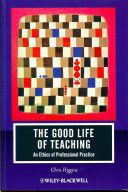
The Good Life of Teaching extends the recent revival of virtue ethics to professional ethics and the philosophy of teaching. It connects long-standing philosophical questions about work and human growth to questions about teacher motivation, identity, and development.Makes a significant contribution to the philosophy of teaching and also offers new insights into virtue theory and professional ethicsOffers fresh and detailed readings of major figures in ethics, including Alasdair MacIntyre, Charles Taylor, and Bernard Williams and the practical philosophies of Hannah Arendt, John Dewey and Hans-Georg GadamerProvides illustrations to assist the reader in visualizing major points, and integrates sources such as film, literature, and teaching memoirs to exemplify arguments in an engaging and accessible wayPresents a compelling vision of teaching as a reflective practice showing how this requires us to prepare teachers differently
ما از اخلاق چه انتظاری داریم؟ این سوال شاید تاحدودی برای عموم مردم و یا متخصصان این رشته قابل پاسخ باشد؛ اینکه خوب بودن را به ما بیاموزد و در تنظیم روابط فردی م...

جشن کتاب تهران به ایستگاه سی و یکم رسیده است. حال و احوال نشر کتاب خوب نیست و باید فرهنگدوستان را به خرید و هدیه دادن کتاب ترغیب نمود. خانه اخلاقپژوهان جوان ب...

بنیاد کتابهای اخلاق اسلامی عمدتا پالایش جان از آلودگیها و آراستن آن به زیباییها است. اندیشه محوری این قبیل کتابها آن است که انسان فعلی آنی نیست که باید باشد...

-
0 Comments