Notice: تابع WP_Block_Type_Registry::register به طورنادرست فراخوانی شد. نامهای نوع بلوک نباید حروف بزرگ داشته باشند. لطفاً برای اطلاعات بیشتر، اشکال زدایی در وردپرس را مشاهده کنید. (این پیام در نگارش 5.0.0 افزوده شده است.) in /home/ethicsho/public_html/wp-includes/functions.php on line 5313
Warning: Use of undefined constant TDC_PATH_LEGACY - assumed 'TDC_PATH_LEGACY' (this will throw an Error in a future version of PHP) in /home/ethicsho/public_html/wp-content/plugins/td-composer/td-composer.php on line 109
Warning: Use of undefined constant TDSP_THEME_PATH - assumed 'TDSP_THEME_PATH' (this will throw an Error in a future version of PHP) in /home/ethicsho/public_html/wp-content/plugins/td-composer/td-composer.php on line 113 بایگانیهای African Americans - Civil Rights - خانه اخلاق پژوهان جوان Notice: Trying to access array offset on value of type bool in /home/ethicsho/public_html/wp-content/plugins/wp-ulike/inc/general-functions.php on line 807
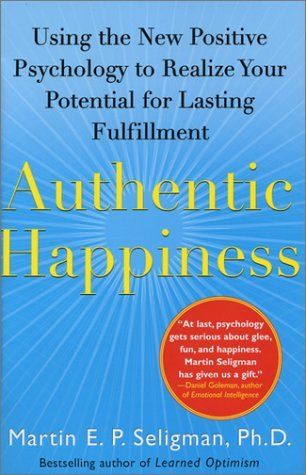
In this national bestseller — Martin Seligman’s most stimulating, persuasive book to date — the acclaimed author of Learned Optimism introduces yet another revolutionary idea. Drawing on groundbreaking scientific research, Seligman shows how Positive Psychology is shifting the profession’s paradigm away from its narrow-minded focus on pathology, victimology, and mental illness to positive emotion and mental health. Happiness, studies show, is not the result of good genes or luck. It can be cultivated by identifying and nurturing traits that we already possess — including kindness, originality, humor, optimism, and generosity.Seligman provides the tools you need in order to ascertain your most positive traits or strengths. Then he explains how, by frequently calling upon these “signature strengths” in all the crucial realms of life — health, relationships, career — you will not only develop natural buffers against misfortune and negative emotion, but also achieve new and sustainable levels of authentic contentment, gratification, and meaning.
Resisting Ethics is a new contribution to an ongoing debate on how the world can be improved. Starting with the notion that resistance and ethics are theoretically and practically intertwined, Scott Schaffer develops a new socially oriented ethics based on the practical experience of resistance and ethics. Borrowing from and extending the ideas of Sartre, Merleau-Ponty, and Bourdieu, and using case studies of the Algerian Revolution and the Zapatista rebellion, Schaffer argues that existentialism can give us new insights into how we can and should act ethically in the world. Resisting Ethics is a wide-ranging work and represents a new kind of intervention into issues of social justice and resistance.
This timely reader in moral philosophy addresses a controversy that strongly affected recent European reflections on the relevance of ethics for theories of democratic institutions and democratic legitimacy. The debate centers around the idea of a communicative ethics as articulated by Jurgen Habermas and Karl-Otto Apel, and it is representative both of recent attempts to bridge the gap between Continental and Anglo-American philosophy and of the turn to language that has characterized much of recent philosophy.The Communicative Ethics Controversy illustrates philosophical dialogue in action, moving from theses to counterarguments to rejoinders. Theoretical statements by Habermas, Apel, and two of their leading students, Dietrich Bohler and Robert Alexy, are followed by a series of five arguments by their leading critics, who represent viewpoints ranging from Kantian idealism to Wittgensteinian ordinary-language theory. Fred Dallmayr’s introduction and Seyla Benhabib’s incisive conclusion place the debate in perspective, bringing it up to date and relating it to the Anglo-American context.Seyla Benhabib is Associate Professor of Philosophy and Women’s Studies at the State University of New York, Stony Brook. Fred Dallmayr is Packey Dee Professor of Government at the University of Notre Dame.Contributors: Robert Alexy. Karl-Otto Apel. Seyla Benhabib. Dietrich Bohler. Jurgen Habermas. Otfried Hoffe. KarlHeinz Ilting. Hermann Lubbe. Herbert Schnadelbach. Albrecht Wellmer.
ما از اخلاق چه انتظاری داریم؟ این سوال شاید تاحدودی برای عموم مردم و یا متخصصان این رشته قابل پاسخ باشد؛ اینکه خوب بودن را به ما بیاموزد و در تنظیم روابط فردی م...

جشن کتاب تهران به ایستگاه سی و یکم رسیده است. حال و احوال نشر کتاب خوب نیست و باید فرهنگدوستان را به خرید و هدیه دادن کتاب ترغیب نمود. خانه اخلاقپژوهان جوان ب...

بنیاد کتابهای اخلاق اسلامی عمدتا پالایش جان از آلودگیها و آراستن آن به زیباییها است. اندیشه محوری این قبیل کتابها آن است که انسان فعلی آنی نیست که باید باشد...

-
0 Comments