Notice: تابع WP_Block_Type_Registry::register به طورنادرست فراخوانی شد. نامهای نوع بلوک نباید حروف بزرگ داشته باشند. لطفاً برای اطلاعات بیشتر، اشکال زدایی در وردپرس را مشاهده کنید. (این پیام در نگارش 5.0.0 افزوده شده است.) in /home/ethicsho/public_html/wp-includes/functions.php on line 5313
Warning: Use of undefined constant TDC_PATH_LEGACY - assumed 'TDC_PATH_LEGACY' (this will throw an Error in a future version of PHP) in /home/ethicsho/public_html/wp-content/plugins/td-composer/td-composer.php on line 109
Warning: Use of undefined constant TDSP_THEME_PATH - assumed 'TDSP_THEME_PATH' (this will throw an Error in a future version of PHP) in /home/ethicsho/public_html/wp-content/plugins/td-composer/td-composer.php on line 113 بایگانیهای Badiou, Alain - خانه اخلاق پژوهان جوان Notice: Trying to access array offset on value of type bool in /home/ethicsho/public_html/wp-content/plugins/wp-ulike/inc/general-functions.php on line 807
From world-renowned psychologist and bestselling author of The Soul’s Code, a profound examination of the roots of man’s primal love/hate relationship with war. War is a timeless force in the human imagination-and, indeed, in daily life. If recent events have taught us anything, it is that peacetime is not nearly so constant and attainable as wartime. During the 5,600 years of recorded history, 14,600 wars have been fought-2 to 3 for every year of human history. War is a constant thing. And yet no one really understands why that is. In A Terrible Love of War, James Hillman, one of the central figures in psychology in the twentieth and twenty-first centuries, fills this great void and undertakes a groundbreaking examination of the origins, needs, and rewards of war. Moreover, in this brilliant inquiry, Hillman explores many other essential questions, such as: Is war a necessary part of our human soul and, therefore, a necessary part of our lives? Why do we need enemies? What scars does warfare carve on the psyche of its soldiers? And why does it have such a permanent effect? If war is such a “normal” part of our existence, why do we fear it so much? And alternately, how could we ever embrace a force so destructive, so wanton, and so inhuman? Can the impulse to engage in war be tamed? Hillman asserts that “if we want war’s horror to be abated so that life may go on, it is necessary to understand and imagine.” A Terrible Love of Waris a crucial tool to understanding war-a crucial book for us all.
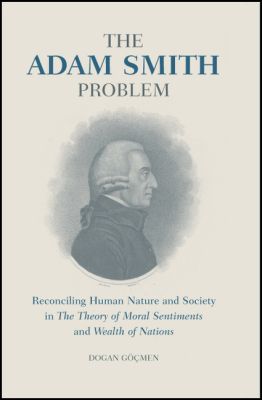
This is the first scholarly work to deal solely with the ‘Adam Smith problem’, namely the apparent contradiction between Adam Smith’s most famous works, The Theory of Moral Sentiments and The Nature and Causes of the Wealth of Nations. Since the 1840s scholars have puzzled over and attempted to explain the fact that these works offer two fundamentally different and contradictory concepts of human nature. In this radical new approach Dogan Göçmen makes a major contribution to the debate. Accepting that Smith does indeed put forward two different and varied ideas, he argues that the ethical position articulated in The Theory of Moral Sentiments can be, and was intended by Smith to be, applied as a basis for criticising the commercial society analysed in the Wealth of Nations. Göçmen argues that this ethical position points to the character of an ideal future society, Adam Smith’s Utopia, a society in which its social components are completely in sympathy – and therefore harmonious – with each other.
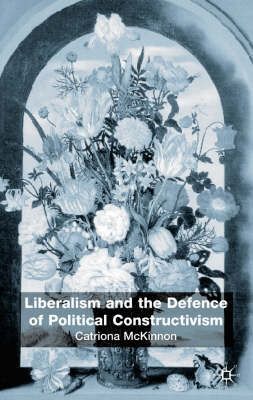
Liberal political justification is often accused of preaching to the converted: the values of such justification, it is claimed, are acceptable as values only to those already convinced by arguments in the secular, humanist Enlightenment tradition of political justification. This is the most taxing problem facing contemporary liberal theories of political justification. Catriona McKinnon suggests an interpretation of the ‘political constructivism’ approach to this problem offered by John Rawls. This interpretation argues that by placing the value of self-respect and its social conditions at the heart of the political constructivist approach to liberal justification, such justification can deliver on its promise to show why liberal principles of toleration and public reason are acceptable even to non-liberal people. A self-respect based constructivist approach to contemporary liberal justification restores to the liberal tradition the radical potential which it has always historically possessed.
ما از اخلاق چه انتظاری داریم؟ این سوال شاید تاحدودی برای عموم مردم و یا متخصصان این رشته قابل پاسخ باشد؛ اینکه خوب بودن را به ما بیاموزد و در تنظیم روابط فردی م...

جشن کتاب تهران به ایستگاه سی و یکم رسیده است. حال و احوال نشر کتاب خوب نیست و باید فرهنگدوستان را به خرید و هدیه دادن کتاب ترغیب نمود. خانه اخلاقپژوهان جوان ب...

بنیاد کتابهای اخلاق اسلامی عمدتا پالایش جان از آلودگیها و آراستن آن به زیباییها است. اندیشه محوری این قبیل کتابها آن است که انسان فعلی آنی نیست که باید باشد...

-
0 Comments