Notice: تابع WP_Block_Type_Registry::register به طورنادرست فراخوانی شد. نامهای نوع بلوک نباید حروف بزرگ داشته باشند. لطفاً برای اطلاعات بیشتر، اشکال زدایی در وردپرس را مشاهده کنید. (این پیام در نگارش 5.0.0 افزوده شده است.) in /home/ethicsho/public_html/wp-includes/functions.php on line 5313
Warning: Use of undefined constant TDC_PATH_LEGACY - assumed 'TDC_PATH_LEGACY' (this will throw an Error in a future version of PHP) in /home/ethicsho/public_html/wp-content/plugins/td-composer/td-composer.php on line 109
Warning: Use of undefined constant TDSP_THEME_PATH - assumed 'TDSP_THEME_PATH' (this will throw an Error in a future version of PHP) in /home/ethicsho/public_html/wp-content/plugins/td-composer/td-composer.php on line 113 بایگانیهای Religions - Relations - خانه اخلاق پژوهان جوان Notice: Trying to access array offset on value of type bool in /home/ethicsho/public_html/wp-content/plugins/wp-ulike/inc/general-functions.php on line 807
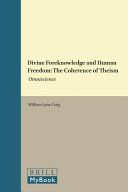
The ancient problem of fatalism, more particularly theological fatalism, has resurfaced with surprising vigour in the second half of the twentieth century. Two questions predominate in the debate: (1) Is divine foreknowledge compatible with human freedom and (2) How can God foreknow future free acts?Having surveyed the historical background of this debate in “The Problem of Divine Foreknowledge and “Future Contingents from Aristotle to Suarez (Brill: 1988), William Lane Craig now attempts to address these issues critically. His wide-ranging discussion brings together a thought- provoking array of related topics such as logical fatalism, multivalent logic, backward causation, precognition, time travel, counterfactual logic, temporal necessity, Newcomb’s Problem, middle knowledge, and relativity theory.The present work serves both as a useful survey of the extensive literature on theological fatalism and related fields and as a stimulating assessment of the possibility of divine foreknowledge of future free acts.
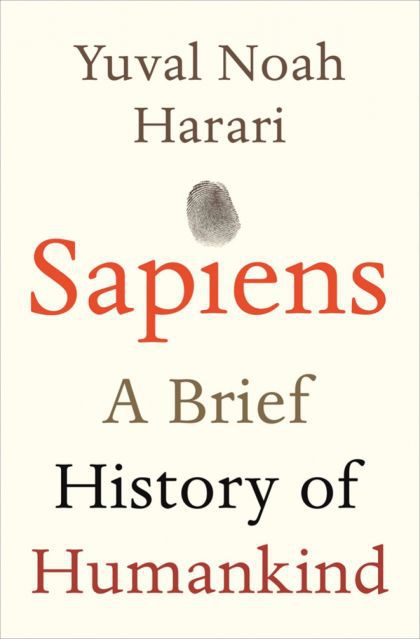
From a renowned historian comes a groundbreaking narrative of humanity’s creation and evolution—a #1 international bestseller—that explores the ways in which biology and history have defined us and enhanced our understanding of what it means to be “human.”
One hundred thousand years ago, at least six different species of humans inhabited Earth. Yet today there is only one—homo sapiens. What happened to the others? And what may happen to us?
Most books about the history of humanity pursue either a historical or a biological approach, but Dr. Yuval Noah Harari breaks the mold with this highly original book that begins about 70,000 years ago with the appearance of modern cognition. From examining the role evolving humans have played in the global ecosystem to charting the rise of empires, Sapiens integrates history and science to reconsider accepted narratives, connect past developments with contemporary concerns, and examine specific events within the context of larger ideas.
Dr. Harari also compels us to look ahead, because over the last few decades humans have begun to bend laws of natural selection that have governed life for the past four billion years. We are acquiring the ability to design not only the world around us, but also ourselves. Where is this leading us, and what do we want to become?
In addressing the political and theoretical debates between critical and post-Marxist theorists, this book discusses the politics of communication and rationality, subjectivity, sovereignty, ethics and deliberative democracy, considering questions such as: * Does the theory of communicative action justify deliberative democracy? * Is a theory of hegemony compatible with an account which relies upon an ideal of communicative success? * Is autonomy a good which should be fostered? * Can the ideal of democracy extend beyond the nation state? * Does post-Marxism have anything interesting to say about ethics? Analysing the work of Ernesto Laclau and Jürgen Habermas – as representatives of different choices made in regard to theory, politics and morality – Ethics and Politics in Contemporary Theorydevelops a critical response to the contrasting conclusions of these approaches.
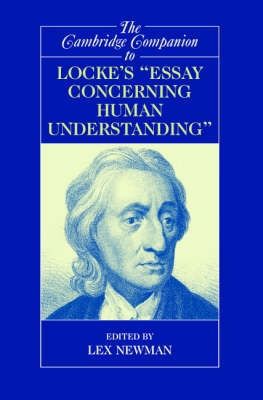
First published in 1689, John Locke’s Essay Concerning Human Understanding is widely recognised as among the greatest works in the history of Western philosophy. The Essay puts forward a systematic empiricist theory of mind, detailing how all ideas and knowledge arise from sense experience. Locke was trained in mechanical philosophy and he crafted his account to be consistent with the best natural science of his day. The Essay was highly influential and its rendering of empiricism would become the standard for subsequent theorists. This Companion volume includes fifteen new essays from leading scholars. Covering the major themes of Locke’s work, they explain his views while situating the ideas in the historical context of Locke’s day and often clarifying their relationship to ongoing work in philosophy. Pitched to advanced undergraduates and graduate students, it is ideal for use in courses on early modern philosophy, British empiricism and John Locke.
ما از اخلاق چه انتظاری داریم؟ این سوال شاید تاحدودی برای عموم مردم و یا متخصصان این رشته قابل پاسخ باشد؛ اینکه خوب بودن را به ما بیاموزد و در تنظیم روابط فردی م...

جشن کتاب تهران به ایستگاه سی و یکم رسیده است. حال و احوال نشر کتاب خوب نیست و باید فرهنگدوستان را به خرید و هدیه دادن کتاب ترغیب نمود. خانه اخلاقپژوهان جوان ب...

بنیاد کتابهای اخلاق اسلامی عمدتا پالایش جان از آلودگیها و آراستن آن به زیباییها است. اندیشه محوری این قبیل کتابها آن است که انسان فعلی آنی نیست که باید باشد...

-
0 Comments