Notice: تابع WP_Block_Type_Registry::register به طورنادرست فراخوانی شد. نامهای نوع بلوک نباید حروف بزرگ داشته باشند. لطفاً برای اطلاعات بیشتر، اشکال زدایی در وردپرس را مشاهده کنید. (این پیام در نگارش 5.0.0 افزوده شده است.) in /home/ethicsho/public_html/wp-includes/functions.php on line 5313
Warning: Use of undefined constant TDC_PATH_LEGACY - assumed 'TDC_PATH_LEGACY' (this will throw an Error in a future version of PHP) in /home/ethicsho/public_html/wp-content/plugins/td-composer/td-composer.php on line 109
Warning: Use of undefined constant TDSP_THEME_PATH - assumed 'TDSP_THEME_PATH' (this will throw an Error in a future version of PHP) in /home/ethicsho/public_html/wp-content/plugins/td-composer/td-composer.php on line 113 بایگانیهای Animal Rescue - خانه اخلاق پژوهان جوان Notice: Trying to access array offset on value of type bool in /home/ethicsho/public_html/wp-content/plugins/wp-ulike/inc/general-functions.php on line 807
As the first book to explore the confluence of three emerging yet critical fields of study, this work sets an exacting standard. The editors’ aim was to produce the most authoritative guide for ecojustice, place-based education, and indigenous knowledge in education. Aimed at a wide audience that includes, but is not restricted to, science educators and policymakers, Cultural Studies and Environmentalism starts from the premise that schooling is a small part of the larger educational domain in which we live and learn. Informed by this overarching notion, the book opens up ways in which home-grown talents, narratives, and knowledge can be developed, and eco-region awareness and global relationships can be facilitated. Incorporating a diversity of perspectives that include photography, poetry and visual art, the work provides a nuanced lens for evaluating educational problems and community conditions while protecting and conserving the most threatened and vulnerable narratives. Editors and contributors share the view that the impending loss of these narratives should be discussed much more widely than is currently the case, and that both teachers and children can take on some of the responsibility for their preservation. The relevance of ecojustice to this process is clear. Ecojustice philosophy is a way of learning about how we frame, or perceive, the world around us—and why that matters. Although it is not synonymous with social or environmental justice, the priorities of ecojustice span the globe in the same way. It incorporates a deep recognition of the appropriateness and significance of learning from place-based experiences and indigenous knowledge systems rather than depending on some urgent (3)4z(Becological crises(3)4y (Bto advocate for school and societal change. With a multiplicity of diverse voices coming together to explore its key themes, this book is an important starting point for educators in many arenas. It brings into better focus a vital role for the Earth’s ecosystems in the context of ecosociocultural theory and participatory democracy alike. (3)4z(BEncompassing theoretical, empirical, and experiential standpoints concerning place-based knowledge systems, this unique book argues for a transformation of (science) education’s intellectual tradition of thinking that emphasizes individual cognition. In its place, the book offers a wisdom tradition of thinking, living, and being that emphasizes community survival in harmony within itself and with Mother Earth.(3)4y (BGlen Aikenhead.
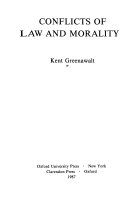
Powerful emotion and pursuit of self-interest have many times led people to break the law with the belief that they are doing so with sound moral reasons. This study is a comprehensive philosophical and legal analysis of the gray area in which the foundations of law and morality clash. This objective book views these oblique circumstances from two perspectives: that of the person who faces a possible conflict between the claims of morality and law and must choose whether or not to obey the penal code; and that of the people who make and uphold laws and must decide whether to treat someone with a moral claim to disobey differently from ordinary lawbreakers. In examining the extent of the obligations owed by citizens to their government, Greenawalt concentrates on the possible existence of a single source of obligation that reaches all citizens and all laws. He also discusses techniques of amelioration of punishment for conscientious lawbreakers, asking how far legal systems should go to accomodate individuals who break the law for reason of conscience. Drawing from numerous examples of conflicts between law and morality, Greenawalt illustrates in detail the positions and predicaments of potential lawbreakers and lawmakers alike.
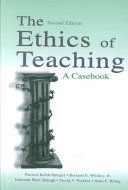
The Ethics of Teaching provides a frank discussion of the most frequently encountered ethical dilemmas that can arise in educational settings, as well as tips on how to avoid these predicaments and how to deal with them when they do occur. The goal is to stimulate discussion and raise faculties’ consciousness about ethical issues. Ethical dilemmas are presented as short, engaging case scenarios, most of which are based on actual situations, so as to furnish more realistic and interesting stimuli for individual reflection and group discussion. These scenarios offer the opportunity to consider the subtle complexities inherent in the social and psychological contexts in which educator-student interactions occur and the effects of those complexities on ethical decision making. Each case is followed by a detailed analysis and advice. The book’s 195 cases are grouped into 22 chapters representing topics, such as the controversial classroom presentations and assignments, debatable testing and grading practices, problematic student-faculty interactions, dual-role relationships with students, collegial conflicts, managing very difficult students, and confidentiality dilemmas. The Ethics of Teaching: A Casebook, Second Edition: *focuses on commonly encountered ethical “gray areas” that have no clear solution; *includes questions to stimulate discussion of related ethical issues; *concludes with a chapter on prevention, peer mentoring, and intervention; and *serves as excellent “assigned reading” to stimulate group discussion in teaching workshops and faculty development programs. The first edition of this book evolved by collecting a variety of teaching situations that commonly occur in college and university settings. The authors then created responses to the situations and circulated both the cases and the responses to reviewers from a number of departments across the country. As a result, the vast majority of the cases are “discipline free.” The second edition features many new cases to reflect recent trends and events related to academic ethics. Questions were added to stimulate discussion and to further elaborate the issues. The Ethics of Teaching: A Casebook is ideal for college and university faculty, graduate assistants, and administrators involved in workshops, graduate teaching assistant courses, and faculty development and new faculty orientation programs. As a result of the book’s cross-disciplinary development, it will be beneficial to faculty from a broad spectrum of disciplines.
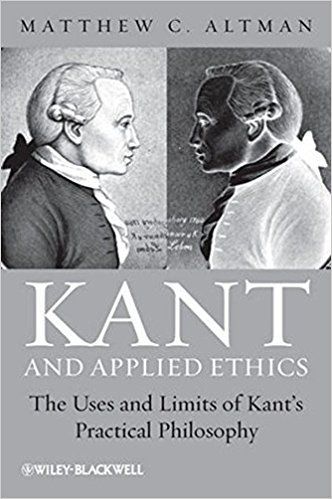
Kant and Applied Ethics makes an important contribution to Kant scholarship, illuminating the vital moral parameters of key ethical debates.Offers a critical analysis of Kant’s ethics, interrogating the theoretical bases of his theory and evaluating their strengths and weaknessesExamines the controversies surrounding the most important ethical discussions taking place today, including abortion, the death penalty, and same-sex marriageJoins innovative thinkers in contemporary Kantian scholarship, including Christine Korsgaard, Allen Wood, and Barbara Herman, in taking Kant’s philosophy in new and interesting directionsClarifies Kant’s legacy for applied ethics, helping us to understand how these debates have been structured historically and providing us with the philosophical tools to address them
ما از اخلاق چه انتظاری داریم؟ این سوال شاید تاحدودی برای عموم مردم و یا متخصصان این رشته قابل پاسخ باشد؛ اینکه خوب بودن را به ما بیاموزد و در تنظیم روابط فردی م...

جشن کتاب تهران به ایستگاه سی و یکم رسیده است. حال و احوال نشر کتاب خوب نیست و باید فرهنگدوستان را به خرید و هدیه دادن کتاب ترغیب نمود. خانه اخلاقپژوهان جوان ب...

بنیاد کتابهای اخلاق اسلامی عمدتا پالایش جان از آلودگیها و آراستن آن به زیباییها است. اندیشه محوری این قبیل کتابها آن است که انسان فعلی آنی نیست که باید باشد...

-
0 Comments