Notice: تابع WP_Block_Type_Registry::register به طورنادرست فراخوانی شد. نامهای نوع بلوک نباید حروف بزرگ داشته باشند. لطفاً برای اطلاعات بیشتر، اشکال زدایی در وردپرس را مشاهده کنید. (این پیام در نگارش 5.0.0 افزوده شده است.) in /home/ethicsho/public_html/wp-includes/functions.php on line 5313
Warning: Use of undefined constant TDC_PATH_LEGACY - assumed 'TDC_PATH_LEGACY' (this will throw an Error in a future version of PHP) in /home/ethicsho/public_html/wp-content/plugins/td-composer/td-composer.php on line 109
Warning: Use of undefined constant TDSP_THEME_PATH - assumed 'TDSP_THEME_PATH' (this will throw an Error in a future version of PHP) in /home/ethicsho/public_html/wp-content/plugins/td-composer/td-composer.php on line 113 بایگانیهای Science - Study And Teaching - خانه اخلاق پژوهان جوان Notice: Trying to access array offset on value of type bool in /home/ethicsho/public_html/wp-content/plugins/wp-ulike/inc/general-functions.php on line 807
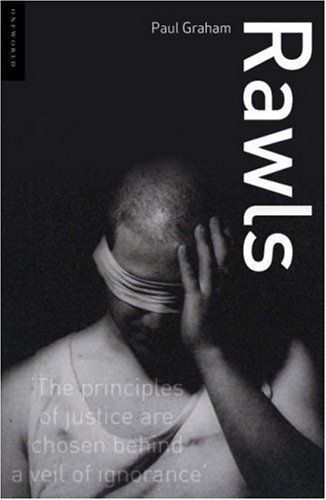
This illuminating guide covers the most interesting and important aspects of Rawls’ work in a stimulating manner, highlighting the foundations that underlie his conception of Justice, and explaining the rationale for his famous starting point, The Veil of Ignorance. Also detailing the criticisms that have met his arguments, this study will prove essential reading for students, scholars, and interested readers alike.
This volume reflects on the effects of recent discoveries in genetics on a broad range of scientific fields. In addition to neuroscience, evolutionary biology, anthropology and medicine, contributors analyze the effects of genetics on theories of health, law, epistemology and philosophy of biology. Social and moral concerns about the relationship between genetics, society and the individual also figure prominently. Genetic discoveries fuel central contemporary public policy debates concerning, for example, human cloning, equitable access to healthcare or the role of genetics in medicine. Perhaps more fundamentally, advances in genetics are altering our perception of human life and death.An interview with François Jacob by Anne Fagot-Largeault opens the volume. In this interview, Jacob, who shared a Nobel Prize with André Lwoff and Jacques Monod for their discoveries concerning genetic control of enzyme and virus synthesis, addresses many of the central methodological epistemological and ethical questions covered in the volume. The dynamic interdisciplinary character of this volume makes it relevant to scholars from many disciplines, from biology, philosophy and the social sciences.
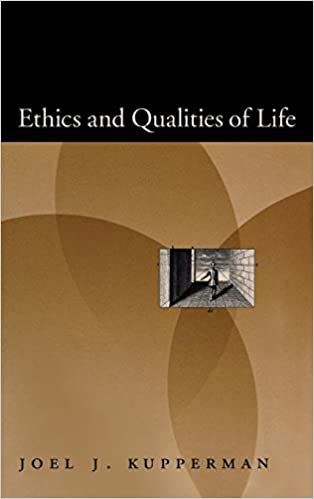
Ethics and Qualities of Life looks at what enters into ethical judgment and choice. Interpretation of a case and of what the options are is always a factor, as is a sense of the possible values at stake. Intuitions also enter in, but often are unreliable. For a long time it seemed only fair that oldest sons inherited, and struck few people as unfair that women were not allowed to attend universities. A moral judgment is putatively part of a moral order in a society that any reasonable person would accept. But what counts as “reasonable” is generally contestable. The unreliability of intuitions leads naturally to ethical theory. Kantian, contractualist, and consequentialist theories all have some important truth in them, but not the whole truth. Contractualism lacks the resources required for a fully determinate account of what counts as “reasonable”. Broad general rules are important to Kant and are at the center of everyday morality. But can Kantian ethics explain why they have to have this central role? Our evolving social contract now contains elements (e.g. the rejection of racism and sexism) that once would have seemed counter-intuitive to most people. But could consequentialists have predicted with entire confidence the consequences of social changes that we now think were desirable? The last part of this book contains a double argument. One is that ethical theory is employed by humans in a state of semi-ignorance of relevant factors, grasping at likely truths and evolved intuitions. The other is that consequentialist considerations have a major role at the fundamental level, but much more in justification or criticism than in ethical discovery.
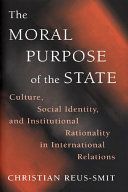
This book seeks to explain why different systems of sovereign states have built different types of fundamental institutions to govern interstate relations. Why, for example, did the ancient Greeks operate a successful system of third-party arbitration, while international society today rests on a combination of international law and multilateral diplomacy? Why did the city-states of Renaissance Italy develop a system of oratorical diplomacy, while the states of absolutist Europe relied on naturalist international law and “old diplomacy”? Conventional explanations of basic institutional practices have difficulty accounting for such variation. Christian Reus-Smit addresses this problem by presenting an alternative, “constructivist” theory of international institutional development, one that emphasizes the relationship between the social identity of the state and the nature and origin of basic institutional practices.Reus-Smit argues that international societies are shaped by deep constitutional structures that are based on prevailing beliefs about the moral purpose of the state, the organizing principle of sovereignty, and the norm of procedural justice. These structures inform the imaginations of institutional architects as they develop and adjust institutional arrangements between states. As he shows with detailed reference to ancient Greece, Renaissance Italy, absolutist Europe, and the modern world, different cultural and historical contexts lead to profoundly different constitutional structures and institutional practices. The first major study of its kind, this book is a significant addition to our theoretical and empirical understanding of international relations, past and present.
ما از اخلاق چه انتظاری داریم؟ این سوال شاید تاحدودی برای عموم مردم و یا متخصصان این رشته قابل پاسخ باشد؛ اینکه خوب بودن را به ما بیاموزد و در تنظیم روابط فردی م...

جشن کتاب تهران به ایستگاه سی و یکم رسیده است. حال و احوال نشر کتاب خوب نیست و باید فرهنگدوستان را به خرید و هدیه دادن کتاب ترغیب نمود. خانه اخلاقپژوهان جوان ب...

بنیاد کتابهای اخلاق اسلامی عمدتا پالایش جان از آلودگیها و آراستن آن به زیباییها است. اندیشه محوری این قبیل کتابها آن است که انسان فعلی آنی نیست که باید باشد...

-
0 Comments