Notice: تابع WP_Block_Type_Registry::register به طورنادرست فراخوانی شد. نامهای نوع بلوک نباید حروف بزرگ داشته باشند. لطفاً برای اطلاعات بیشتر، اشکال زدایی در وردپرس را مشاهده کنید. (این پیام در نگارش 5.0.0 افزوده شده است.) in /home/ethicsho/public_html/wp-includes/functions.php on line 5313
Warning: Use of undefined constant TDC_PATH_LEGACY - assumed 'TDC_PATH_LEGACY' (this will throw an Error in a future version of PHP) in /home/ethicsho/public_html/wp-content/plugins/td-composer/td-composer.php on line 109
Warning: Use of undefined constant TDSP_THEME_PATH - assumed 'TDSP_THEME_PATH' (this will throw an Error in a future version of PHP) in /home/ethicsho/public_html/wp-content/plugins/td-composer/td-composer.php on line 113 بایگانیهای Agriculture-Religious aspects-Christianity - خانه اخلاق پژوهان جوان Notice: Trying to access array offset on value of type bool in /home/ethicsho/public_html/wp-content/plugins/wp-ulike/inc/general-functions.php on line 807
R. Jay Wallace argues in this book that moral accountability hinges on questions of fairness: When is it fair to hold people morally responsible for what they do? Would it be fair to do so even in a deterministic world? To answer these questions, we need to understand what we are doing when we hold people morally responsible, a stance that Wallace connects with a central class of moral sentiments, those of resentment, indignation, and guilt. To hold someone responsible, he argues, is to be subject to these reactive emotions in one’s dealings with that person. Developing this theme with unusual sophistication, he offers a new interpretation of the reactive emotions and traces their role in our practices of blame and moral sanction. With this account in place, Wallace advances a powerful and sustained argument against the common view that accountability requires freedom of will. Instead, he maintains, the fairness of holding people responsible depends on their rational competence: the power to grasp moral reasons and to control their behavior accordingly. He shows how these forms of rational competence are compatible with determinism. At the same time, giving serious consideration to incompatibilist concerns, Wallace develops a compelling diagnosis of the common assumption that freedom is necessary for responsibility. Rigorously argued, eminently readable, this book touches on issues of broad concern to philosophers, legal theorists, political scientists, and anyone with an interest in the nature and limits of responsibility.
This unique introduction to comparative philosophy brings together Chinese, Indian, and Western philosophers of roughly the same sort, of comparable stature, on the same philosophical topics and issues. Discussions are arranged in traditional clusters — logic, epistemology, metaphysics, ethics, and social and political philosophy. Compares equals to equals — logicians with logicians, metaphysicians with metaphysicians, ethicists with ethicists — e.g., compares Indian, Chinese and Western empiricists, utilitarians, hedonists, egoists, atheists, theists, monists, pluralists, idealists, materialists, dualists, skeptics, relativists, political realists, etc. Treats the strictly philosophical arguments as roughly similar across cultures, but presents the larger cultural contexts in which they occur as considerably different. For anyone interested in comparative philosophy.
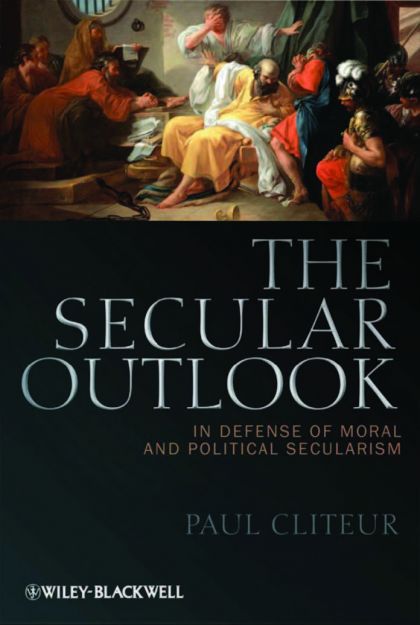
The Secular Outlook: In Defense of Moral and Political Secularism shows how people can live together and overcome the challenge of religious terrorism by adopting a “secular outlook” on life and politics. Shows how secularism can answer the problem of religious terrorism Provides new perspectives on how religious minorities can be integrated into liberal democracies Reveals how secularism has gained a new political and moral significance. Also examines such topics as atheism, religious criticism and free speech
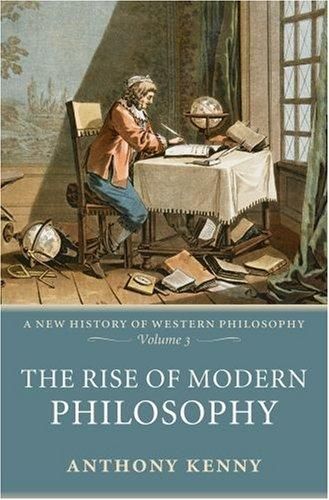
Sir Anthony Kenny’s engaging new multi-volume history of Western philosophy now advances into the modern era. The Rise of Modern Philosophy captures the fascinating story of the emergence, from the early sixteenth to the early nineteenth century, of the great ideas and intellectual systems that shaped modern thought. Kenny introduces us to some of the world’s most original and influential thinkers and helps us gain an understanding of their famous works. The great minds we meet include Rene Descartes, traditionally seen as the founder of modern philosophy; the great British philosophers Hobbes, Locke, and Hume; continental thinkers such as Spinoza, Liebniz, and Hegel; and the towering figure of Immanuel Kant, who perhaps more than any other made philosophy what it is today. Kenny first tells the story of modern philosophy chronologically: his lively, accessible narrative brings the philosophers to life and fills in the historical and intellectual background to their work. It is ideal as the first thing to read for someone new to this wonderfully creative period. Kenny then backtracks to look closely at each of the main areas of philosophical exploration in this period: knowledge and understanding; the nature of the physical universe; metaphysics (the most fundamental questions there are about existence); mind and soul; the nature and content of morality; political philosophy; and God. The book also features many intriguing and beautiful illustrations which evoke the human and social side of philosophy. Anyone who is interested in the evolution of modern thought will find this a book a treasure.
ما از اخلاق چه انتظاری داریم؟ این سوال شاید تاحدودی برای عموم مردم و یا متخصصان این رشته قابل پاسخ باشد؛ اینکه خوب بودن را به ما بیاموزد و در تنظیم روابط فردی م...

جشن کتاب تهران به ایستگاه سی و یکم رسیده است. حال و احوال نشر کتاب خوب نیست و باید فرهنگدوستان را به خرید و هدیه دادن کتاب ترغیب نمود. خانه اخلاقپژوهان جوان ب...

بنیاد کتابهای اخلاق اسلامی عمدتا پالایش جان از آلودگیها و آراستن آن به زیباییها است. اندیشه محوری این قبیل کتابها آن است که انسان فعلی آنی نیست که باید باشد...

-
0 Comments