Notice: تابع WP_Block_Type_Registry::register به طورنادرست فراخوانی شد. نامهای نوع بلوک نباید حروف بزرگ داشته باشند. لطفاً برای اطلاعات بیشتر، اشکال زدایی در وردپرس را مشاهده کنید. (این پیام در نگارش 5.0.0 افزوده شده است.) in /home/ethicsho/public_html/wp-includes/functions.php on line 5313
Warning: Use of undefined constant TDC_PATH_LEGACY - assumed 'TDC_PATH_LEGACY' (this will throw an Error in a future version of PHP) in /home/ethicsho/public_html/wp-content/plugins/td-composer/td-composer.php on line 109
Warning: Use of undefined constant TDSP_THEME_PATH - assumed 'TDSP_THEME_PATH' (this will throw an Error in a future version of PHP) in /home/ethicsho/public_html/wp-content/plugins/td-composer/td-composer.php on line 113 بایگانیهای Weiser Books - خانه اخلاق پژوهان جوان Notice: Trying to access array offset on value of type bool in /home/ethicsho/public_html/wp-content/plugins/wp-ulike/inc/general-functions.php on line 807
Over more than two millennia, the world’s leading religious traditions have provided the guidance in questions of when war can be justified, and of what methods and targets are permissible in war. Linking deep historical analysis to contemporary issues, this volume provides insight to the understanding of the role and influence of religion in the state politics. The book examines the norms of war in Hinduism, in Theravada Buddhism, in Japanese religion, in Judaism, in Roman Catholic Christianity, in Eastern Orthodox Christianity, in Protestant Christianity, in Shia Islam and in Sunni Islam, and discusses norms of war in cross-religious perspective.–Publisher’s description.
There is now a renewed concern for moral psychology among moral philosophers. Moreover, contemporary philosophers interested in virtue, moral responsibility and moral progress regularly refer to Plato and Aristotle, the two founding fathers of ancient ethics. The book contains eleven chapters by distinguished scholars which showcase current research in Greek ethics. Four deal with Plato, focusing on the Protagoras, Euthydemus, Symposium and Republic, and discussing matters of literary presentation alongside the philosophical content. The four chapters on Aristotle address problems such as the doctrine of the mean, the status of rules, equity and the tension between altruism and egoism in Aristotelian eudaimonism. A contrast to classical Greek ethics is presented by two chapters reconstructing Epicurus’ views on the emotions and moral responsibility as well as on moral development. The final chapter on personal identity in Empedocles shows that the concern for moral progress is already palpable in Presocratic philosophy.
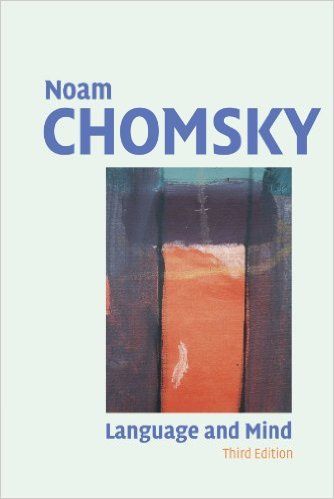
This is the long-awaited third edition of Chomsky’s outstanding collection of essays on language and mind. The first six chapters, originally published in the 1960s, made a groundbreaking contribution to linguistic theory. This new edition complements them with an additional chapter and a new preface, bringing Chomsky’s influential approach into the twenty-first century. Chapters 1-6 present Chomsky’s early work on the nature and acquisition of language as a genetically endowed, biological system (Universal Grammar), through the rules and principles of which we acquire an internalized knowledge (I-language). Over the past fifty years, this framework has sparked an explosion of inquiry into a wide range of languages, and has yielded some major theoretical questions. The final chapter revisits the key issues, reviewing the ‘biolinguistic’ approach that has guided Chomsky’s work from its origins to the present day, and raising some novel and exciting challenges for the study of language and mind.
ما از اخلاق چه انتظاری داریم؟ این سوال شاید تاحدودی برای عموم مردم و یا متخصصان این رشته قابل پاسخ باشد؛ اینکه خوب بودن را به ما بیاموزد و در تنظیم روابط فردی م...

جشن کتاب تهران به ایستگاه سی و یکم رسیده است. حال و احوال نشر کتاب خوب نیست و باید فرهنگدوستان را به خرید و هدیه دادن کتاب ترغیب نمود. خانه اخلاقپژوهان جوان ب...

بنیاد کتابهای اخلاق اسلامی عمدتا پالایش جان از آلودگیها و آراستن آن به زیباییها است. اندیشه محوری این قبیل کتابها آن است که انسان فعلی آنی نیست که باید باشد...

-
0 Comments